
Founder & Editor · Last reviewed 2026-05-30
The 2026 edition has been run. Next: Royal Ascot 2027, Tuesday 15 to Saturday 19 June 2027.
Royal AscotStablebet model (pre-race estimated win chances)
Royal Ascot 15:40 · King Charles III Stakes (Group 1) · Class 1 · 5f
Pre-race estimate. Published 16 June 2026, before the off. This is what the model made of the race beforehand, kept as a record. It was never published as a tip.
The model rated Rosy Affair its most likely winner at 5%, ahead of Overpass (5%) and Frost At Dawn (5%). It read as a competitive, open race with no dominant runner.
| Horse | SP | Model chance | Market | vs Market |
|---|---|---|---|---|
| Rosy Affair Billy Loughnane / G Boughey | 21.00 | 5.0% | 3.1% | Market 1.8pp longer |
| Overpass Joshua Parr / Bjorn Baker | 3.50 | 4.9% | 18.7% | Market 13.8pp shorter |
| Frost At Dawn W Buick / W J Knight | 34.00 | 4.9% | 1.9% | Market 2.9pp longer |
| Time For Sandals R Kingscote / Harry Eustace | 17.00 | 4.8% | 3.9% | Market 0.9pp longer |
| American Affair P Mulrennan / J S Goldie | 8.00 | 4.6% | 8.2% | Market 3.6pp shorter |
| Getreadytorumble Callum Rodriguez / J Channon | 51.00 | 4.6% | 1.3% | Market 3.3pp longer |
| Night Raider James Doyle / K R Burke | 7.00 | 4.4% | 9.4% | Market 5.0pp shorter |
| Jm Jungle Jason Hart / J & S Quinn | 34.00 | 4.1% | 1.9% | Market 2.2pp longer |
| Big Mojo Tom Marquand / M Appleby | 15.00 | 4.1% | 4.4% | In line with market |
| Behike D Egan / George Scott | 34.00 | 4.0% | 1.9% | Market 2.1pp longer |
| Jakajaro J P Spencer / R M H Cowell | 34.00 | 3.9% | 1.9% | Market 2.0pp longer |
| Shagraan H Crouch / C G Cox | 51.00 | 3.9% | 1.3% | Market 2.6pp longer |
| Ain't Nobody K Stott / K A Ryan | 101.00 | 3.9% | 0.7% | Market 3.2pp longer |
| Monteille C Demuro / M Baratti | 51.00 | 3.8% | 1.3% | Market 2.5pp longer |
| First Instinct Cieren Fallon / W J Haggas | 67.00 | 3.8% | 1.0% | Market 2.8pp longer |
| Miss Attitude Ronan Whelan / J Channon | 67.00 | 3.7% | 1.0% | Market 2.8pp longer |
| Starlust Rossa Ryan / R M Beckett | 34.00 | 3.7% | 1.9% | Market 1.8pp longer |
| Rumstar Rob Hornby / J G Portman | 15.00 | 3.7% | 4.4% | Market 0.7pp shorter |
| Cover Up James McDonald / S & E Crisford | 34.00 | 3.4% | 1.9% | Market 1.5pp longer |
| Aspect Island S De Sousa / James Owen | 67.00 | 3.2% | 1.0% | Market 2.3pp longer |
| Mission Central R L Moore / A P O'Brien | 9.00 | 3.2% | 7.3% | Market 4.0pp shorter |
| Rayevka M Barzalona / F Graffard | 6.00 | 3.0% | 10.9% | Market 7.9pp shorter |
| Azure Angel D Tudhope / E Bethell | 101.00 | 2.9% | 0.7% | Market 2.3pp longer |
| Mgheera K Shoemark / E Walker | 34.00 | 2.9% | 1.9% | Market 1.0pp longer |
| Heavenly Heather Barry McHugh / Miss Tracy Waggott | 67.00 | 2.8% | 1.0% | Market 1.8pp longer |
| Asfoora Oisin Murphy / Henry Dwyer | 9.00 | 2.8% | 7.3% | Market 4.5pp shorter |
These were the model's estimated win chances going into the race, not tips. The model is calibrated to real results (when it says 25%, about 25% win) but it does not beat the market, so read it as an independent second opinion on the race. See how accurate it is →
This race has been run. See the Royal Ascot 2026 results for the finishing order and starting prices. What follows is kept as it was written before the race, so anything it lists as not confirmed was still open when it was written and was not revisited afterwards.
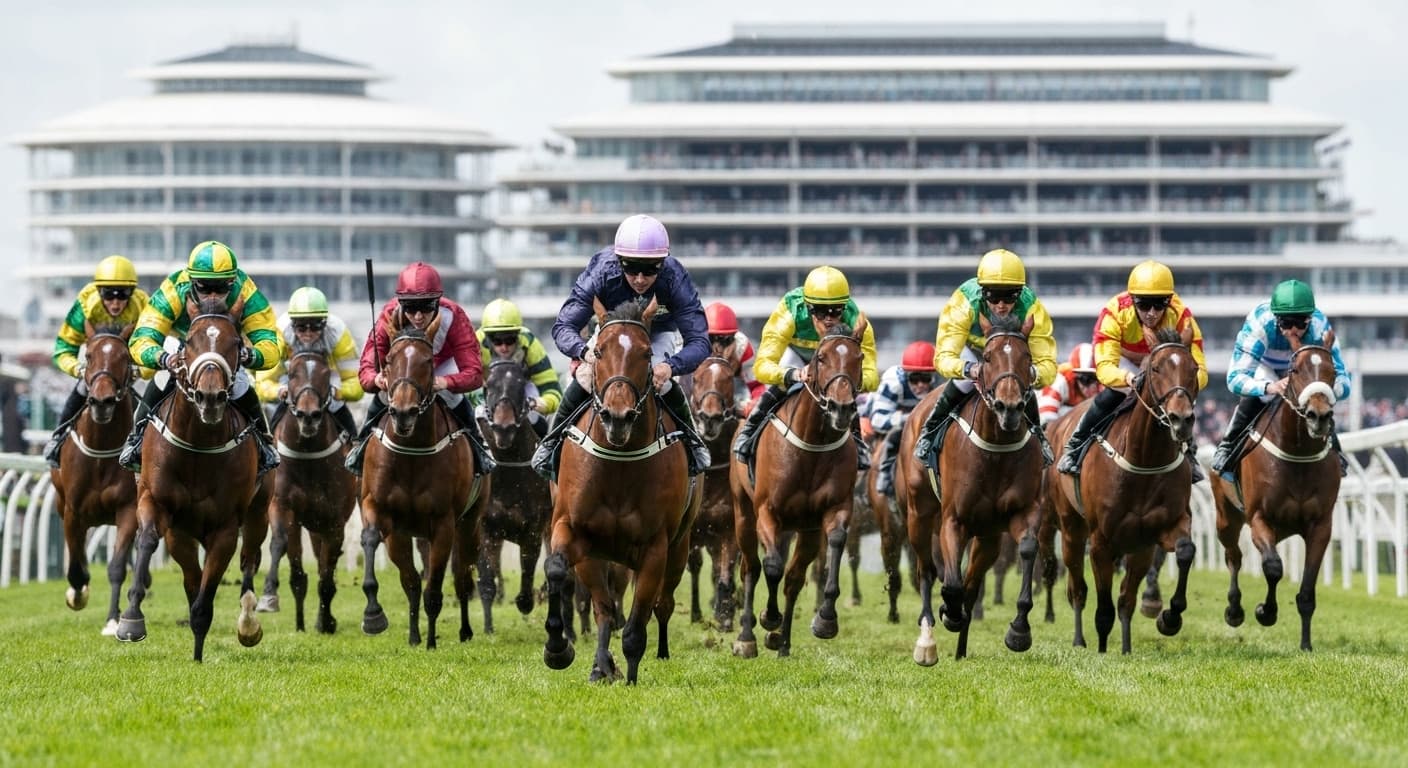
When the stalls crack open for the King's Stand Stakes at 15:40 BST on Tuesday 16 June 2026, the world's fastest sprinters will have roughly fifty-eight seconds to settle the question of who is quickest over five furlongs on turf. The opening-day Group 1 at Royal Ascot is shorter than a Premier League corner routine and yet it routinely attracts raiders from three continents, a level of global pull that few flat-racing prizes can match [Wikipedia, Ascot.com].
The race has been a fixture of the Royal Meeting since 1860, when bad weather forced the two-mile Royal Stand Plate to be shortened on the spot: a piece of improvisation that, in time, evolved into one of the centrepiece sprints of the European calendar [Wikipedia]. Originally christened the Queen's Stand Plate for Queen Victoria, it became the King's Stand Stakes in 1901 under Edward VII, and in 2023 was formally retitled the King Charles III Stakes to mark King Charles's 75th birthday, though most racing-press copy still uses the historic King's Stand name [Wikipedia, Ascot.com].
Group 1 status arrived in 2008, sitting it firmly within the Global Sprint Challenge series and giving Australian, Hong Kong and US speedsters a top-tier reason to make the trip [Wikipedia, BettingSites.co]. The pull of the prize money is part of the story: the 2025 renewal carried a total fund of £725,750 with £411,573 to the winner, and the 2026 fund is expected to be at least as generous and likely a touch higher in line with Royal Ascot's recent annual uplifts [Wikipedia].
Why does it matter? Because for one short, lung-busting dash up Ascot's punishing straight five, the global rankings get rewritten. Charlie Appleby's Blue Point doubled up in 2018 and 2019, Chris Waller's Nature Strip flew the flag for Australia in 2022, and Henry Dwyer's Asfoora landed the 2024 renewal with another Australian raid [Wikipedia, Racing Post]. The 2025 race fell to American Affair at 11/1 for the Jim Goldie yard [Racing Post 2025, not re-checked for this page].
For the home contingent, this is the season's first chance to put down a marker in elite-sprint company; for the international raiders, it is the bridgehead for the rest of the Royal Ascot week and, often, the Diamond Jubilee five days later. Either way, the King's Stand sets the tone for everything that follows.
Companion analysis: our King's Stand Stakes 2026 trends & stats deep-dive runs the 10-year winning profile and the Temple-Stakes pipeline.
Where to Bet
Place your bets with a trusted, licensed bookmaker.

Promo code BETFRED50. New customers only. Register, deposit with a Debit Card, and place a first bet of £10+ at Evens (2.0)+ on Sports, to be settled within 7 days, to get £30 in Sports Free Bets and £20 in Bet Builder Free Bets within 24 hours of settlement. 7-day expiry. Eligibility & payment exclusions apply. Full T&Cs apply. Take Time to Think. BeGambleAware.org. 18+. Full T&Cs.

Promo code R30. New UK customers only, 18+. Register, deposit £10 or more, then place a £10 single cash bet at odds of 1/2 (1.5) or greater on any sports market (excluding Virtuals). Once the qualifying bet settles you get £30 in Free Bets (3 x £10) — the qualifying bet can win or lose. Free Bets are valid on any sports market excluding Virtuals, expire in 7 days, are non-withdrawable and must be used in full. Excluded deposit methods apply (including PayPal, Apple Pay, Skrill and NETELLER). Named bets such as Lucky 15 do not qualify. If you cash out the qualifying bet, or it is voided, you are no longer eligible for the offer. Ends 31.12.26. Full T&Cs apply. Please gamble responsibly. BeGambleAware.org. 18+. Full T&Cs.

Promo code BET40GET20. New UK customers, 18+. Register with the code and place a first bet of £40 or more at Evens (2.0) or greater. Receive 2 × £10 free bets: the first credited automatically once the qualifying bet settles, the second 24 hours later. Free bets must be placed at minimum odds of 4/1 (5.0), expire 24 hours after credit, and the free-bet stake is not returned with winnings. Debit card deposits only. Take Time to Think. BeGambleAware.org. 18+. T&Cs apply. Full T&Cs.

50% of your first-day net losses refunded as a free bet, capped at £25. New UK customers aged 18+ only. To qualify, deposit and place a first bet of £10 or more on any sport at minimum odds of evens (2.00), then place at least two further bets on different events, each worth at least 50% of your largest bet, all at evens (2.00) or greater. Losses are counted from your first settled bet until 23:59 the same day. Place a qualifying £10+ bet and you are guaranteed at least a £5 free bet. Bets placed at SP, void bets, cashed-out bets and bets struck with free bets do not count towards the offer. The free bet is credited the day after your qualifying bets settle and must be used within 7 days, after which it expires. It can be used at odds from 1/4 (1.25) up to 250/1 on singles and straight accumulators, but not on Trixie, Patent or Yankee style multiples. Free-bet stake is not returned with winnings. One offer per person, household, address, IP address and device. E-wallet deposits may not qualify, so check the cashier before depositing. Customers registered with GAMSTOP cannot claim. KYC identity verification must be completed before the free bet is credited. Take Time to Think. BeGambleAware.org. 18+. T&Cs apply. Full T&Cs.

New customers, 18+. Choose the sports bonus at sign-up, make a first deposit and receive a 100% bonus up to £50 in your Sports Bonus balance. To convert the bonus to cash, wager it 10x within 30 days. Single bets below Evens (2.00) do not qualify; accumulators do not qualify if any selection is below 1/2 (1.50). Virtual Sports, voided, cancelled, drawn, cashed-out and free-bet wagers do not count towards wagering. Only the first settled bet per event counts. Withdrawing before the wagering requirement is met forfeits the bonus balance including bonus winnings. Real-money funds are used before bonus funds. Deposits via Skrill or Neteller are not eligible. Not valid in conjunction with other promotions. Odds, bet and payment limits apply. 10bet general and promotion T&Cs apply. BeGambleAware.org. 18+. Full T&Cs.

New customers in Great Britain and Republic of Ireland, 18+. Place a £10 fixed-odds qualifying bet at minimum odds of 1/2 (1.50) — single or each-way (only the win part counts), pre-event or in-play, not cashed out early, within 28 days of opening the account. Receive up to £60 in bonuses credited over three days: 3 × £10 fixed-odds free bets (the first on settlement, then 24 and 48 hours later) plus 3 × £5 Total Goals FOOTBALL spread bets and 3 × £5 racing Winning Favourites spread bets, with a £1 racing Race Index spread bet as an extra on top. The spread bets need a full spread-betting account, opened within 28 days of the fixed-odds account and subject to Spreadex's eligibility and appropriateness checks. Free-bet stakes not returned with winnings; free bets valid 28 days from issue. IMPORTANT: the £5 credits are SPREAD bets — sports spread betting carries the risk that losses can exceed your stake. Sports spread-betting customers do not have Financial Ombudsman or FSCS recourse. Take Time to Think. BeGambleAware.org. 18+. T&Cs apply. Full T&Cs.

Promo code WELCOME15, entered under My Bonuses after registering. New UK customers, 18+. Place a first qualifying bet of at least £10 from your cash balance at odds of evens (2.0) or greater within 7 days of opening the account. Once the qualifying bet fully settles you receive £15 in free bets, credited as 3 x £5 tokens with set uses: one £5 accumulator free bet (minimum 4 legs, each leg at 2/5 or bigger), one £5 sports free bet (any market at evens or bigger) and one £5 Sub Cover free bet (selected football player markets at evens or bigger). Free-bet stakes are not returned with winnings. Free bets expire 7 days after they are credited. Void, cashed-out and partially cashed-out bets do not qualify. One offer per customer. Confirm the current terms on BetGoodwin's own welcome-offer page before claiming. Take Time to Think. BeGambleAware.org. 18+. T&Cs apply. Full T&Cs.

New UK customers, 18+. Minimum deposit £10. Place a £10 qualifying single at minimum odds of 1/2 (1.50), settled within 14 days. Receive £30 in free bets (stake not returned), split £20 for sportsbook use (2 x £10) and £10 for Bet Builder only (2 x £5); Bet Builder does not cover horse racing. Free bets must be accepted within 7 days and expire 7 days after acceptance. No promo code required. Best Odds Guaranteed on UK & Irish racing, subject to having staked over £25 in the previous seven days. Operated by LiveScore Betting and Gaming (Gibraltar) Ltd, UKGC 56859. Confirm the current terms on LiveScore Bet's own promotions page before claiming. Take Time to Think. BeGambleAware.org. 18+. T&Cs apply. Full T&Cs.
18+. BeGambleAware.org
Course and distance demands
The King's Stand is run on Ascot's straight five-furlong course, which is in fact a chute that joins the round track and climbs gently uphill the whole way before that punishing rise to the line in the final furlong [Ascot Course Guide]. The geometry sounds simple (five furlongs in a straight line) but the topography turns it into a stamina-loaded sprint where high cruising speed has to be backed up by the legs to actually finish the job up the hill.
That uphill finish is the single most important fact in race planning. Fast-ground specialists tend to be favoured because the rising ground is enough on its own without a holding surface to layer on top, and most years the going reads "good" or quicker [Ascot Course Guide, ascotracesbetting.com]. Soft ground does occur and when it does the dynamic flips: the far side (low draw numbers) tends to gain a slight advantage, with field-splits and bias often skewing the result.
Draw bias is generally fair but pace-driven. In a dry year the so-called "Golden Highway" up the stands rail often delivers, with high-drawn horses able to find a fast strip of ground and ride the camber [ascotracesbetting.com, attheraces.com]. But that pattern is not iron-clad: pace and where the field congregate matter more than the draw itself. If the speed comes from low numbers, the field will lean that way and the bias inverts.
The recent winning template
Pull the last decade of winners apart and the recipe is consistent. The typical recent King's Stand winner is a 4-6yo proven Group-class sprinter, trained by an elite yard (Charlie Appleby, Charles Hills, Clive Cox, Archie Watson) or a top-flight international raider from Australia or the USA, sent off at single-figure SP [Wikipedia, OLBG, Racing Post].
They have shown elite peak speed at 5f either via a Group 2 Temple Stakes prep at Haydock in late May, or via a leading overseas Group 1 sprint such as the Al Quoz Sprint at Meydan, the TJ Smith at Randwick or the Palace House at Newmarket. Most carry a Timeform rating around 120+ and act on good-to-firm ground. Almost all hold proven Group 1 form from somewhere in the world: first-time Group 1 winners are rare exceptions, with Goldream (2015) and Bradsell (2023) the standout outliers in the last ten years.
Race format and tradition
The King's Stand is a Group 1 weight-for-age sprint for 3yos and up. Weights are set by the standard pattern-race conditions: 3yo colts and geldings carry 9st 3lb, 3yo fillies 8st 11lb, while older horses carry 9st 12lb (colts/geldings) or 9st 7lb (fillies), figures broadly applicable across recent renewals [Ascot.com]. There are penalties for previous Group 1 success.
Tradition runs deep. The race opens the Royal Meeting on Tuesday afternoon (its slot is typically 15:40 BST, the third or fourth race on the card; verify the 2026 schedule via Ascot.com closer to the date), and it is preceded by the Royal Procession down the straight. Most years the race attracts around 14-20 declared runners, with the international contingent often headlining the market and the British sprinters fronting the home charge.
What makes a typical winner profile
If you were to build the perfect King's Stand horse from a parts catalogue, you would pick a 4-6yo with a Timeform rating north of 120, demonstrable Group 1 form, a recent Group 2 or international Group 1 prep within the last three to ten weeks, a top-tier yard, an elite international jockey booking, an SP under 8/1 and proven action on good or quicker ground. Almost every recent winner ticks five or six of those boxes.
What you would not pick is a lightly raced 3yo, a horse with no Group form, an outsider over 14/1, or a horse with a soft-ground preference. Those profiles do still occasionally win (Goldream at 20/1 in 2015 remains the cautionary tale for backers who dismiss the rags), but the broad-strokes template has held remarkably well across more than a decade of results.
That template translates directly into the trends scorecard, which is where we turn next. Five testable, time-weighted trends, each with a strike-rate from the last ten years, are how we will narrow the 2026 field once declarations land and the draw is published.
The 5-trend King's Stand scorecard
The race has a reputation for being short on shocks, and the trend strike-rates back that up. We have crunched the last ten renewals to pull out five testable filters; each one stamps a horse with a tick or a cross on race-week, and the cleanest profile is usually the one to lean on.
1) Aged 4-6 dominate: 7/10 Mature sprinters at peak deliver: Profitable (4), Blue Point (4 and 5), Oxted (5), Asfoora (5), Battaash (6) and Goldream (6) all ticked the bracket. Only Lady Aurelia (2017, age 3) and Bradsell (2023, age 3) bucked it as juveniles, with Nature Strip (2022, age 7) the lone older outlier [Wikipedia, OLBG]. 3yo entries can win but they need exceptional form on the line.
2) Single-figure SP: 9/10 Only Goldream (20/1, 2015) has cracked the double-figure SP barrier in the last ten years. Even Bradsell at 14/1 in 2023 was the highest-priced winner since 2015. The market gets the King's Stand result right almost every year, and that matters when you are weighing up rags [BettingSites.co].
3) Came via Temple Stakes (Haydock) or an international Group 1 sprint: 6/10 The Temple Stakes route delivered Profitable, Battaash, Oxted and American Affair (2025). The international route delivered Blue Point twice via the Al Quoz Sprint, Nature Strip via the TJ Smith, and Asfoora direct from Australia [OLBG, Racing Post]. Trial-graduates of these two paths overwhelmingly dominate.
4) Top-tier yards or Global Sprint Challenge raiders: 10/10 Every winner of the last ten years has come from either an elite British yard or a top international raider: Charlie Appleby (2 wins), Charles Hills, Clive Cox, Roger Teal, Archie Watson, Robert Cowell, Wesley Ward (USA), Chris Waller (AUS) and Henry Dwyer (AUS) [Wikipedia]. No surprise yards, ever.
5) Good or quicker ground specialists: 8/10 The bias toward firmer surfaces is real: average winning times around 58-59 seconds reflect fast-ground racing. Pace dominates over draw, and the stands-side draw advantage shows up most clearly in dry years [ascotracesbetting.com]. A wet week reshuffles the deck.
Last 10 winners at a glance
| Year | Winner | Age | Trainer | Jockey | SP | Prep Race |
|---|---|---|---|---|---|---|
| 2024 | Asfoora | 5 | Henry Dwyer | Oisin Murphy | 5/1 | Listed sprint Australia (direct to Ascot) |
| 2023 | Bradsell | 3 | Archie Watson | Hollie Doyle | 14/1 | Pavilion Stakes / direct from layoff |
| 2022 | Nature Strip | 7 | Chris Waller | James McDonald | 9/4 | TJ Smith Stakes (Randwick) |
| 2021 | Oxted | 5 | Roger Teal | Cieren Fallon | 4/1 | Temple Stakes (Haydock) |
| 2020 | Battaash | 6 | Charles Hills | Jim Crowley | 5/6F | Temple Stakes (Haydock) |
| 2019 | Blue Point | 5 | Charlie Appleby | James Doyle | 5/2 | Al Quoz Sprint (Meydan) |
| 2018 | Blue Point | 4 | Charlie Appleby | William Buick | 6/1 | Al Quoz Sprint (Meydan) |
| 2017 | Lady Aurelia | 3 | Wesley Ward | John Velazquez | 7/2 | Giant's Causeway Stakes (Keeneland) |
| 2016 | Profitable | 4 | Clive Cox | Adam Kirby | 4/1 | Temple Stakes (Haydock) |
| 2015 | Goldream | 6 | Robert Cowell | Martin Harley | 20/1 | Palace House Stakes (Newmarket) |
Cleanest profile
A horse that ticks 5/5 trends in 2026 should look like this: aged 4-6, single-figure SP, prepped via either the Temple Stakes or an overseas Group 1 sprint, trained by an elite British yard or arriving as a credentialled international raider, and proven on good or quicker ground. That is the trend stencil: anything else needs an explicit reason.
The shape of any King's Stand field is set by two competing forces: the established British sprint yards aiming the cream of their five-furlong divisions at the Royal Meeting, and the international raiders arriving via the Global Sprint Challenge with credentials already stamped on their passports. The 2026 line-up will be no different, and a clear-eyed look at the historically dominant yards is the best starting point before declarations land.
Historically dominant yards
Charlie Appleby (Godolphin) is the leading recent name, with Blue Point's back-to-back wins in 2018 and 2019 setting the bar for what a Godolphin sprint operation looks like at this level [Wikipedia]. Whenever Appleby fires a horse with elite international form in here, the market sits up and listens.
Charles Hills trained the brilliant Battaash (2020) and the yard's expertise with stretchy, high-cruising-speed sprinters is well documented. Clive Cox (Profitable, 2016) has been a fixture in top-flight sprint circles for over a decade, while Archie Watson (Bradsell, 2023) and Roger Teal (Oxted, 2021) showed how a sharply timed Group 2 prep or a fresh layoff can land the prize for non-Godolphin yards. Robert Cowell (Goldream, 2015) remains a perennial sprint name worth respecting at a price.
From overseas, Chris Waller (Nature Strip, 2022) and Henry Dwyer (Asfoora, 2024) have both flown the flag for Australia in recent renewals, and Wesley Ward (Lady Aurelia, 2017) is the obvious US standard-bearer.
Typical sire-line profiles
Recent winners have leaned on speed-stacked, sprint-bred families. Australian-bred raiders typically come from Snitzel and Choisir lines, US graduates often trace to Scat Daddy and Speightstown, and the British winners have come from a mix of established sprint sires. The common thread is precocious 2yo speed projected through to 4-6yo physical maturity; slow-burning stayers' lines do not win this race.
Trial-graduate routes
Five well-trodden paths supply most of the contenders:
- Temple Stakes (Haydock, Group 2, late May): the classic British prep, used by Battaash, Oxted, Profitable and American Affair (2025).
- Palace House Stakes (Newmarket, Group 3, early May at the Guineas Festival): provided Goldream in 2015 and acts as a useful sighter.
- Al Quoz Sprint (Meydan, Group 1, Dubai World Cup night in March): the Appleby Blue Point route, twice over.
- TJ Smith Stakes (Randwick, Group 1, Sydney Autumn Carnival in April): the Australian Group 1 stepping-stone used by Nature Strip.
- Duke of York Stakes (York, Group 2, mid-May): more typically a Diamond Jubilee trial but worth watching for crossover entries.
A horse arriving via one of those five races, with an in-the-frame finish, deserves the benefit of the doubt before declarations open up other options.
What we know about the 2026 field
At the time of writing, the 2026 entries have not yet been published. Specific runner-by-runner analysis must therefore wait for the confirmation stage at declaration.
What we can flag in advance:
- Ante-post market leaders: bookmaker prices for the 2026 King's Stand are still thin on the ground, with most firms not yet pricing the race up beyond a token list. A proper market typically forms in the two weeks before Royal Ascot.
- Carry-over candidates: any 2025 King's Stand placed horses staying in training, plus any TJ Smith Stakes 2026 winner targeting the trip, would be the logical names to follow once entries open not confirmed at declaration.
- British prep cycle: the 2026 Temple Stakes at Haydock and the 2026 Palace House at Newmarket will between them sketch out the British contingent. Both are run in May ahead of the Royal Meeting and any winner or close second from those races should be on every shortlist.
- International raid signals: confirmation of which Australian, Hong Kong or US runners have shipped over typically arrives in the final fortnight. Watch for trainer interviews and travel confirmations through early June.
Final word on the field
Until declarations are published, every name on a market list is provisional. The yards listed above (Appleby, Hills, Cox, Watson, Waller, Dwyer, Ward) are the historical filter through which to read the eventual line-up, and trial-graduates from the five listed routes are the structural shortcut. Beyond that, full runner-by-runner analysis lands once the field is confirmed.
The King's Stand rewards patience as much as opinion. Single-figure SPs win the race most years (9/10 in the last decade), and a working framework that combines the five-trend scorecard with disciplined each-way maths tends to outperform sentiment or last-minute hunches. What follows is the evergreen template: the actual NAP and NB for 2026 will be added in a race-week update note once declarations land and the draw is published.
The trends-scorecard framing
The five-trend stencil is the spine of any sound King's Stand approach. A horse that ticks four or five out of five (aged 4-6, single-figure SP, prepped via the Temple Stakes or an international Group 1, trained by an elite yard or an Australian / US raider, and proven on good or quicker ground) sits in the bracket from which almost every recent winner has come. A horse ticking two or fewer trends is fighting historical headwinds.
How the scorecard narrows the field on the day:
- Cross every entry against the five filters. Note the count for each.
- Drop everything scoring 2/5 or lower into a "needs an excuse" pile.
- The 4-5/5 horses become the working shortlist.
- Among those, prefer ones with a single-figure SP and a clear prep-race signal.
- Sanity-check against pace and draw once both are known.
Each-way maths: the template
Each-way betting at the King's Stand makes a lot of sense because top sprinters often run honest races at single-figure prices and places generally pay 1/4 odds for either 3 or 4 places depending on the field size. The arithmetic is straightforward and bookmaker-led.
A worked example using the embedded calculator:
King's Stand Stakes each-way
Total stake
£20.00
If wins
£120.00
If places only
£30.00
The calculator shows the win and place return so you can see in advance what an each-way bet actually pays when your horse wins and when it merely places. Most King's Stand books open at 1/4 odds for 3 places in fields of 8-15 runners, stepping to 4 places when 16+ go to post, so check the specific bookmaker terms before betting.
Place-fraction explainer
A 1/4 place fraction means your place stake collects at one-quarter of the win odds if the horse finishes in a paid place. So on the 8/1 above:
- Win half: stake x 8/1 + stake back = £80 + £10 = £90.
- Place half (1/4 odds): stake x 2/1 + stake back = £20 + £10 = £30.
- If the horse wins, you collect both halves: £120 on a £20 outlay.
- If it merely places, you collect the place half only: £30 on a £20 outlay (net £10 profit).
That asymmetry (a positive return on placing alone) is why each-way play is the default tool for single-figure SP sprinters where the price is right but you would rather not have a binary win-or-bust ticket.
How the trends-scorecard narrows the field: worked logic
A typical King's Stand declaration list runs to 14-20 runners. Apply the trend filters and you usually walk out the other side with a shortlist of 4-6 names. From there, prefer:
- The cleanest 5/5 horse at a single-figure SP, taken each-way.
- A 4/5 horse at a slightly bigger price as the saver, taken each-way.
- Skip win-only unless one name screams short-priced standout.
A note on selections for 2026
Specific NAP and NB picks for the 2026 King's Stand will be added in a separate race-week update once the field is declared and the draw is known. The reason is simple: until both are confirmed, any horse-by-horse opinion is provisional. The framework above is the evergreen tool: apply it as soon as the declared list is up.
Responsible note: stake small, walk away if it isn't fun. BeGambleAware.org.
Frequently Asked Questions
Share this article
Betting offers for Royal Ascot
Work it out & learn the basics
Gamble Responsibly
Gambling should be entertaining and not seen as a way to make money. Never bet more than you can afford to lose. If you or someone you know has a gambling problem, help and support is available.