
Founder & Editor · Last reviewed 2026-05-31
The 2026 edition has been run. Next: Royal Ascot 2027, Tuesday 15 to Saturday 19 June 2027.
Royal AscotStablebet model (pre-race estimated win chances)
Royal Ascot 17:35 · Golden Gates Stakes (Handicap) · Class 2 · 1m1f212y
Pre-race estimate. Published 20 June 2026, before the off. This is what the model made of the race beforehand, kept as a record. It was never published as a tip.
The model rated Lost Boys its most likely winner at 9%, ahead of Evanesco (9%) and Harmonics (9%). It read as a competitive, open race with no dominant runner.
| Horse | SP | Model chance | Market | vs Market |
|---|---|---|---|---|
| Lost Boys James McDonald / D Menuisier | 4.50 | 9.0% | 16.7% | Market 7.7pp shorter |
| Evanesco D Egan / C Johnston | 9.00 | 8.7% | 8.4% | In line with market |
| Harmonics Shane Foley / J & T Gosden | 9.00 | 8.6% | 8.4% | In line with market |
| Echo Of Stars J P Spencer / Oliver Cole | 15.00 | 8.5% | 5.0% | Market 3.5pp longer |
| Folk Pageant Rowan Scott / C Johnston | 17.00 | 7.6% | 4.4% | Market 3.1pp longer |
| Sahara King James Doyle / R Hannon | 6.00 | 6.8% | 12.6% | Market 5.8pp shorter |
| Amadeus Mozart R L Moore / A P O'Brien | 17.00 | 6.0% | 4.4% | Market 1.6pp longer |
| Bayaann Cieren Fallon / W J Haggas | 15.00 | 5.9% | 5.0% | Market 0.8pp longer |
| Nil Bua Gan Dua Dylan Browne McMonagle / J P O'Brien | 21.00 | 5.7% | 3.6% | Market 2.2pp longer |
| Bourbon Blues Joe Leavy / B J Meehan | 26.00 | 5.3% | 2.9% | Market 2.4pp longer |
| Princling Tom Marquand / W J Haggas | 8.00 | 5.1% | 9.4% | Market 4.3pp shorter |
| Spyce Rossa Ryan / A King | 15.00 | 5.0% | 5.0% | In line with market |
| Balzac Billy Loughnane / Jane Chapple-Hyam | 26.00 | 4.9% | 2.9% | Market 2.0pp longer |
| Perisher W Buick / J P O'Brien | 11.00 | 4.9% | 6.9% | Market 1.9pp shorter |
| Allegresse Oisin Murphy / A M Balding | 34.00 | 4.2% | 2.2% | Market 2.0pp longer |
| Sunset On Leros Marco Ghiani / M Botti | 34.00 | 3.8% | 2.2% | Market 1.6pp longer |
These were the model's estimated win chances going into the race, not tips. The model is calibrated to real results (when it says 25%, about 25% win) but it does not beat the market, so read it as an independent second opinion on the race. See how accurate it is →
This race has been run. See the Royal Ascot 2026 results for the finishing order and starting prices. What follows is kept as it was written before the race, so anything it lists as not confirmed was still open when it was written and was not revisited afterwards.
The cavalry charge that closes Royal Ascot
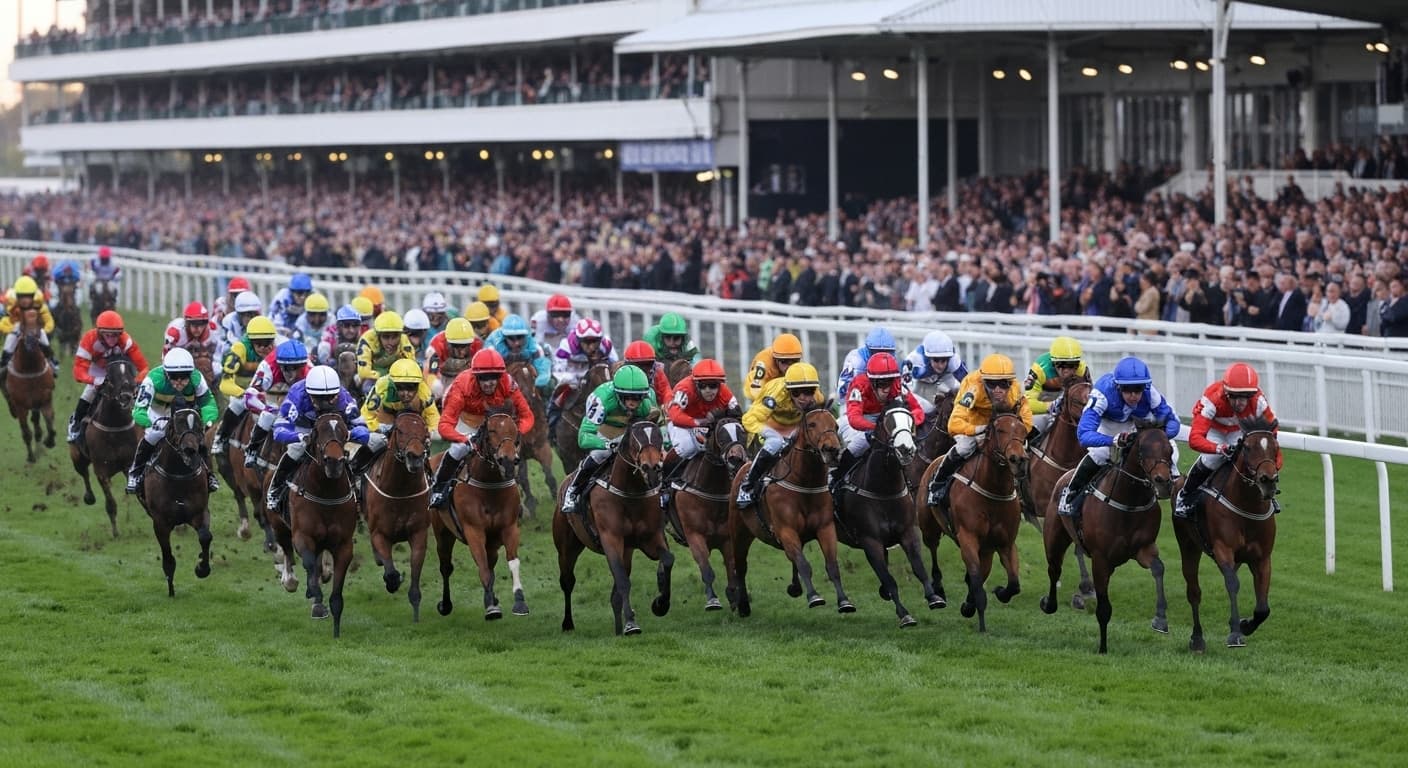
Thirty sprinters. Six furlongs. Uphill. No bend, no hiding place, and one favourite winner in the last decade. The Wokingham Stakes is the single hardest punting puzzle of the entire Royal Meeting: a Heritage handicap so wide-open that the average winning starting price since 2015 sits north of 15/1, and the sub-10/1 winner is the exception rather than the rule.
The 2026 renewal is scheduled for Saturday 20 June, off at 17:35 BST, as the fifth race on the closing day of Royal Ascot [Sporting Life racecard]. It is the oldest handicap of the entire week, first run in 1813 (won by Pointers, owned by the Duke of York) and inaugurated in its current single-division format in 1874 after decades of being split into divisions [Wikipedia; royalascot.org.uk]. That heritage matters: every leading owner-trainer-jockey team in British sprinting has spent the past 150 years trying to crack this race, and most have failed.
The race is run as a 0-110 Heritage handicap over Ascot's straight 6f, open to three-year-olds and upwards. Safety limit is 30 runners, and recent fields have been close to capacity: 28 went to post in 2025, 28 in 2024, 26 in 2023. The 2025 prize fund was £175,000 total with £90,195 to the winner, £42,298 to second, £21,158 to third, and £10,570 to fourth [Sky Sports Racing: 21 June 2025 result].
What makes the Wokingham unusually punishing for punters is not just the field size. It is the geometry of Ascot's straight six furlongs: the track has no turn, splits into two pace groups racing up the stands' rail and down the far side, and rises into a stiff uphill finish that demands both raw speed AND staying power within the sprint distance. Eleven of the last 12 winners had previous course experience [The Stats Don't Lie]: the uphill grind catches out one-paced milers stepping back, and bends-specialist sprinters drafted in for one shot.
The roll of honour reads like a punter's nightmare and a value-hunter's dream. Only Cape Byron (7/2F, 2019) has won at single-figure odds in the last decade, and Rohaan's back-to-back wins in 2021-22 were the first successive Wokingham victories since Selhurstpark Flyer in 1997-98 [Wikipedia; OLBG]. This page sets out the race history, the last ten winners, the five strongest trends, the draw bias, the evergreen field demands, and the each-way maths that make 25-30 runner heritage handicaps the single best playground for extra-place specials.
Where to Bet
Place your bets with a trusted, licensed bookmaker.

Promo code BETFRED50. New customers only. Register, deposit with a Debit Card, and place a first bet of £10+ at Evens (2.0)+ on Sports, to be settled within 7 days, to get £30 in Sports Free Bets and £20 in Bet Builder Free Bets within 24 hours of settlement. 7-day expiry. Eligibility & payment exclusions apply. Full T&Cs apply. Take Time to Think. BeGambleAware.org. 18+. Full T&Cs.

Promo code R30. New UK customers only, 18+. Register, deposit £10 or more, then place a £10 single cash bet at odds of 1/2 (1.5) or greater on any sports market (excluding Virtuals). Once the qualifying bet settles you get £30 in Free Bets (3 x £10) — the qualifying bet can win or lose. Free Bets are valid on any sports market excluding Virtuals, expire in 7 days, are non-withdrawable and must be used in full. Excluded deposit methods apply (including PayPal, Apple Pay, Skrill and NETELLER). Named bets such as Lucky 15 do not qualify. If you cash out the qualifying bet, or it is voided, you are no longer eligible for the offer. Ends 31.12.26. Full T&Cs apply. Please gamble responsibly. BeGambleAware.org. 18+. Full T&Cs.

Promo code BET40GET20. New UK customers, 18+. Register with the code and place a first bet of £40 or more at Evens (2.0) or greater. Receive 2 × £10 free bets: the first credited automatically once the qualifying bet settles, the second 24 hours later. Free bets must be placed at minimum odds of 4/1 (5.0), expire 24 hours after credit, and the free-bet stake is not returned with winnings. Debit card deposits only. Take Time to Think. BeGambleAware.org. 18+. T&Cs apply. Full T&Cs.

50% of your first-day net losses refunded as a free bet, capped at £25. New UK customers aged 18+ only. To qualify, deposit and place a first bet of £10 or more on any sport at minimum odds of evens (2.00), then place at least two further bets on different events, each worth at least 50% of your largest bet, all at evens (2.00) or greater. Losses are counted from your first settled bet until 23:59 the same day. Place a qualifying £10+ bet and you are guaranteed at least a £5 free bet. Bets placed at SP, void bets, cashed-out bets and bets struck with free bets do not count towards the offer. The free bet is credited the day after your qualifying bets settle and must be used within 7 days, after which it expires. It can be used at odds from 1/4 (1.25) up to 250/1 on singles and straight accumulators, but not on Trixie, Patent or Yankee style multiples. Free-bet stake is not returned with winnings. One offer per person, household, address, IP address and device. E-wallet deposits may not qualify, so check the cashier before depositing. Customers registered with GAMSTOP cannot claim. KYC identity verification must be completed before the free bet is credited. Take Time to Think. BeGambleAware.org. 18+. T&Cs apply. Full T&Cs.

New customers, 18+. Choose the sports bonus at sign-up, make a first deposit and receive a 100% bonus up to £50 in your Sports Bonus balance. To convert the bonus to cash, wager it 10x within 30 days. Single bets below Evens (2.00) do not qualify; accumulators do not qualify if any selection is below 1/2 (1.50). Virtual Sports, voided, cancelled, drawn, cashed-out and free-bet wagers do not count towards wagering. Only the first settled bet per event counts. Withdrawing before the wagering requirement is met forfeits the bonus balance including bonus winnings. Real-money funds are used before bonus funds. Deposits via Skrill or Neteller are not eligible. Not valid in conjunction with other promotions. Odds, bet and payment limits apply. 10bet general and promotion T&Cs apply. BeGambleAware.org. 18+. Full T&Cs.

New customers in Great Britain and Republic of Ireland, 18+. Place a £10 fixed-odds qualifying bet at minimum odds of 1/2 (1.50) — single or each-way (only the win part counts), pre-event or in-play, not cashed out early, within 28 days of opening the account. Receive up to £60 in bonuses credited over three days: 3 × £10 fixed-odds free bets (the first on settlement, then 24 and 48 hours later) plus 3 × £5 Total Goals FOOTBALL spread bets and 3 × £5 racing Winning Favourites spread bets, with a £1 racing Race Index spread bet as an extra on top. The spread bets need a full spread-betting account, opened within 28 days of the fixed-odds account and subject to Spreadex's eligibility and appropriateness checks. Free-bet stakes not returned with winnings; free bets valid 28 days from issue. IMPORTANT: the £5 credits are SPREAD bets — sports spread betting carries the risk that losses can exceed your stake. Sports spread-betting customers do not have Financial Ombudsman or FSCS recourse. Take Time to Think. BeGambleAware.org. 18+. T&Cs apply. Full T&Cs.

Promo code WELCOME15, entered under My Bonuses after registering. New UK customers, 18+. Place a first qualifying bet of at least £10 from your cash balance at odds of evens (2.0) or greater within 7 days of opening the account. Once the qualifying bet fully settles you receive £15 in free bets, credited as 3 x £5 tokens with set uses: one £5 accumulator free bet (minimum 4 legs, each leg at 2/5 or bigger), one £5 sports free bet (any market at evens or bigger) and one £5 Sub Cover free bet (selected football player markets at evens or bigger). Free-bet stakes are not returned with winnings. Free bets expire 7 days after they are credited. Void, cashed-out and partially cashed-out bets do not qualify. One offer per customer. Confirm the current terms on BetGoodwin's own welcome-offer page before claiming. Take Time to Think. BeGambleAware.org. 18+. T&Cs apply. Full T&Cs.

New UK customers, 18+. Minimum deposit £10. Place a £10 qualifying single on sports (excluding virtuals) at minimum odds of 1/2 (1.50), settled within 14 days. Deposit-method exclusions apply. Receive £30 in free bets (stake not returned), split £20 for sportsbook use (2 x £10) and £10 for Bet Builder only (2 x £5); Bet Builder does not cover horse racing. Free bets must be accepted within 7 days and expire 7 days after acceptance. No promo code required. Best Odds Guaranteed on UK & Irish racing, subject to having staked over £25 in the previous seven days. Operated by LiveScore Betting and Gaming (Gibraltar) Ltd, UKGC 56859. Confirm the current terms on LiveScore Bet's own promotions page before claiming. Take Time to Think. BeGambleAware.org. 18+. T&Cs apply. Full T&Cs.
18+. BeGambleAware.org
The Race: course, distance, draw, and the winning template
Ascot's straight six furlongs
The Wokingham is run on Ascot's straight six-furlong sprint course, a chute that joins the round course only after the field has crossed the line. There is no bend. From flag-fall the runners are committed to the strip they were drawn on, and any horse trying to switch groups mid-race surrenders momentum on a track where the final two furlongs rise into a stiff uphill finish [Ascot Betting Today].
The course has a slight camber that falls toward the stands' rail, which is one of the reasons jockeys gravitate to the wings rather than holding the centre. The other reason is more practical: with up to 30 runners stretching across the full width of the track, a horse running in the middle has no rail to lock onto, no lead horse to track, and no shelter from being pushed off a true line as the two pace groups converge in the final furlong. The centre of the track is, almost without exception, the worst place to be when the field is large.
Going tends to be good or good-to-firm in mid-June, but Royal Ascot has produced soft renewals (notably 2016 and 2021). Soft ground materially shifts the bias; it slows the uphill finish further and rewards the pace group that produced the strongest gallop early, rather than the group with the late closers. Punters tracking the going report through the week should pay particular attention to the morning watering reports on Saturday, as the track team works to keep the ground fair across the full width.
Draw bias: the central puzzle
The Wokingham splits into two pace groups racing up the two rails. OLBG's analysis of 25 recent renewals shows 44% of winners were drawn within 4 stalls of either rail. The Stats Don't Lie analysis of recent runnings flags an even stronger pattern: roughly 83% of recent winners (10 of 12) came from stalls 10 or higher, OR from stalls 1-2 racing hard against the far rail.
That dual pattern matters because it inverts what punters might expect from the Royal Hunt Cup (Wednesday's straight-mile handicap), where high draws racing up the stands' side are historically favoured. The Wokingham is the opposite: the 6f start sits in a different position relative to where the two pace groups form, and the dominant winning group at 6f has tended to be the far-side group with horses drawn high, plus the small low-draw nibble for those locked against the inside rail. The centre of the draw (stalls 5 to 9 in a typical 28-30 runner field) is the danger zone.
A practical comparison: Stewards' Cup form (Goodwood, 5f straight) translates well to the Wokingham because both races demand the same skill: a sprinter who locks onto a rail, holds position from the stalls, and produces a sustained surge from two out. Get It (2025 Wokingham winner, made all from stall 13 in 1:11.40, the fastest time in 20 renewals) was a Stewards' Cup type drafted into the meeting and graduated cleanly.
The recent winning template
The 2015-25 honour roll converges on a remarkably consistent profile. The textbook Wokingham winner is:
- Aged 4 or 5: 7 of last 10 winners. Three-year-olds are rare (Rohaan, 2021, the modern exception) and 6yo+ runners almost non-existent (Out Do, 2017, at age 8, the outlier).
- Carrying between 9-2 and 9-9: mid-range handicap weight. Top-weights carrying 10-0+ are dead money historically.
- Rated 99-105: the official ratings band the handicapper places the winner at, on average.
- Drawn 10 or higher, or in stall 1-2 hard against the far rail: middle draws (5-9) are the trap.
- Previously experienced at Ascot over 6f: 11 of the last 12 winners. Ideally a course-and-distance winner [The Stats Don't Lie].
- Arriving off a recent prep within 49 days: the Victoria Cup (Ascot, May) is the model prep race, supplying Outback Traveller (2016) and Cape Byron (2019). Recent winners coming from the Buckingham Palace Stakes route or the Epsom Dash also have form.
- Returning at 10/1 or bigger: 8 of 10 last decade. The market consistently misses the winner.
Race format and field size
The Wokingham is a Class 2 Heritage handicap (0-110) under BHA classification. Safety limit is 30 runners; recent fields have run close to that ceiling (28 in 2025 and 2024; 26 in 2023; 24 in 2022). Declarations are made at the standard 48-hour stage, with the final field, weights and draw published Thursday morning ahead of the Saturday race. Final weights are released after the Royal Ascot handicapper's review of any horses who won between entry and declaration.
The race carries Heritage status: a sub-category of valuable historic handicaps that the BHA promotes alongside Listed and Group races, with the prize fund pitched accordingly. £175,000 total in 2025 sits the Wokingham above most ordinary handicap sprints but below the Royal Hunt Cup (£200,000) on the meeting hierarchy. Coverage is live on ITV Racing across the Saturday card.
Heritage tradition
Three threads of tradition give the Wokingham its identity. First, the age of the race: the only handicap older than the Wokingham at the Royal Meeting is the Royal Hunt Cup, by a single year. Second, the cavalry charge: no other British Heritage handicap routinely sends 28-30 runners over six furlongs on a straight, uphill course. Third, the value culture: the betting ring at the Wokingham is one of the most active of the entire meeting, with multi-runner each-way books written specifically for the race and most major firms running 5-place or 6-place specials. The race rewards the punter who has done the work; it punishes the punter who has not.
Trends and stats: the five-point Wokingham scorecard
The Wokingham yields to discipline more readily than most heritage handicaps because the same demands (Ascot 6f experience, mid-range weight, mid-to-high draw, age 4-5, double-digit SP) recur year after year. The five trends below are the strongest filters across the last 10-12 renewals and form the basis of a workable scorecard. A horse hitting four of the five is a credible each-way contender; a horse hitting five is the trends-led pick of the race.
Trend 1: Aged 4 or 5
Strike rate (last 10): 7/10 (70%)
Outback Traveller (4), Cape Byron (4), Hey Jonesy (5), Rohaan (3 then 4), Saint Lawrence (4) and Unequal Love (5): seven of the last ten winners fell in the 4-5 age band, and The Stats Don't Lie extends this to 9 of the last 12. Three-year-olds need a Group-class profile to overcome the weight-for-age balance against seasoned handicappers; Rohaan (2021) is the modern outlier. Six-year-olds and older fade fast: only Out Do (2017, aged 8) has broken the rule in the last decade.
Scorecard line: Mark a single point for any runner aged 4 or 5 at race day. Zero points for 3yo unless rated 100+; zero points for 6yo+.
Trend 2: Returned at 10/1 or bigger
Strike rate (last 10): 8/10 (80%)
Eight of the last ten winners returned at 10/1 or bigger, with the average winning SP since 2015 north of 15/1. Only Cape Byron (7/2F, 2019) and Rohaan (8/1, 2021) have been priced shorter than 10/1. The 2017 winner Out Do went off at 25/1; Bacchus (2018) at 33/1; Saint Lawrence (2023) at 22/1; Get It (2025) at 28/1.
Punting takeaway: the market consistently misses the winner. The Wokingham is a value-hunter's race, not a fave-backer's. Each-way and place-only strategies typically out-perform straight win betting.
Scorecard line: Mark a point for any runner trading 10/1 or bigger at the off. Zero points for any horse trading shorter than 8/1 (a near-certain trap).
Trend 3: Previous Ascot course form
Strike rate (last 12): ~92% (11/12 per The Stats Don't Lie)
The single strongest filter in the race. Ascot is by far the most productive last-time-out course for Wokingham winners (seven LTO Ascot winners since 2010 per OLBG). Previous course experience over the stiff straight 6f is virtually essential: the uphill grind catches out one-paced sprinters who have only raced on bend-tracks. Course-and-distance winners are over-represented in the honour roll.
Scorecard line: Mark a point for any runner with a previous run at Ascot over 6f. Add a bonus half-point for a previous C&D win.
Trend 4: Carrying 9-2 to 9-9
Strike rate (last 12): ~75% (9/12 per The Stats Don't Lie)
Mid-range handicap weights dominate. Eight of the last 10 winners carried between 9-1 and 9-9: only Out Do (8-13, 2017) and Rohaan in 2022 (9-12) sat outside that band. Top-weights carrying 10-0+ struggle in the cavalry-charge environment, where a lower-weighted runner of equal ability holds a real per-furlong advantage over six furlongs uphill.
Scorecard line: Mark a point for any runner carrying between 9-2 and 9-9. Zero points for top-weights at 10-0+.
Trend 5: Drawn 10 or higher (or hard against a rail)
Strike rate (last 12): ~83% (10/12 per The Stats Don't Lie)
Middle-to-high draws are favoured in big fields. The Stats Don't Lie flags 10 of the last 12 winners as drawn 10+. The exception is stall 1 hard against the far rail, which has produced 2 of the last 10 winners. The real danger zone is stalls 5 to 9 in a typical 28-30 runner field: the centre of the track, with no rail to lock onto.
Scorecard line: Mark a point for any runner drawn 10 or higher. Mark half a point for stalls 1-2. Zero points for stalls 3-9.
Last 10 winners
| Year | Winner | Trainer | SP |
|---|---|---|---|
| 2024 | Unequal Love | William Haggas | 12/1 |
| 2023 | Saint Lawrence | Archie Watson | 22/1 |
| 2022 | Rohaan | David Evans | 18/1 |
| 2021 | Rohaan | David Evans | 8/1 |
| 2020 | Hey Jonesy | Kevin Ryan | 18/1 |
| 2019 | Cape Byron | Roger Varian | 7/2F |
| 2018 | Bacchus | Brian Meehan | 33/1 |
| 2017 | Out Do | David O'Meara | 25/1 |
| 2016 | Outback Traveller | Robert Cowell | 10/1 |
| 2015 | Interception (not confirmed) | David Lanigan | 10/1 |
Source notes: 2016-24 entries cross-verified across Wikipedia, OLBG and Sporting Life. 2015 (Interception) sourced from a single reference and flagged accordingly.
Punting heuristic
Apply the five trends as a scorecard out of 5.5 (including the C&D bonus). Any runner scoring 4+ deserves a closer look; any runner scoring 5+ is the trends-led pick of the race. The exercise is most powerful as a filter: narrowing a 30-runner field to four or five trends-positive horses before considering each-way maths, place fractions and extra-place specials. Apply it the morning of declarations once weights and draw are published.
The Field: dominant yards, draw patterns, and trial routes
Yards with the strongest Wokingham records
Several yards have built real specialism around the Wokingham profile, and their representatives are worth a second look every June. The list below sets out the historically dominant trainers rather than the 2026 declared field; those entries will be updated once weights and the draw are published in the days before the race.
David Evans: back-to-back wins with Rohaan in 2021 and 2022 made the Welsh yard the standout Wokingham operator of the modern era. Rohaan's win in 2022 was the first successive Wokingham winner since Selhurstpark Flyer in 1997-98 [Wikipedia]. Evans tends to bring battle-hardened sprinters with proven Ascot form rather than ante-post fancies. Watch for any Evans-trained 4yo or 5yo with a recent Ascot 6f run.
William Haggas: the 2024 winner Unequal Love added to a strong recent record for the Newmarket yard. Haggas has a long history of placing sprint handicappers at the Royal Meeting and tends to target the Wokingham specifically with horses who have been campaigned with the race in mind from the spring.
Archie Watson: Saint Lawrence (2023) at 22/1 demonstrated the yard's value angle with improving 4yos. Watson's stable has been a consistent supplier of trends-friendly Wokingham types over recent seasons.
Roger Varian: Cape Byron (2019) at 7/2F is the only winning favourite of the last decade. Varian rarely runs in the Wokingham but when he does, the runner is usually well backed and credibly placed.
Brian Meehan, Kevin Ryan, David O'Meara, Robert Cowell: each have won the race within the last 10 years and represent the broader pool of northern and southern specialist sprint yards with the form to compete.
Karl Burke and Richard Hannon: strong representation at the meeting in sprint handicaps generally, and the Hannon yard in particular tends to bring multiple Wokingham runners every year.
The specific 2026 declared field, weights, draw and current market follow at declaration.
Age patterns
The trends data is unambiguous: 4yo and 5yo runners dominate, accounting for 7 of the last 10 winners. The Stats Don't Lie extends this to 9 of the last 12. The structural reason is straightforward: handicappers under official ratings 99-105 in the 4-5 age bracket sit at the peak of their handicap careers, having lost any 3yo weight-for-age allowance but still holding the physical edge over older sprint handicappers whose form lines are starting to drift.
Three-year-olds: rare winners. Rohaan (2021) is the modern outlier; before that, the last 3yo Wokingham winner was a generation back. A 3yo needs a Group-class profile or a striking handicap mark improvement to overcome the cavalry-charge demands.
Six-year-olds and older: even rarer. Out Do (2017, aged 8) is the singular exception in the last decade. The uphill grind catches out veteran sprinters whose acceleration has dulled, and the weight scale tends to push older horses up to weights they cannot carry over the distance.
Weight patterns
Eight of the last 10 winners carried between 9-1 and 9-9: a tight middle band of the handicap weight scale. The strikingly bad area is the top of the weights: top-weights carrying 10-0+ rarely win, partly because the handicapper has set them above their ceiling and partly because the cavalry charge over six furlongs uphill rewards a lower-burdened sprinter of equal raw ability.
The bottom of the weights is more nuanced. Outsiders carrying 8-12 to 9-0 do win: Out Do (2017) at 8-13 and several placed efforts since show the route remains live, but the strike rate from the lowest 5-6 weights is lower than the mid-range band, partly because horses at the bottom of the handicap are often there for a reason.
Draw patterns
The dual pattern from Trend 5 (drawn 10+ OR stall 1-2 hard against the far rail) is the central practical takeaway. In a typical 28-runner field, that means stalls 1-2 and 10-28 are the live zones, and stalls 3-9 are the trap. The middle of the draw has no rail to lock onto, no shelter from the convergence of the two pace groups, and is the position where front-runners and prominent racers most often get squeezed off their preferred line in the final two furlongs.
Pace map matters. A horse drawn 14 who is normally held up is at a clear structural disadvantage to a horse drawn 14 who races prominently: the held-up runner ends up isolated in the middle of the track when the two pace groups break, while the prominent racer has options.
Typical trial routes
The model prep route for the Wokingham is the Victoria Cup (Ascot, May), a heritage handicap over the straight 7f. Outback Traveller (2016) and Cape Byron (2019) both came via the Victoria Cup. The route works because it gives the horse a recent Ascot 6f-7f run on the straight course, ticks the previous Ascot course form trend, and lands within the 49-day window that the data favours.
Other live trial routes include:
- Buckingham Palace Stakes (Ascot, the same week, Friday): same course and distance trial earlier in the meeting, used by some yards as a Wokingham warm-up.
- Epsom Dash (Epsom, Derby weekend, 5f straight): sharp speed prep, used when the yard wants a recent run without the weight burden of a heritage handicap.
- Goodwood Stewards' Cup form (previous July): winter campaigners off a Stewards' Cup-style sprint background translate well, as Get It (2025) demonstrated.
- Northern handicaps from the Ayr-Beverley-York spring programme: supplying outsiders with course experience from spring meetings.
Which of the 2026 declared runners came via which trial route, with timings and form lines, follows at declaration.
Betting tips: each-way maths for a 30-runner heritage handicap
Why the each-way book matters more in the Wokingham than almost any race of the year
The Wokingham is the single best playground for each-way and place-only strategies on the British calendar. Three structural reasons converge. First, field size: the safety limit is 30 runners and recent renewals have run 26-28 deep. Second, market dispersion: with only one favourite winner in the last decade (Cape Byron, 7/2F, 2019) and an average winning SP north of 15/1, value is spread across the field rather than concentrated at the head of the market. Third, extra-place culture: most major bookmakers run 5-place or 6-place specials on the Wokingham as a flagship Royal Ascot promotion, often with a "non-runner no bet" attachment from a fixed early-pricing date.
The result is that each-way mathematics (the place fraction, the number of paid places, and the gap between standard and special terms) can swing the expected value of a Wokingham bet by 10-15% even before any horse-specific assessment.
Place-fraction explainer
A standard each-way bet at fractional odds X/Y with place fraction 1/Z and N paid places pays:
- Win part: stake at full odds X/Y if the horse wins.
- Place part: stake at (X/Y) divided by Z if the horse finishes in the top N.
A 14/1 each-way runner at 1/4 odds, 5 places (the typical Wokingham "extra place special") pays:
- Win: £10 win at 14/1 returns £150 (including stake).
- Place: £10 place at (14/1) divided by 4 = 3.5/1, returns £45 (including stake).
- Combined: £195 return for £20 outlay if the horse wins; £45 back for the place stake (plus the win stake lost) if it finishes 2nd-5th.
Wokingham Stakes each-way
Total stake
£20.00
If wins
£188.00
If places only
£38.00
Why extra places matter so much in 30-runner heritage handicaps
The mathematical edge of an extra paid place (going from 4 places at 1/4 to 5 places at 1/5, or 5 places to 6 places) compounds quickly in a 28-30 runner field. The reason is the "fair" probability of any individual horse hitting the place: in a 30-runner field where each horse has a roughly equal place chance, going from 4 paid places to 5 is a +25% increase in place strike rate. Even adjusted for the market's true probability distribution (where favourites place more often than outsiders), the additional place coverage typically delivers 4-8% positive expected value on a 14/1 to 25/1 runner.
A worked illustration on the same 14/1 each-way example: shift the place fraction from 1/4 (standard heritage) to 1/5 (the typical extra-place special) and the place payout drops from 3.5/1 to 2.8/1. But the number of paid places usually rises from 4 to 5 or 6, and the extra place is worth more than the reduction in fraction in almost any field of 25+ runners.
Trends-scorecard usage
The Section 3 five-trend scorecard is the right tool to narrow a 30-runner field to a shortlist before any betting work begins. Process:
- Pull declarations and weights on Thursday morning (48-hour declaration stage).
- Apply the five trends: age 4-5, returning at 10/1+, previous Ascot 6f form, weight 9-2 to 9-9, draw 10+ or stall 1-2 with the far rail.
- Shortlist runners scoring 4+ out of 5.5 (with the C&D bonus). In a typical 30-runner field this usually produces a shortlist of 5-8 horses.
- Cross-reference with the extra-place specials: which bookmakers are running 5 or 6 places, and on which prices.
- Bet each-way on the shortlist runners trading at 12/1 to 25/1: the price band the data most strongly favours. Stake to the place return rather than the win, since the place is where the value sits.
Defer specific 2026 picks
Specific 2026 selections are deferred to the days before the race, once declarations, weights, the draw and the market are published. The trends scorecard, the each-way maths and the dominant yards described above are evergreen guides; the specific runners they point to in the 2026 renewal will be detailed in the closer-to-race-day update.
Responsible note
Heritage handicap each-way betting can deliver positive expected value, but the variance is high: a 14/1 each-way runner that finishes 6th in a 5-place race returns nothing. Stake sizing matters more than horse selection on a long-run basis. Set a budget, work to small stakes, and use the BeGambleAware.org tools if any of the above stops being fun.
Frequently Asked Questions
Share this article
Betting offers for Royal Ascot
Work it out & learn the basics
Gamble Responsibly
Gambling should be entertaining and not seen as a way to make money. Never bet more than you can afford to lose. If you or someone you know has a gambling problem, help and support is available.