
Founder & Editor · Last reviewed 2026-07-13
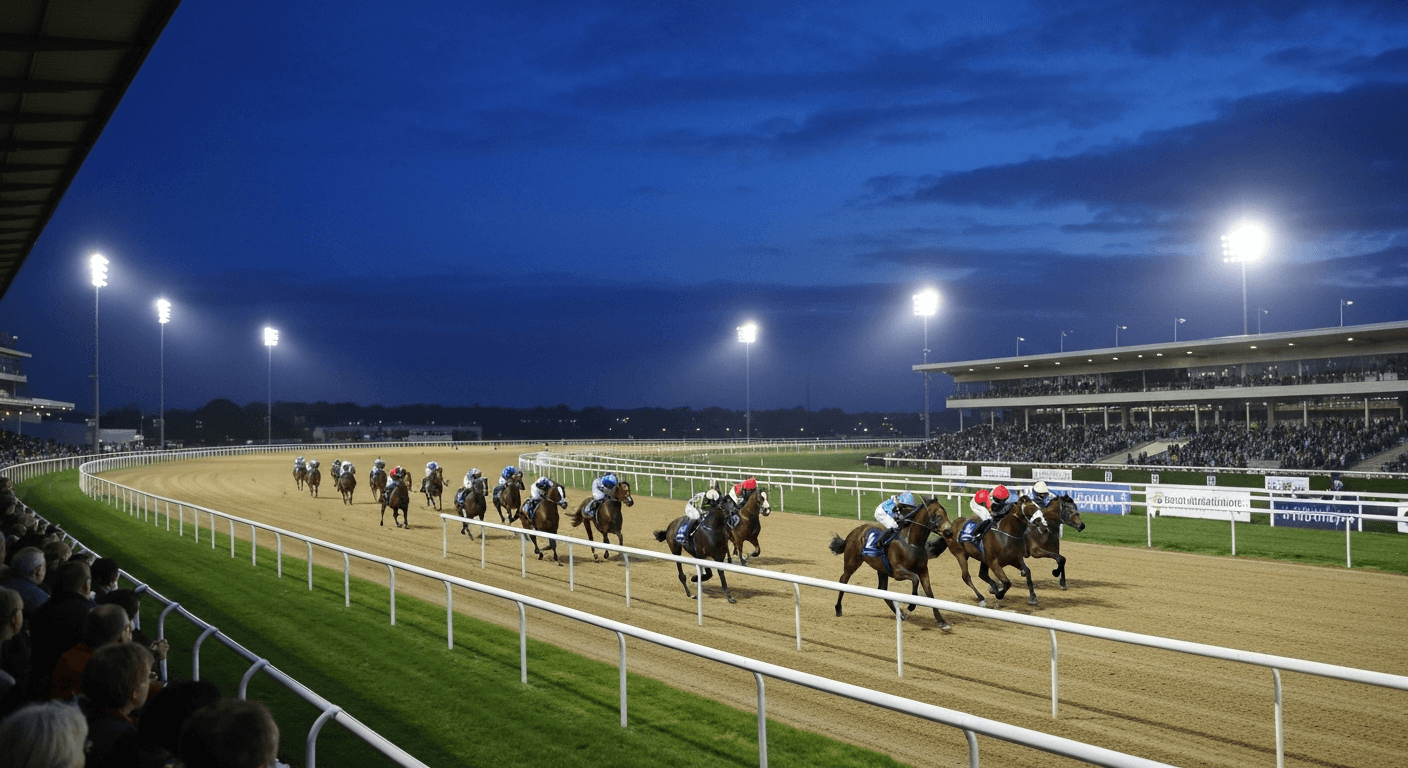
Most Irish racecourses are known for a single great horse or a famous festival. Dundalk is known for something rarer: what it is. It is the Republic of Ireland's only floodlit all-weather Flat racecourse, and it is the only venue in Europe where thoroughbreds and greyhounds race on the same site. That combination, run under lights on Friday nights through the Irish winter, is the story of this piece.
Dundalk Stadium sits at Dowdallshill, just north of the town in Co. Louth, close to but firmly inside the border with Northern Ireland. Horses race on a Polytrack oval; greyhounds race on an inner sand track. The modern venue reopened for Flat racing on 26 August 2007 after a rebuild costing about €35m in total, and it has anchored Ireland's winter Flat programme ever since.
This is a venue-and-format story rather than a champion's tale. Dundalk has no signature superstar, but it has an identity built on surface, format and timing, plus one genuine course specialist in the grey Togoville, who won a reported 14 of his career races here.
In this guide:
- The Venue: the floodlit stadium, the dual horse-and-dog format, and the Friday-night identity.
- The Surface: what Polytrack is, how it rides, and why an all-weather matters.
- Dundalk's Role in Irish Racing: the winter hub, the prep and comeback venue, and its place in the calendar.
- Great Nights at Dundalk: the races and the course specialists that have defined the place.
- FAQ: quick answers on surface, format and fixtures.
For the full course rundown, see the Dundalk complete guide.
Where to Bet
Place your bets with a trusted, licensed bookmaker.

Promo code BETFRED50. New customers only. Register, deposit with a Debit Card, and place a first bet of £10+ at Evens (2.0)+ on Sports, to be settled within 7 days, to get £30 in Sports Free Bets and £20 in Bet Builder Free Bets within 24 hours of settlement. 7-day expiry. Eligibility & payment exclusions apply. Full T&Cs apply. Take Time to Think. BeGambleAware.org. 18+. Full T&Cs.

Promo code R30. New UK customers only, 18+. Register, deposit £10 or more, then place a £10 single cash bet at odds of 1/2 (1.5) or greater on any sports market (excluding Virtuals). Once the qualifying bet settles you get £30 in Free Bets (3 x £10) — the qualifying bet can win or lose. Free Bets are valid on any sports market excluding Virtuals, expire in 7 days, are non-withdrawable and must be used in full. Excluded deposit methods apply (including PayPal, Apple Pay, Skrill and NETELLER). Named bets such as Lucky 15 do not qualify. If you cash out the qualifying bet, or it is voided, you are no longer eligible for the offer. Ends 31.12.26. Full T&Cs apply. Please gamble responsibly. BeGambleAware.org. 18+. Full T&Cs.

Promo code BET40GET20. New UK customers, 18+. Register with the code and place a first bet of £40 or more at Evens (2.0) or greater. Receive 2 × £10 free bets: the first credited automatically once the qualifying bet settles, the second 24 hours later. Free bets must be placed at minimum odds of 4/1 (5.0), expire 24 hours after credit, and the free-bet stake is not returned with winnings. Debit card deposits only. Take Time to Think. BeGambleAware.org. 18+. T&Cs apply. Full T&Cs.

50% of your first-day net losses refunded as a free bet, capped at £25. New UK customers aged 18+ only. To qualify, deposit and place a first bet of £10 or more on any sport at minimum odds of evens (2.00), then place at least two further bets on different events, each worth at least 50% of your largest bet, all at evens (2.00) or greater. Losses are counted from your first settled bet until 23:59 the same day. Place a qualifying £10+ bet and you are guaranteed at least a £5 free bet. Bets placed at SP, void bets, cashed-out bets and bets struck with free bets do not count towards the offer. The free bet is credited the day after your qualifying bets settle and must be used within 7 days, after which it expires. It can be used at odds from 1/4 (1.25) up to 250/1 on singles and straight accumulators, but not on Trixie, Patent or Yankee style multiples. Free-bet stake is not returned with winnings. One offer per person, household, address, IP address and device. E-wallet deposits may not qualify, so check the cashier before depositing. Customers registered with GAMSTOP cannot claim. KYC identity verification must be completed before the free bet is credited. Take Time to Think. BeGambleAware.org. 18+. T&Cs apply. Full T&Cs.

New customers, 18+. Choose the sports bonus at sign-up, make a first deposit and receive a 100% bonus up to £50 in your Sports Bonus balance. To convert the bonus to cash, wager it 10x within 30 days. Single bets below Evens (2.00) do not qualify; accumulators do not qualify if any selection is below 1/2 (1.50). Virtual Sports, voided, cancelled, drawn, cashed-out and free-bet wagers do not count towards wagering. Only the first settled bet per event counts. Withdrawing before the wagering requirement is met forfeits the bonus balance including bonus winnings. Real-money funds are used before bonus funds. Deposits via Skrill or Neteller are not eligible. Not valid in conjunction with other promotions. Odds, bet and payment limits apply. 10bet general and promotion T&Cs apply. BeGambleAware.org. 18+. Full T&Cs.

New customers in Great Britain and Republic of Ireland, 18+. Place a £10 fixed-odds qualifying bet at minimum odds of 1/2 (1.50) — single or each-way (only the win part counts), pre-event or in-play, not cashed out early, within 28 days of opening the account. Receive up to £60 in bonuses credited over three days: 3 × £10 fixed-odds free bets (the first on settlement, then 24 and 48 hours later) plus 3 × £5 Total Goals FOOTBALL spread bets and 3 × £5 racing Winning Favourites spread bets, with a £1 racing Race Index spread bet as an extra on top. The spread bets need a full spread-betting account, opened within 28 days of the fixed-odds account and subject to Spreadex's eligibility and appropriateness checks. Free-bet stakes not returned with winnings; free bets valid 28 days from issue. IMPORTANT: the £5 credits are SPREAD bets — sports spread betting carries the risk that losses can exceed your stake. Sports spread-betting customers do not have Financial Ombudsman or FSCS recourse. Take Time to Think. BeGambleAware.org. 18+. T&Cs apply. Full T&Cs.

Promo code WELCOME15, entered under My Bonuses after registering. New UK customers, 18+. Place a first qualifying bet of at least £10 from your cash balance at odds of evens (2.0) or greater within 7 days of opening the account. Once the qualifying bet fully settles you receive £15 in free bets, credited as 3 x £5 tokens with set uses: one £5 accumulator free bet (minimum 4 legs, each leg at 2/5 or bigger), one £5 sports free bet (any market at evens or bigger) and one £5 Sub Cover free bet (selected football player markets at evens or bigger). Free-bet stakes are not returned with winnings. Free bets expire 7 days after they are credited. Void, cashed-out and partially cashed-out bets do not qualify. One offer per customer. Confirm the current terms on BetGoodwin's own welcome-offer page before claiming. Take Time to Think. BeGambleAware.org. 18+. T&Cs apply. Full T&Cs.

New UK customers, 18+. Minimum deposit £10. Place a £10 qualifying single at minimum odds of 1/2 (1.50), settled within 14 days. Receive £30 in free bets (stake not returned), split £20 for sportsbook use (2 x £10) and £10 for Bet Builder only (2 x £5); Bet Builder does not cover horse racing. Free bets must be accepted within 7 days and expire 7 days after acceptance. No promo code required. Best Odds Guaranteed on UK & Irish racing, subject to having staked over £25 in the previous seven days. Operated by LiveScore Betting and Gaming (Gibraltar) Ltd, UKGC 56859. Confirm the current terms on LiveScore Bet's own promotions page before claiming. Take Time to Think. BeGambleAware.org. 18+. T&Cs apply. Full T&Cs.
18+. BeGambleAware.org
The Venue
Dundalk Stadium is a dual-purpose venue, and that is what sets it apart. Horses race on the Polytrack oval; greyhounds race on an inner sand track. No other racecourse in Europe combines the two on one site. On a Friday dual race night the horse card runs through the evening under floodlights, and greyhound racing follows on the inner track once the thoroughbreds have finished.
The floodlights are the second defining feature. Dundalk is the Republic of Ireland's only floodlit all-weather Flat course, which is what makes the winter Friday-night programme possible in the first place. Racing at the Dowdallshill site dates back to 1889, when the old turf track staged predominantly National Hunt racing until it closed in 2001. The venue that stands today is a different animal: the total build cost about €35m, and the all-weather horse track officially opened on 26 August 2007, making it Ireland's first floodlit all-weather course.
The dual format is the product of a merger. In 1999 the Dundalk Race Company and the Dundealgan Greyhound Racing Company joined to form Dundalk Racing (1999) Ltd, which allowed a new horse circuit to be built over the old turf course with a greyhound track inside it. The new greyhound stadium opened first, on 29 November 2003, followed by the horse track in 2007.
Physically, the stadium is built for watching two sports at once. A three-storey grandstand of about 2,500 square metres gives elevated views across both the horse and greyhound tracks, with an approximate spectator capacity of 6,000. Behind the scenes there is a stable block for up to about 130 horses and around 120 greyhound kennels. Free parking accommodates roughly 500 cars and 50 coaches.
The Friday-night identity runs through everything. Doors open about an hour before the first horse race, the card works through the evening under lights, and the greyhounds follow, with the last dog race at around 10.20pm and music often after that. Horse Racing Ireland lists Dundalk as staging 43 fixtures across the year, and the venue is especially busy in winter, staging Flat racing weekly from late October to mid-March. That weekly winter rhythm, under floodlights, with dogs to follow, is the character of the place. It markets itself as more than a racing venue, and hosts conferences, weddings and concerts around the racing calendar.
The Surface
Dundalk races on Polytrack, a wax-coated synthetic surface made from silica sand, synthetic fibres, plastics and rubber. It is emphatically not turf. The old turf track closed in 2001, and every horse race at Dundalk since 2007 has been run on the all-weather.
The layout is a left-handed Polytrack oval of about 1 mile 2 furlongs, roughly 10 furlongs, with a run-in of about two and a half furlongs. A 5-furlong chute joins the main course on the home bend just over three and a half furlongs from the finish, and the 1-mile start sits in a short chute at the start of the back straight, so minimum-trip races do not begin on a bend.
How it rides matters as much as how it is built. The Polytrack generally plays like good to firm or good ground on turf, so horses that need soft ground on turf are not always suited here. The surface has been managed over the years to keep it fair: a cutaway rail was introduced in December 2013, and the surface was refurbished in July 2015 to reduce kickback. There is a well-documented draw bias, with low draws favoured. That advantage is strongest over 5 and 6 furlongs, where runners meet a bend soon after the start, and it fades over 7 furlongs and a mile. Prominent racers are often favoured over the sprint trips.
The reason an all-weather surface matters is straightforward, and it is the whole point of Dundalk's place in the programme. Turf Flat racing in Ireland is at the mercy of the weather. A sound synthetic surface keeps racing on when turf fixtures are frost-bound or waterlogged, which is exactly the risk from late autumn through to spring. That reliability is why nearly all of Ireland's leading Flat trainers use the track through the winter, and why the all-weather figures are consistent from meeting to meeting. For context, the 2025 Mercury Stakes over 5f was run in 58.57s and the 2025 Diamond Stakes over 1m2f150y in 2m 11.61s, fast times that reflect a quick, even surface rather than official course records, which are not published in a single authoritative table.
Dundalk's Role in Irish Racing
Dundalk is Ireland's winter all-weather hub, and that role follows directly from being the country's only all-weather Flat track. When turf racing shuts down for the cold months, Dundalk keeps the Flat programme running. Horse Racing Ireland describes the venue as especially busy in winter, staging Flat racing weekly from late October to mid-March, which gives the sport a dependable Friday-night meeting almost every week from autumn through to spring.
That winter programme has its own shape. The Winter Series is an all-weather championship run as weekly handicaps from late October to March, culminating in a Winter Series Awards Day. The 2026 finale was held on Friday 20 March, built around multiple €15,000 handicaps restricted to horses that had run at Dundalk during the winter season, each paying €9,000 to the winner. Dundalk is also an Irish qualifying venue feeding into the wider all-weather championship structure, with the Finals Day itself staged in Britain.
The cards themselves are typically big-field, competitive handicaps and maidens rather than uniformly high-class racing. That composition is part of the appeal for trainers: it is where winter form is made, and where horses that handle the surface can rack up wins through the quiet months.
Dundalk also serves as a prep and comeback venue for Flat horses. Because the surface is sound and predictable, it is a natural place to give a horse a run before a bigger target, or to bring one back from a break. Several subsequent Group 1 winners recorded their first career win here, including Caravaggio, Winter and Skitter Scatter. At the higher end, Aidan O'Brien's Mastercraftsman used the 2009 Diamond Stakes as a Breeders' Cup prep, in the year the Diamond became Ireland's first non-turf Group race.
The calendar has two distinct peaks worth separating. The season finale, the Winter Series Awards Day in March, is the richest handicap night. The black-type night around the Diamond and Mercury Stakes in late September and October is the strongest in racing-quality terms. The two are different things, and Dundalk holds both, which is a fair summary of its role: a workmanlike winter engine for the sport that also stages Ireland's best all-weather races.
Great Nights at Dundalk
Dundalk's best racing lands on the black-type night around the Diamond and Mercury Stakes each autumn. The Group 3 Mercury Stakes over 5f is the highest-class race on the calendar, upgraded from Listed in 2018 and worth €60,000 in 2025. The Diamond Stakes over 1m2f150y is the long-standing feature: it moved to Dundalk in 2008, became Ireland's first non-turf Group race when promoted to Group 3 in 2009, then returned to Listed grade in 2022.
Two Diamond Stakes winners stand out as horses who went on to the top. Mastercraftsman won the 2009 running under Johnny Murtagh at 2/9 favourite for Aidan O'Brien, a landmark result in the year the race first carried Group status. Declaration Of War took the 2012 Diamond for the same yard before developing into a dual Group 1 winner the following season, landing the Queen Anne and the Juddmonte International. O'Brien is the leading trainer of the Diamond with a reported 8 wins across the turf and Dundalk eras.
The real course specialist, though, is a grey who never troubled the Group races. Togoville holds Dundalk's all-time course record with a reported 14 wins, and 14 of his 16 career victories came at the track. His first Dundalk win is dated to 5 December 2014, after which he did not win anywhere else. Trained latterly by Anthony McCann, he stretched his record with a hat-trick over a fortnight in February 2021, aged 11, before retiring that year. He is four clear of the next group of multiple course winners, with Shake The Bucket, He's Our Music, Reckless Lad, Six Silver Lane and Sharjah each reported on nine, and Grey Danube on six. These win counts come from course-statistics sources rather than an official record table, so treat them as reported figures.
Togoville also owns a poignant footnote. He provided the nine-time champion jockey Pat Smullen's last winning ride at Dundalk, dated to 16 March 2018, when he beat the well-rated Primo Uomo by half a length in a small conditions race. Smullen, who died in September 2020, rode both his first and last winners at the track, and the 2020 Mercury Stakes was run in his memory. For a course without a single defining champion, those threads, the grey specialist and the champion jockey's farewell, are the human story of the place.
Frequently Asked Questions
Share this article
More about this racecourse
All dundalk guides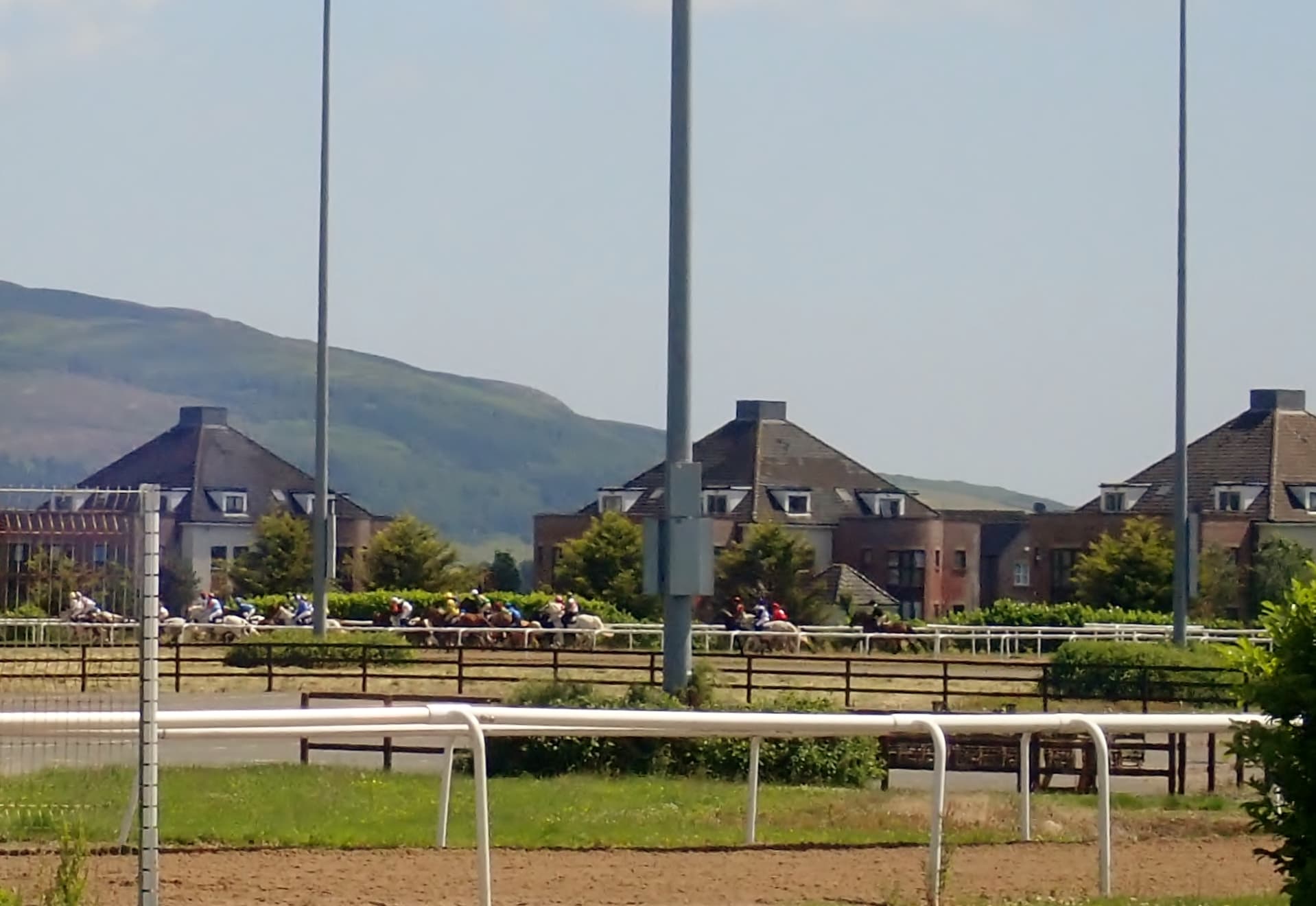
Betting at Dundalk Stadium
How Dundalk's floodlit Polytrack oval shapes betting, with the low-draw sprint bias, going, trainer and favourite form all set out honestly for the Friday-night Flat cards.
Read more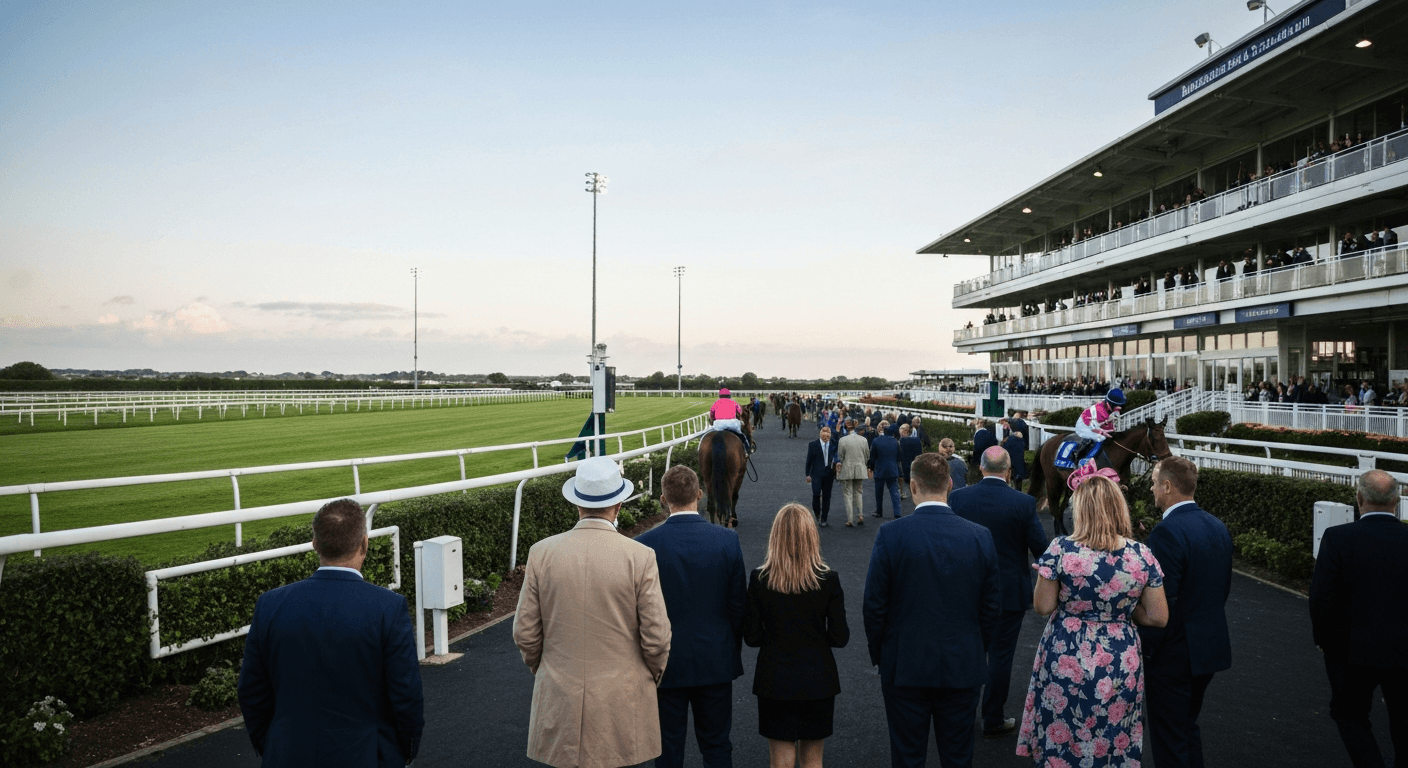
A Night Out at Dundalk Stadium
Plan a Friday night at Dundalk Stadium: getting there, tickets and the View Restaurant, food and bars, the best race nights, what to wear and first-visit tips.
Read more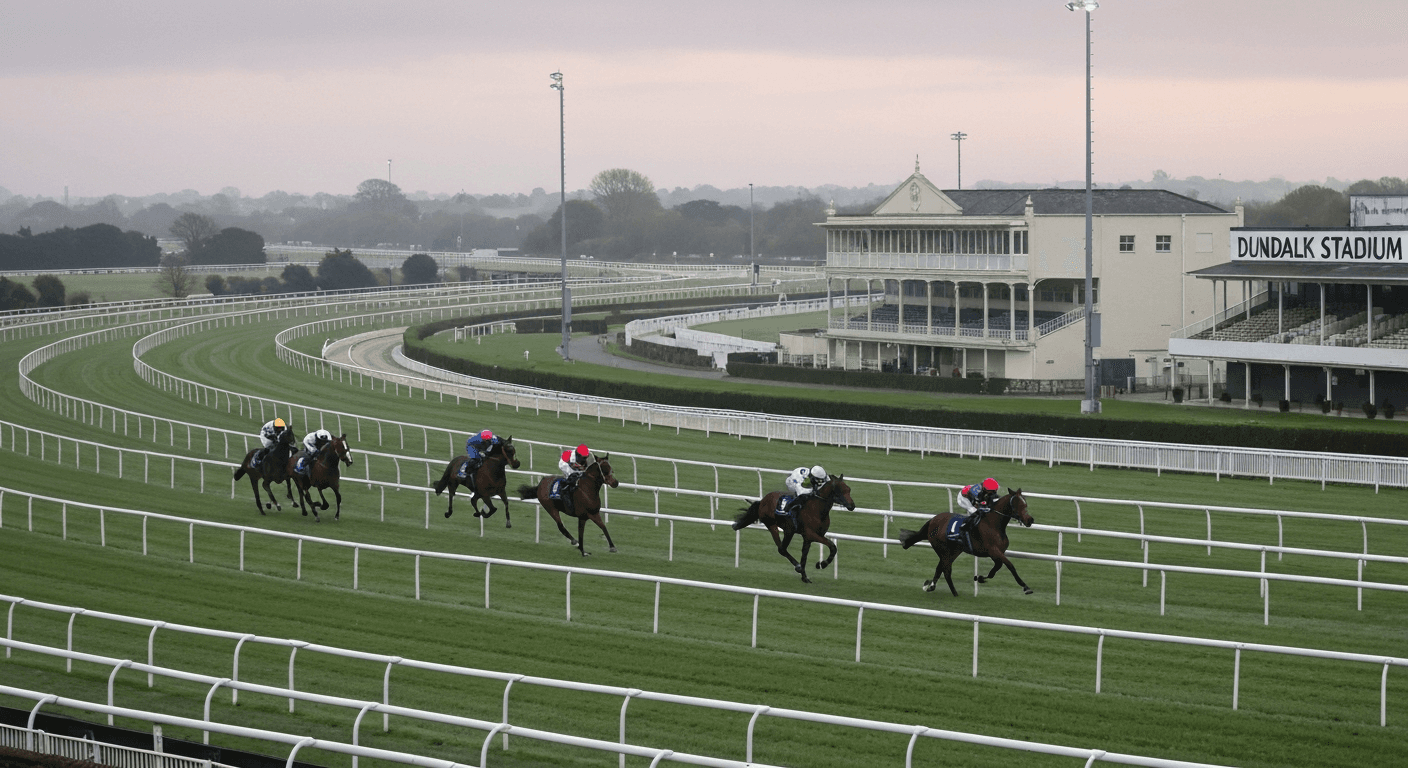
The History of Dundalk Stadium
How Dundalk went from an 1889 turf course to Ireland's only floodlit all-weather Flat track, home of the Mercury and Diamond Stakes, after a 35m euro rebuild.
Read morePhotos on this page are used under Creative Commons licences. Titles, sources and licence links for each one are on our image credits page.
Research the field with the AI Race Predictor
Our model publishes calibrated win-probability estimates for UK races — a second opinion to understand a race, not tips. It's open about its record: it doesn't beat the market, and we show exactly how it does.
Work it out & learn the basics
Gamble Responsibly
Gambling should be entertaining and not seen as a way to make money. Never bet more than you can afford to lose. If you or someone you know has a gambling problem, help and support is available.