
Founder & Editor · Last reviewed 2026-07-13
Dundalk Stadium is unlike anywhere else in Irish racing. It is the country's only floodlit all-weather racecourse, a Polytrack oval in Co. Louth that runs Flat racing under lights on Friday evenings, week in and week out through the winter. The old turf course at Dowdallshill closed in 2001, and the all-weather track that replaced it opened in August 2007 as Ireland's first synthetic circuit. Horse Racing Ireland lists 43 fixtures a year here, with the card especially busy from late October to mid-March when the winter season runs weekly. It is also Europe's only combined horse and greyhound venue, with the dogs racing after the horses on the dual Friday nights.
For a punter, that all-weather character changes the questions worth asking. The surface is consistent, the going does not swing about the way a turf track's does, and the layout produces one feature that most of the Irish jumps courses simply do not have: a real, well-documented draw bias. On a floodlit oval with a tight turn not far after some of the starts, the stall a horse comes out of genuinely matters over the shorter trips. That makes Dundalk one of the few Irish tracks where the draw belongs near the front of your reading rather than as a footnote.
This guide walks through what the Polytrack oval asks of a runner, how the surface tends to ride, what the draw does over each trip, where the trainer, jockey and course-specialist angles sit, and what the favourite and form figures look like once you frame them honestly. That last word matters. Nothing here is a tip, and nothing here implies a way to profit. The plain truth of Flat betting is that backing the market leader blindly loses money to the starting price over time, and Dundalk is no exception. The aim is to understand the track, not to sell a system, and to stake only what you can afford to lose.
In order, this guide covers what the Polytrack oval asks, how the surface rides through the season, the draw trip by trip, the trainer, jockey and course-specialist angles, the favourites and form figures framed honestly, betting on the big nights, and answers to some common questions.
Where to Bet
Place your bets with a trusted, licensed bookmaker.

Promo code BETFRED50. New customers only. Register, deposit with a Debit Card, and place a first bet of £10+ at Evens (2.0)+ on Sports, to be settled within 7 days, to get £30 in Sports Free Bets and £20 in Bet Builder Free Bets within 24 hours of settlement. 7-day expiry. Eligibility & payment exclusions apply. Full T&Cs apply. Take Time to Think. BeGambleAware.org. 18+. Full T&Cs.

Promo code R30. New UK customers only, 18+. Register, deposit £10 or more, then place a £10 single cash bet at odds of 1/2 (1.5) or greater on any sports market (excluding Virtuals). Once the qualifying bet settles you get £30 in Free Bets (3 x £10) — the qualifying bet can win or lose. Free Bets are valid on any sports market excluding Virtuals, expire in 7 days, are non-withdrawable and must be used in full. Excluded deposit methods apply (including PayPal, Apple Pay, Skrill and NETELLER). Named bets such as Lucky 15 do not qualify. If you cash out the qualifying bet, or it is voided, you are no longer eligible for the offer. Ends 31.12.26. Full T&Cs apply. Please gamble responsibly. BeGambleAware.org. 18+. Full T&Cs.

Promo code BET40GET20. New UK customers, 18+. Register with the code and place a first bet of £40 or more at Evens (2.0) or greater. Receive 2 × £10 free bets: the first credited automatically once the qualifying bet settles, the second 24 hours later. Free bets must be placed at minimum odds of 4/1 (5.0), expire 24 hours after credit, and the free-bet stake is not returned with winnings. Debit card deposits only. Take Time to Think. BeGambleAware.org. 18+. T&Cs apply. Full T&Cs.

50% of your first-day net losses refunded as a free bet, capped at £25. New UK customers aged 18+ only. To qualify, deposit and place a first bet of £10 or more on any sport at minimum odds of evens (2.00), then place at least two further bets on different events, each worth at least 50% of your largest bet, all at evens (2.00) or greater. Losses are counted from your first settled bet until 23:59 the same day. Place a qualifying £10+ bet and you are guaranteed at least a £5 free bet. Bets placed at SP, void bets, cashed-out bets and bets struck with free bets do not count towards the offer. The free bet is credited the day after your qualifying bets settle and must be used within 7 days, after which it expires. It can be used at odds from 1/4 (1.25) up to 250/1 on singles and straight accumulators, but not on Trixie, Patent or Yankee style multiples. Free-bet stake is not returned with winnings. One offer per person, household, address, IP address and device. E-wallet deposits may not qualify, so check the cashier before depositing. Customers registered with GAMSTOP cannot claim. KYC identity verification must be completed before the free bet is credited. Take Time to Think. BeGambleAware.org. 18+. T&Cs apply. Full T&Cs.

New customers, 18+. Choose the sports bonus at sign-up, make a first deposit and receive a 100% bonus up to £50 in your Sports Bonus balance. To convert the bonus to cash, wager it 10x within 30 days. Single bets below Evens (2.00) do not qualify; accumulators do not qualify if any selection is below 1/2 (1.50). Virtual Sports, voided, cancelled, drawn, cashed-out and free-bet wagers do not count towards wagering. Only the first settled bet per event counts. Withdrawing before the wagering requirement is met forfeits the bonus balance including bonus winnings. Real-money funds are used before bonus funds. Deposits via Skrill or Neteller are not eligible. Not valid in conjunction with other promotions. Odds, bet and payment limits apply. 10bet general and promotion T&Cs apply. BeGambleAware.org. 18+. Full T&Cs.

New customers in Great Britain and Republic of Ireland, 18+. Place a £10 fixed-odds qualifying bet at minimum odds of 1/2 (1.50) — single or each-way (only the win part counts), pre-event or in-play, not cashed out early, within 28 days of opening the account. Receive up to £60 in bonuses credited over three days: 3 × £10 fixed-odds free bets (the first on settlement, then 24 and 48 hours later) plus 3 × £5 Total Goals FOOTBALL spread bets and 3 × £5 racing Winning Favourites spread bets, with a £1 racing Race Index spread bet as an extra on top. The spread bets need a full spread-betting account, opened within 28 days of the fixed-odds account and subject to Spreadex's eligibility and appropriateness checks. Free-bet stakes not returned with winnings; free bets valid 28 days from issue. IMPORTANT: the £5 credits are SPREAD bets — sports spread betting carries the risk that losses can exceed your stake. Sports spread-betting customers do not have Financial Ombudsman or FSCS recourse. Take Time to Think. BeGambleAware.org. 18+. T&Cs apply. Full T&Cs.

Promo code WELCOME15, entered under My Bonuses after registering. New UK customers, 18+. Place a first qualifying bet of at least £10 from your cash balance at odds of evens (2.0) or greater within 7 days of opening the account. Once the qualifying bet fully settles you receive £15 in free bets, credited as 3 x £5 tokens with set uses: one £5 accumulator free bet (minimum 4 legs, each leg at 2/5 or bigger), one £5 sports free bet (any market at evens or bigger) and one £5 Sub Cover free bet (selected football player markets at evens or bigger). Free-bet stakes are not returned with winnings. Free bets expire 7 days after they are credited. Void, cashed-out and partially cashed-out bets do not qualify. One offer per customer. Confirm the current terms on BetGoodwin's own welcome-offer page before claiming. Take Time to Think. BeGambleAware.org. 18+. T&Cs apply. Full T&Cs.

New UK customers, 18+. Minimum deposit £10. Place a £10 qualifying single at minimum odds of 1/2 (1.50), settled within 14 days. Receive £30 in free bets (stake not returned), split £20 for sportsbook use (2 x £10) and £10 for Bet Builder only (2 x £5); Bet Builder does not cover horse racing. Free bets must be accepted within 7 days and expire 7 days after acceptance. No promo code required. Best Odds Guaranteed on UK & Irish racing, subject to having staked over £25 in the previous seven days. Operated by LiveScore Betting and Gaming (Gibraltar) Ltd, UKGC 56859. Confirm the current terms on LiveScore Bet's own promotions page before claiming. Take Time to Think. BeGambleAware.org. 18+. T&Cs apply. Full T&Cs.
18+. BeGambleAware.org
What the Polytrack Oval Asks of a Horse
Start with the shape of the place, because the draw and the run of every race follow from it. Dundalk is a left-handed Polytrack oval of about one mile and two furlongs, roughly ten furlongs round, with a run-in of around two and a half furlongs to the line. It is a compact, uniform circuit, and the turns are a genuine part of the test rather than an afterthought. A horse that races keenly and gets shuffled wide round a bend on a track this size gives away ground it rarely gets back up a run-in of that length.
The starts are worth knowing in detail, because they explain a lot. A five-furlong chute joins the main course on the home bend just over three and a half furlongs from the finish, so sprinters race a short way before meeting the turn. The one-mile start sits in a short chute at the start of the back straight, which means minimum-trip races do not begin on a bend. Where a runner is drawn, and how quickly it can take up a position before the turn arrives, therefore counts for more here than on a wide, galloping course with long straights.
This is Flat racing only, on Polytrack, a wax-coated synthetic mix of silica sand, fibres, plastics and rubber. There are no hurdles or fences and never have been on the all-weather track, so every runner is a Flat horse being asked an all-weather question. The surface generally rides on the quick side, closer to good to firm or good turf than to soft, which shapes the type that goes well here. Horses that need give in the ground on turf are not always suited when they switch to the Polytrack.
In practical terms the layout rewards handy, adaptable types that can travel into a good position and hold it round the turns. Prominent racers are often favoured over the sprint trips, where getting to the bend on the right part of the track early is half the battle. Course form counts for a lot too. Some horses take to the specific demands of this surface and this shape and win here again and again, while others who look well treated on turf never reproduce it under lights. None of this is a selection method. It is a description of the questions the track asks, and the answers tend to favour speed, adaptability and proven all-weather form over turf reputation alone.
How the Polytrack Rides Through the Season
One of the reasons Dundalk fills so much of the winter calendar is that the Polytrack takes weather that would abandon a turf card. The synthetic surface is consistent from meeting to meeting, and it does not swing between firm and heavy the way turf does across a season. That reliability is part of what makes the all-weather times here so well recorded, and it means the ground itself is far less of a variable than it is at a jumps or turf Flat course.
The one point worth carrying into any race is how the surface actually rides. The Polytrack generally plays on the quick side, closer to good to firm or good turf than to soft. For betting, that has a practical read. A horse whose best turf form has come on soft or heavy ground is not guaranteed to bring it to Dundalk, because the demand here is different: it is a fast, even surface rewarding a horse that is comfortable at a good gallop rather than one that wants to slog through cut. Proven all-weather form, and Dundalk form in particular, tends to be a better guide than a smart soft-ground turf line.
The honest position is that the going at Dundalk is a contextual factor rather than a standalone angle. Because the surface is so consistent, the reading is less about guessing today's ground and more about whether a horse's best efforts have come on a fast, synthetic surface like this one. As always, this describes the conditions. It is not a recommendation to back or oppose anything.
The Draw: A Real Factor Over the Sprint Trips
This is the section where Dundalk parts company with most of Irish racing. On the jumps courses the draw barely registers, but on a floodlit all-weather oval with a turn soon after some of the starts, it is a real and well-documented factor. Low draws are favoured at Dundalk, and the strength of that edge depends heavily on the trip.
The bias is at its strongest over five and six furlongs. Over those trips runners meet a bend soon after the start, and a low draw keeps a horse on the inside for it, saving ground at exactly the point where ground is hardest to make up. The illustration most often quoted is stark: over six furlongs, at one point around half of the ten-plus-runner handicaps were won by the bottom third of the draw. That is a genuine structural feature of the sprint trips, not a one-off.
Over seven furlongs the picture softens. Runners have more time before the turn to secure a position, so outside draws are far less compromised and the bias is only slight. Over a mile there is only a slight edge to low numbers, helped by the fact that the one-mile start sits in a chute and does not begin on a bend at all. The pattern, in short, is a strong low-draw advantage over the minimum trips that fades as the distance climbs.
| Trip | Draw angle |
|---|---|
| 5f | Low draws strongly favoured; bend comes soon after the start |
| 6f | Low draws strongly favoured; at one point about half of 10-plus-runner handicaps won by the bottom third of the draw |
| 7f | Slight bias only; outside draws have time to get a position |
| 1m | Slight edge to low draws; start is in a chute, not on a bend |
Two honest caveats keep this in proportion. First, the draw works alongside pace and position, not instead of them. A prominent runner from a low stall that can take up its spot before the turn is doubly helped, while a low draw wasted by a slow start is worth much less. Second, and this is the point the whole guide keeps returning to, a known bias is not a licence to print money. The stall a horse comes out of is public information, the market can see it as clearly as you can, and it is already reflected in the price. A low draw over five furlongs is worth knowing about when you read a race. It does not, on its own, beat the starting price.
Trainer, Jockey and Course-Specialist Angles
Dundalk rewards two things above all when it comes to the people and horses behind the form: in-form yards and genuine course specialists. Because the winter season runs weekly and the surface is so consistent, the stables that treat Dundalk as a regular target tend to build up a clear feel for it, and their runners can string wins together in a way that is harder to sustain on turf.
Adrian Murray was the standout trainer at the track in 2025, and a yard operating at that level through a busy all-weather campaign is worth respecting on the night. On the highest-class evenings the leading British and Irish stables raid too. The 2025 Mercury Stakes, the track's top race, went to the Archie Watson-trained Spartan Arrow under Hollie Doyle, and the 2025 Diamond Stakes fell to Phantom Flight for George Scott. The bigger names in the record books run deeper still: Aidan O'Brien has won the Diamond Stakes with subsequent Group 1 horses including Mastercraftsman and Declaration Of War.
Course specialists are the other angle worth carrying. Some horses simply take to this surface and this shape. Togoville is the standout example, a noted Dundalk specialist with a reported 14 wins at the track for trainer Anthony McCann. A record like that is a reminder that all-weather form is often about which horses have proven they handle the specific demands here, rather than about turf reputation.
| Name | Angle at Dundalk |
|---|---|
| Adrian Murray | Standout trainer at the track in 2025 |
| Anthony McCann (with Togoville) | Course specialist; Togoville a reported 14 wins here |
| Aidan O'Brien | Diamond Stakes winners include Mastercraftsman and Declaration Of War |
| Archie Watson / Hollie Doyle | Won the 2025 Mercury Stakes with Spartan Arrow |
| George Scott | Won the 2025 Diamond Stakes with Phantom Flight |
The honest reading is the same as for any track. A hot yard or a proven course specialist is a real signal of quality and suitability, but it is a signal the whole market can read. When a stable is in form and a horse has course form, that is priced in, and the puzzle is usually which of the fancied runners rather than whether the fancied runners will go well. These are pointers for understanding a race, not a shortcut to value.
Favourites, Form Figures and the Honest Maths
Here is the part most betting guides skip, so it is worth being blunt. Favourites win their share of races at Dundalk, as they do everywhere, but backing the favourite, or any single mechanical angle, loses money to the starting price over time. That is not a Dundalk quirk. It is how the market works. The starting price already contains the public's best estimate of a horse's chance plus the bookmaker's margin, so a policy of backing the obvious time after time hands that margin away with every bet. No system, and no policy of backing favourites, is profitable over the long run.
The all-weather setting sharpens the point rather than softening it. Because the surface is consistent and the meetings come round weekly, the form is heavily exposed and closely studied. The same horses meet again and again, the draw is public, and the course specialists are well known. All of that information is in the prices. A market that is picked over this thoroughly leaves little slack for a blind angle to exploit, however sound the angle sounds when you describe it.
The feature results make the trap concrete. Look at the two big 2025 races below. The Diamond Stakes went to a well-backed favourite that duly obliged, while the Mercury Stakes was won by a 6/1 shot. Both are perfectly readable after the fact, and neither would have made you money as part of a mechanical rule: backing all favourites bleeds the margin, and backing bigger prices for the sake of it is no better.
| Race (2025) | Winner | SP | Detail |
|---|---|---|---|
| Mercury Stakes (5f, Group 3) | Spartan Arrow | 6/1 | Aged 5; Archie Watson / Hollie Doyle |
| Diamond Stakes (1m2f150y, Listed) | Phantom Flight | 3/1 fav | George Scott |
So how should the form figures be used? As a filter on understanding, not as a betting machine. Knowing that low draws help over the sprint trips, that the Polytrack rides on the quick side, that in-form yards and course specialists go well, and that prominent racers are often favoured over five and six furlongs, these things help you read why a result happened and judge whether a price looks fair. They do not, individually or together, hand you a profit. Anyone who tells you a course angle reliably beats the starting price is selling something. The realistic goal is to be better informed about the races, place fewer poor bets, and stake only what you can afford to lose. The honest bottom line is that betting at Dundalk, like betting anywhere, is a cost for entertainment over time, not a source of income.
Betting on the Big Nights
Dundalk's calendar is built on year-round Friday-evening race nights, with the greyhound racing following the horses on the dual cards. Most of those fixtures are competitive all-weather handicaps rather than black-type contests, and they bet accordingly: large-ish fields, exposed form, and the draw and pace angles from the earlier sections doing much of the work in reading a race. Two parts of the season stand out for the betting, and they are different in character.
The strongest fixture in racing-quality terms is the black-type night in late September and October built around the track's best races. The Mercury Stakes, a Group 3 over five furlongs run in late October, is the highest-class race Dundalk stages, and the Diamond Stakes, a Listed contest over one mile two furlongs and 150 yards in September or October, is its long-standing feature. Around them sit further Listed races such as the Legacy Stakes and Star Appeal Stakes for two-year-olds and the Cooley Fillies Stakes. These are small-field, class-driven races where the best horses tend to win, the markets are sharp, and the favourites are well found. The 2025 Diamond Stakes going to a 3/1 favourite is a fair picture of how these nights usually bet.
The other landmark is the Winter Series, the winter all-weather championship of handicaps that runs weekly from late October to March and culminates in the Winter Series Awards Day. The 2026 finale, on Friday 20 March, was built around several 15,000-euro handicaps restricted to horses that had run at Dundalk during the winter season. This is a different betting proposition to the black-type night: these are competitive handicaps for exposed all-weather horses, the kind of races where course form, the draw over the sprint trips, and a horse's proven liking for the surface all come into play.
A few honest points apply across all of it. The bigger-field handicaps are where the low-draw sprint edge is most worth weighing, and where pace and position matter most. The black-type races are class contests where the market is at its sharpest. The Winter Series handicaps reward course knowledge but are studied just as closely by everyone else. On every one of these nights the favourite still loses money backed blind over time, and the only sound rule is to stake what you can afford and treat any winnings as a bonus rather than a plan.
Frequently Asked Questions
Share this article
More about this racecourse
All dundalk guides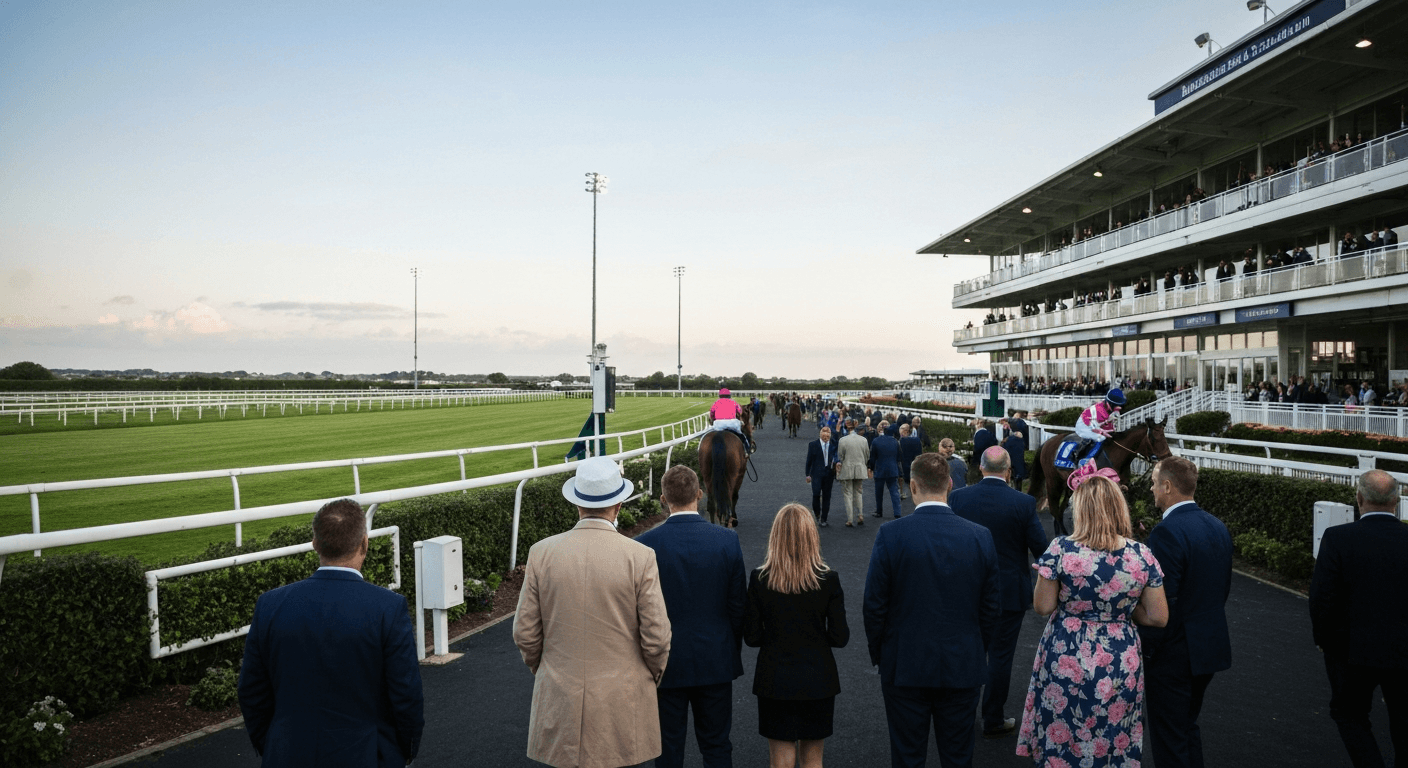
A Night Out at Dundalk Stadium
Plan a Friday night at Dundalk Stadium: getting there, tickets and the View Restaurant, food and bars, the best race nights, what to wear and first-visit tips.
Read more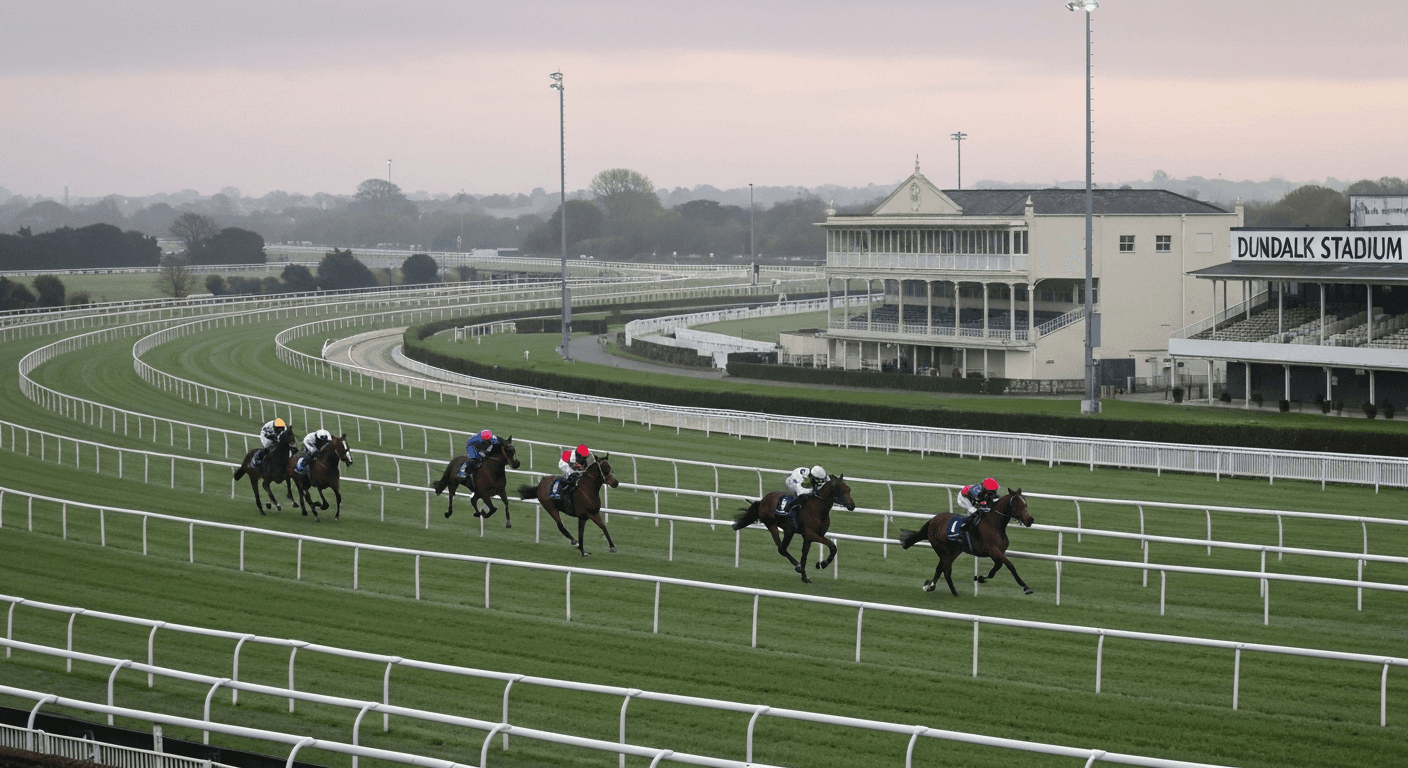
The History of Dundalk Stadium
How Dundalk went from an 1889 turf course to Ireland's only floodlit all-weather Flat track, home of the Mercury and Diamond Stakes, after a 35m euro rebuild.
Read more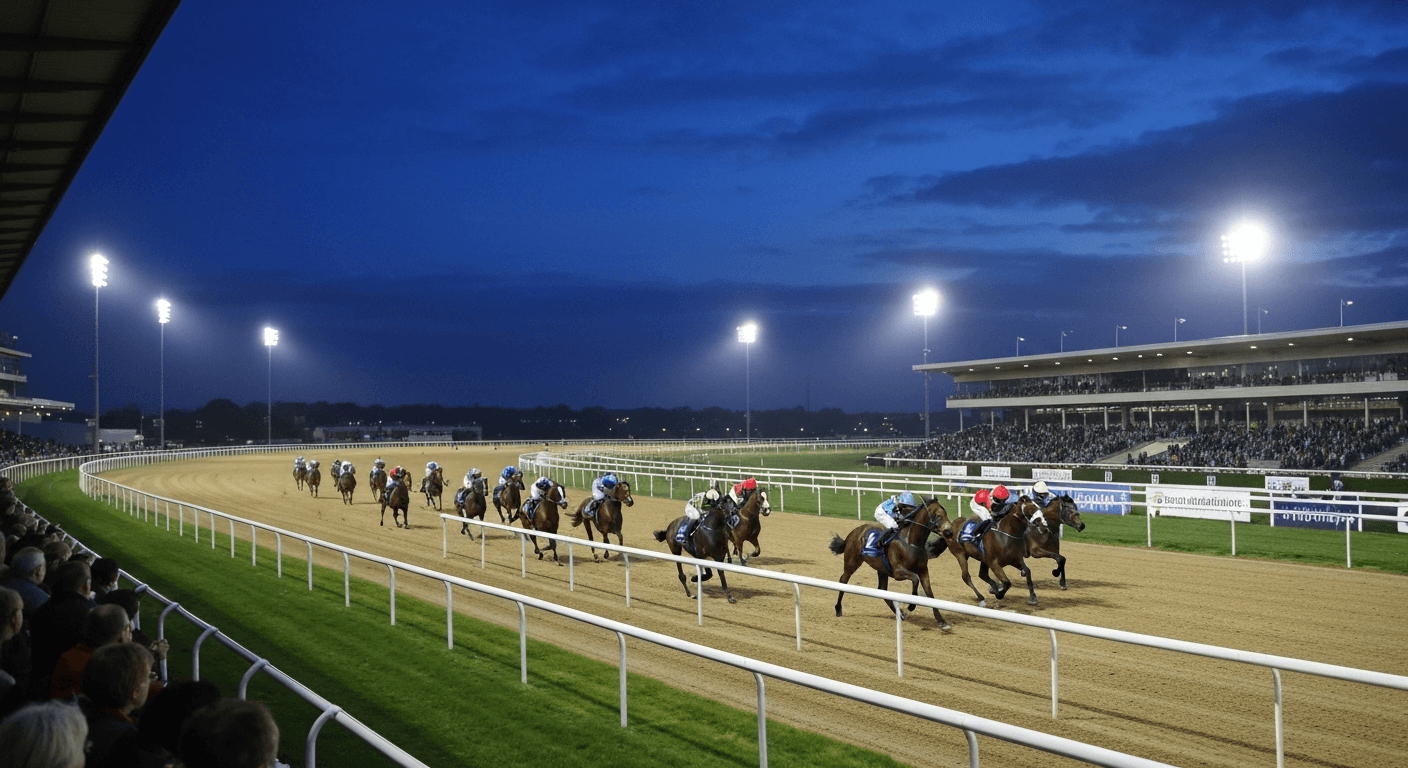
Dundalk Racecourse: The Complete Guide
Dundalk Racecourse, Ireland's only floodlit all-weather Flat track in Co. Louth, home of the Mercury and Diamond Stakes, plus tickets, travel and how to visit.
Read moreResearch the field with the AI Race Predictor
Our model publishes calibrated win-probability estimates for UK races — a second opinion to understand a race, not tips. It's open about its record: it doesn't beat the market, and we show exactly how it does.
Work it out & learn the basics
Gamble Responsibly
Gambling should be entertaining and not seen as a way to make money. Never bet more than you can afford to lose. If you or someone you know has a gambling problem, help and support is available.