
Founder & Editor · Last reviewed 2026-07-13
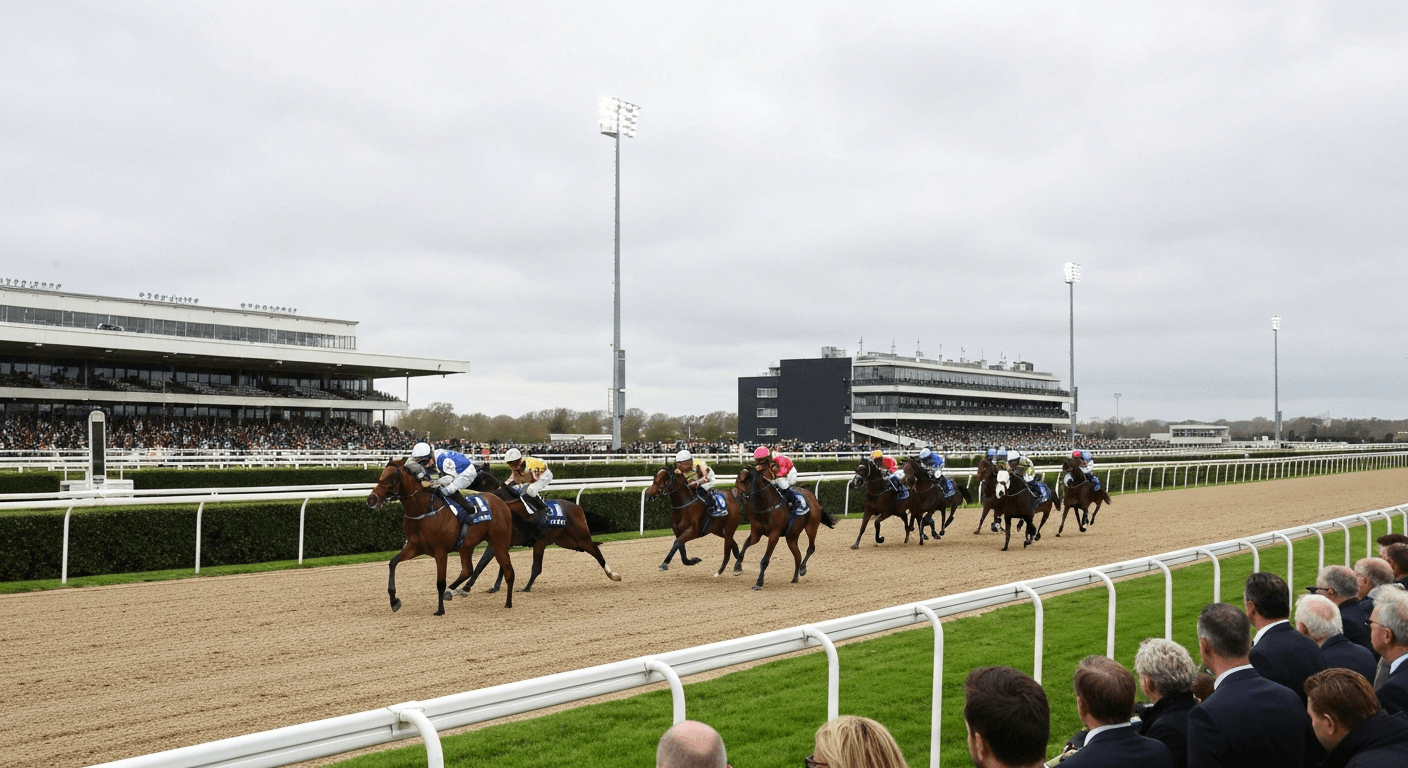
The Mercury Stakes is Dundalk's highest-class race. It is a Group 3 Flat sprint run over five furlongs on the floodlit Polytrack at Dundalk Stadium in Co. Louth, open to horses aged two and older, and it is worth watching for one plain reason: it is the best race Ireland's only all-weather track stages all year. Where most of Dundalk's programme is competitive handicaps and maidens under lights, the Mercury is black type, and it heads a floodlit Friday-night card in late October.
That setting is the whole point. Dundalk is the Republic of Ireland's only floodlit all-weather Flat racecourse, and its identity is built on Friday nights through the Irish winter, when the horse card runs under the lights and greyhound racing follows on the inner sand track. The Mercury takes that weekly routine and lifts it to Group level for one night. In 2025 it was run on Friday 24 October, worth €60,000, and won by Spartan Arrow for Archie Watson and Hollie Doyle.
The Mercury shares Dundalk's autumn black-type billing with the Listed Diamond Stakes, a middle-distance event over 1 mile 2 furlongs and 150 yards that has been the track's long-standing feature since it moved here in 2008. Between them, these two races give Dundalk its strongest fixtures of the year in racing-quality terms, distinct from the busier winter handicap nights that follow. Dundalk is also Europe's only combined horse-and-greyhound venue, and that dual format is part of what makes a night here unlike a raceday anywhere else in Ireland.
This guide covers the Mercury Stakes in full: the race and its conditions, its history and grade changes, the roll of honour, how the race and the track tend to bet, the wider autumn black-type nights it belongs to, and how to watch or attend. For the full profile of the venue, see the Dundalk Racecourse complete guide.
In this guide:
Where to Bet
Place your bets with a trusted, licensed bookmaker.

Promo code BETFRED50. New customers only. Register, deposit with a Debit Card, and place a first bet of £10+ at Evens (2.0)+ on Sports, to be settled within 7 days, to get £30 in Sports Free Bets and £20 in Bet Builder Free Bets within 24 hours of settlement. 7-day expiry. Eligibility & payment exclusions apply. Full T&Cs apply. Take Time to Think. BeGambleAware.org. 18+. Full T&Cs.

Promo code R30. New UK customers only, 18+. Register, deposit £10 or more, then place a £10 single cash bet at odds of 1/2 (1.5) or greater on any sports market (excluding Virtuals). Once the qualifying bet settles you get £30 in Free Bets (3 x £10) — the qualifying bet can win or lose. Free Bets are valid on any sports market excluding Virtuals, expire in 7 days, are non-withdrawable and must be used in full. Excluded deposit methods apply (including PayPal, Apple Pay, Skrill and NETELLER). Named bets such as Lucky 15 do not qualify. If you cash out the qualifying bet, or it is voided, you are no longer eligible for the offer. Ends 31.12.26. Full T&Cs apply. Please gamble responsibly. BeGambleAware.org. 18+. Full T&Cs.

Promo code BET40GET20. New UK customers, 18+. Register with the code and place a first bet of £40 or more at Evens (2.0) or greater. Receive 2 × £10 free bets: the first credited automatically once the qualifying bet settles, the second 24 hours later. Free bets must be placed at minimum odds of 4/1 (5.0), expire 24 hours after credit, and the free-bet stake is not returned with winnings. Debit card deposits only. Take Time to Think. BeGambleAware.org. 18+. T&Cs apply. Full T&Cs.

50% of your first-day net losses refunded as a free bet, capped at £25. New UK customers aged 18+ only. To qualify, deposit and place a first bet of £10 or more on any sport at minimum odds of evens (2.00), then place at least two further bets on different events, each worth at least 50% of your largest bet, all at evens (2.00) or greater. Losses are counted from your first settled bet until 23:59 the same day. Place a qualifying £10+ bet and you are guaranteed at least a £5 free bet. Bets placed at SP, void bets, cashed-out bets and bets struck with free bets do not count towards the offer. The free bet is credited the day after your qualifying bets settle and must be used within 7 days, after which it expires. It can be used at odds from 1/4 (1.25) up to 250/1 on singles and straight accumulators, but not on Trixie, Patent or Yankee style multiples. Free-bet stake is not returned with winnings. One offer per person, household, address, IP address and device. E-wallet deposits may not qualify, so check the cashier before depositing. Customers registered with GAMSTOP cannot claim. KYC identity verification must be completed before the free bet is credited. Take Time to Think. BeGambleAware.org. 18+. T&Cs apply. Full T&Cs.

New customers, 18+. Choose the sports bonus at sign-up, make a first deposit and receive a 100% bonus up to £50 in your Sports Bonus balance. To convert the bonus to cash, wager it 10x within 30 days. Single bets below Evens (2.00) do not qualify; accumulators do not qualify if any selection is below 1/2 (1.50). Virtual Sports, voided, cancelled, drawn, cashed-out and free-bet wagers do not count towards wagering. Only the first settled bet per event counts. Withdrawing before the wagering requirement is met forfeits the bonus balance including bonus winnings. Real-money funds are used before bonus funds. Deposits via Skrill or Neteller are not eligible. Not valid in conjunction with other promotions. Odds, bet and payment limits apply. 10bet general and promotion T&Cs apply. BeGambleAware.org. 18+. Full T&Cs.

New customers in Great Britain and Republic of Ireland, 18+. Place a £10 fixed-odds qualifying bet at minimum odds of 1/2 (1.50) — single or each-way (only the win part counts), pre-event or in-play, not cashed out early, within 28 days of opening the account. Receive up to £60 in bonuses credited over three days: 3 × £10 fixed-odds free bets (the first on settlement, then 24 and 48 hours later) plus 3 × £5 Total Goals FOOTBALL spread bets and 3 × £5 racing Winning Favourites spread bets, with a £1 racing Race Index spread bet as an extra on top. The spread bets need a full spread-betting account, opened within 28 days of the fixed-odds account and subject to Spreadex's eligibility and appropriateness checks. Free-bet stakes not returned with winnings; free bets valid 28 days from issue. IMPORTANT: the £5 credits are SPREAD bets — sports spread betting carries the risk that losses can exceed your stake. Sports spread-betting customers do not have Financial Ombudsman or FSCS recourse. Take Time to Think. BeGambleAware.org. 18+. T&Cs apply. Full T&Cs.

Promo code WELCOME15, entered under My Bonuses after registering. New UK customers, 18+. Place a first qualifying bet of at least £10 from your cash balance at odds of evens (2.0) or greater within 7 days of opening the account. Once the qualifying bet fully settles you receive £15 in free bets, credited as 3 x £5 tokens with set uses: one £5 accumulator free bet (minimum 4 legs, each leg at 2/5 or bigger), one £5 sports free bet (any market at evens or bigger) and one £5 Sub Cover free bet (selected football player markets at evens or bigger). Free-bet stakes are not returned with winnings. Free bets expire 7 days after they are credited. Void, cashed-out and partially cashed-out bets do not qualify. One offer per customer. Confirm the current terms on BetGoodwin's own welcome-offer page before claiming. Take Time to Think. BeGambleAware.org. 18+. T&Cs apply. Full T&Cs.

New UK customers, 18+. Minimum deposit £10. Place a £10 qualifying single at minimum odds of 1/2 (1.50), settled within 14 days. Receive £30 in free bets (stake not returned), split £20 for sportsbook use (2 x £10) and £10 for Bet Builder only (2 x £5); Bet Builder does not cover horse racing. Free bets must be accepted within 7 days and expire 7 days after acceptance. No promo code required. Best Odds Guaranteed on UK & Irish racing, subject to having staked over £25 in the previous seven days. Operated by LiveScore Betting and Gaming (Gibraltar) Ltd, UKGC 56859. Confirm the current terms on LiveScore Bet's own promotions page before claiming. Take Time to Think. BeGambleAware.org. 18+. T&Cs apply. Full T&Cs.
18+. BeGambleAware.org
The Race
The Mercury Stakes is a Group 3 Flat race open to horses aged two and older, run over five furlongs on Dundalk's Polytrack. It is scheduled each year in October and heads a floodlit Friday-night card. The 2025 running was worth €60,000 in total, with about €36,000 to the winner; the 2019 Group 3 running was worth €75,000, with €45,001 to the winner. Recent sponsors include Al Basti Equiworld Dubai, William Hill in 2024, and Bar One Racing in 2025.
Five furlongs at Dundalk is a specialist test. The track is a left-handed Polytrack oval of about ten furlongs with a run-in of roughly two and a half furlongs, and the sprint start is in a chute that joins the main course on the home bend just over three and a half furlongs from the finish, so runners meet a turn soon after the break. That places a premium on early speed and a low draw, both of which matter more here than the bare form figures suggest. The wax-coated Polytrack rides on the fast side, broadly like good to firm ground on turf, so horses that need cut in the ground on grass are not always suited. A cutaway rail was introduced in December 2013 and the surface was refurbished in July 2015 to reduce kickback, both of which made the track fairer.
The table below sets out the race at a glance.
| Detail | Mercury Stakes |
|---|---|
| Grade | Group 3 (Listed until 2017) |
| Distance | 5f, Polytrack |
| Course | Dundalk Stadium, Co. Louth |
| Age | Two years and older |
| Month | October (floodlit Friday night) |
| Prize fund (2025) | €60,000 total, about €36,000 to the winner |
| 2025 sponsor | Bar One Racing |
| First run | 2008 (as a Listed race) |
| Group 3 since | 2018 |
Because it is a five-furlong all-weather sprint rather than a Classic trial or a staying handicap, the Mercury draws a mix of established Irish sprinters and British-trained raiders who travel over for the black-type prize and the sound surface. The 2025 winner, Spartan Arrow, came from Archie Watson's British yard and beat the favourite West Acre by three-quarters of a length. That pattern, a competitive small-to-medium field of proven sprinters, is typical of the race.
The Mercury sits alongside the Listed Diamond Stakes, run over 1 mile 2 furlongs and 150 yards, as one of Dundalk's two black-type features each autumn. The two races are covered together through this guide because they define the track's strongest nights of the year.
History
The Mercury Stakes is a young race by the standards of Irish black type. It was first run in 2008, the year Dundalk reopened as an all-weather track, and it started life as a Listed event. Dundalk's Polytrack had officially opened on 26 August 2007 after a €35m redevelopment of the old Dowdallshill site, and the new circuit needed feature races to anchor its calendar. The Mercury, a five-furlong sprint under lights, filled that role from the start.
Borderlescott won the first running in 2008 for Robin Bastiman, sent off the 4/5 favourite. Over the following decade the race built a record as a reliable target for hardy sprinters, both Irish-trained and raiders from Britain, with Take Cover winning it twice, in 2015 and 2017, for David Griffiths. The all-weather surface was part of the appeal from the outset: a sound, consistent five furlongs under lights in late October, when turf sprints can be at the mercy of the weather.
The race gained its current standing in 2018, when it was upgraded from Listed to Group 3. That promotion came through the European Pattern Committee and gave Dundalk a graded sprint to sit alongside its middle-distance feature, the Diamond Stakes. From 2018 the roll of honour carries the higher grade.
The 2020 running holds a particular place in the race's story. It was run in memory of Pat Smullen, the nine-time Irish champion Flat jockey who rode his first and last winners at Dundalk and died in September 2020. Urban Beat took that renewal for J.P. Murtagh.
The race sits within the wider history of Dundalk itself, which is longer than the Mercury's own. Horse racing began at Dowdallshill in 1889, predominantly National Hunt on turf, and that turf track closed in 2001. The venue was rebuilt as a dual horse-and-greyhound stadium after the 1999 merger that formed Dundalk Racing (1999) Ltd, and the greyhound stadium reopened in 2003 before the all-weather horse track followed in 2007. The Mercury is a product of that modern era: a floodlit, all-weather sprint that could only exist once Dundalk had its Polytrack. For the founding of the track and its wider past, see the Dundalk Racecourse complete guide.
The Roll of Honour
The Mercury Stakes has no single dominant champion. Its story is one of tough, repeatable sprinters, and the standout is Take Cover, who won it twice, in 2015 and 2017, for David Griffiths. On the training side, Griffiths and Daniel Murphy have each saddled two winners, and Stevie Donohoe is the leading jockey with two wins. The biggest-priced winner in the race's recent history was Dun Na Sead, successful at 25/1 in 2023 for Daniel Murphy.
The roll of honour below runs from the first Listed running in 2008 to 2025. The race was Listed from 2008 to 2017 and has been Group 3 since 2018. Starting prices are given only where they are confirmed; where a price could not be verified, the SP column shows n/a.
| Year | Winner | Jockey | Trainer | SP |
|---|---|---|---|---|
| 2008 | Borderlescott | Pat Cosgrave | Robin Bastiman | 4/5F |
| 2009 | Arganil | K. Latham | Kevin Ryan | 5/1 |
| 2010 | Invincible Ash | G.F. Carroll | M. Halford | 13/2 |
| 2011 | Nocturnal Affair | C. O'Donoghue | David Marnane | 5/2 |
| 2012 | Balmont Mast | J.P. Murtagh | Edward Lynam | 7/2 |
| 2013 | Timeless Call | P.J. Smullen | Reginald Roberts | 6/1 |
| 2014 | Sir Maximilian | Stevie Donohoe | Ian Williams | n/a |
| 2015 | Take Cover | David Allan | David Griffiths | n/a |
| 2016 | Caspian Prince | Declan McDonogh | Roger Fell | n/a |
| 2017 | Take Cover | David Allan | David Griffiths | n/a |
| 2018 | Hit The Bid | n/a | n/a | n/a |
| 2019 | Dr Simpson | Rory Cleary | Tom Dascombe | 16/1 |
| 2020 | Urban Beat | Ben Coen | J.P. Murtagh | 11/2 |
| 2021 | The Highway Rat | Ronan Whelan | Andrew Oliver | n/a |
| 2022 | Manaccan | Stevie Donohoe | J. Ryan | n/a |
| 2023 | Dun Na Sead | Oisin McSweeney | Daniel Murphy | 25/1 |
| 2024 | Ostraka | James Ryan | Daniel Murphy | n/a |
| 2025 | Spartan Arrow | Hollie Doyle | Archie Watson | 6/1 |
The 2025 running was a good example of what the Mercury asks for. Spartan Arrow, trained in Britain by Archie Watson, was ridden by Hollie Doyle from a wide draw in stall 13 and beat the favourite West Acre by three-quarters of a length. It was Doyle's second Irish winner, both at Group level, and it showed that a well-drawn or well-ridden raider can beat the home defence in a Group 3 sprint on the Polytrack.
The race also reflects the trainers who make Dundalk their winter home. Mick Halford, listed here as the winning trainer of Invincible Ash in 2010, has trained more winners at the track than anyone, and the venue rewards yards that know the surface. That is a track-level pattern rather than a Mercury-specific one, but it runs through the roll of honour: several winners came from stables that use Dundalk heavily through the all-weather season.
For the longer list of horses who have defined the track as a whole, including the course specialist Togoville and his reported 14 wins at Dundalk, see the legends section of the Dundalk Racecourse complete guide.
Betting Angles
The Mercury is a five-furlong all-weather sprint, and at Dundalk that means the draw is a genuine factor rather than a footnote. This is not a profitable angle, and none of what follows is a system. It is context that helps you read the race.
Dundalk has a well-documented low-draw bias, and it is strongest over exactly the Mercury's trip. Over five and six furlongs, roughly two-thirds of winners come from the lower half of the draw, because runners meet the home bend soon after the start and inside stalls save ground. The bias fades over seven furlongs and is only slight over a mile. Front-runners are also favoured over the sprint trips, since they can hold the inside line into and around the bend. The Polytrack rides like good to firm ground, so horses that want give underfoot on turf often fail to reproduce their grass form here.
The table sets out how the draw tends to play across Dundalk's trips.
| Trip | Draw effect |
|---|---|
| 5f | Strong low-draw bias, around two-thirds of winners from the lower half |
| 6f | Strong low-draw bias |
| 7f | Slight bias only |
| 1m | Marginal edge to low draws |
For the Mercury specifically, this means a wide draw is a real handicap that the form figures do not show. That said, the draw is not destiny. Spartan Arrow won the 2025 running from stall 13, a wide berth, which is a useful reminder that a good horse ridden well can overcome the bias. Treat the draw as one filter among several, alongside course form and proven ability on the surface, not as a guarantee.
The honest bottom line is the one that applies to every race. There is no reliable way to bet the Mercury, or any race, for profit over time. Favourites lose money to starting price across a long enough run, and so does backing course specialists, low-drawn runners, or any other pattern once the bookmaker's margin is taken into account. Draw and surface information can sharpen how you read a race; they cannot turn it into a winning strategy. Anything here is background, not advice, and prices on a well-publicised Group 3 tend to be sharp on the night.
Please gamble responsibly. Only ever stake what you can afford to lose, set your own limits, and never chase a loss. If betting is causing you or someone you know difficulty, free and confidential support is available from BeGambleAware or the National Gambling Helpline on 0808 8020 133.
The Autumn Black-Type Nights
The Mercury Stakes belongs to a short but real black-type season at Dundalk. Late September and October is when the track stages its highest-quality racing of the year, and the Mercury shares that billing with the Listed Diamond Stakes. The two feature races head separate floodlit Friday-night cards, and together they form Dundalk's strongest fixtures in racing-quality terms.
The Diamond Stakes is the older feature and the middle-distance counterpart to the Mercury's sprint. It is a Listed race over 1 mile 2 furlongs and 150 yards for horses aged three and older, worth €45,000 in 2025, with €27,000 to the winner. It moved to Dundalk in 2008, having previously been staged at Phoenix Park, the Curragh from 1991, and Fairyhouse in 2006 and 2007. The Diamond has the more decorated grade history: it was promoted to Group 3 in 2009, becoming Ireland's first non-turf Group race, and was part of the Breeders' Cup Challenge series before being downgraded back to Listed from 2022. Aidan O'Brien is its leading trainer with eight wins, and Phantom Flight took the 2025 running for George Scott and Seamie Heffernan at 3/1 favourite.
Around these two features sit Dundalk's other black-type and pattern-level all-weather races through the autumn, including the Listed Legacy Stakes over five furlongs for two-year-olds, the Listed Star Appeal Stakes over seven furlongs for two-year-olds, and the Listed Cooley Fillies Stakes over a mile for fillies and mares. These fill out the quality end of the programme in October and early November.
From late October the character of the fixture list changes. Dundalk moves into its winter all-weather season, staging Flat racing weekly through to mid-March, and the emphasis shifts from black type to the Winter Series: a championship of handicaps that runs week by week and culminates in the Winter Series Awards Day, held in 2026 on Friday 20 March and built around €15,000 handicaps restricted to horses that ran at the track during the winter. That awards night is the richest handicap fixture of the season, but it is a different animal from the Diamond and Mercury nights, which remain the highest-class racing Dundalk offers.
For how the whole calendar fits together across the year, see the festivals and fixtures section of the Dundalk Racecourse complete guide.
Watching and Attending
Mercury Stakes night is a floodlit Friday. The race heads an evening card at Dundalk Stadium, and in 2025 it was run on Friday 24 October, off at 19:15. Dundalk's Friday fixtures are dual race nights: the horse card runs under the lights through the evening, and greyhound racing follows on the inner sand track, with the last dog race late in the night and music often afterwards. Doors typically open about an hour before the first horse race.
On television, Dundalk's Friday-evening fixtures are a staple of Racing TV, which has broadcast Irish racing since 2019, when the media rights covering Ireland's racecourses passed to Racecourse Media Group and SIS. If you cannot get to Co. Louth, that is where to find the Mercury.
For those attending, Dundalk is straightforward to reach. It sits just off the M1 at Junction 18, about 45 to 50 minutes from Dublin and around an hour from Belfast, with ample free parking for cars and coaches. By rail, Dundalk Clarke station is on the Dublin to Belfast line, about 4km from the stadium and a short taxi ride away. Dublin Airport is roughly 45 to 50 minutes by road.
Admission is modest by the standards of a Group race night. General admission has been around €10 for adults, €5 for seniors and students, and €2 for children under 14, bought at the gate or online, with children admitted free on some family nights. The stadium is a three-storey grandstand with elevated viewing over both the horse and greyhound tracks and an approximate capacity of 6,000.
If you want to make an evening of it, the trackside View Restaurant seats around 400 on an upper floor, with panoramic views over the track and the Cooley Mountains and table-side tote betting. The ground-floor Silks Carvery opens for every horse fixture with no need to pre-book, and there are several bars and a takeaway around the stands. Dress is smart casual, with sportswear and baseball caps discouraged in the hospitality areas.
Whether you watch on Racing TV or go under the lights, the Mercury is the one night to see Dundalk at its best: a Group 3 sprint on the Polytrack, floodlights on, and the winter all-weather season about to begin. For fuller detail on tickets, travel and hospitality, see the Dundalk Racecourse complete guide.
Frequently Asked Questions
Share this article
More about this racecourse
All dundalk guides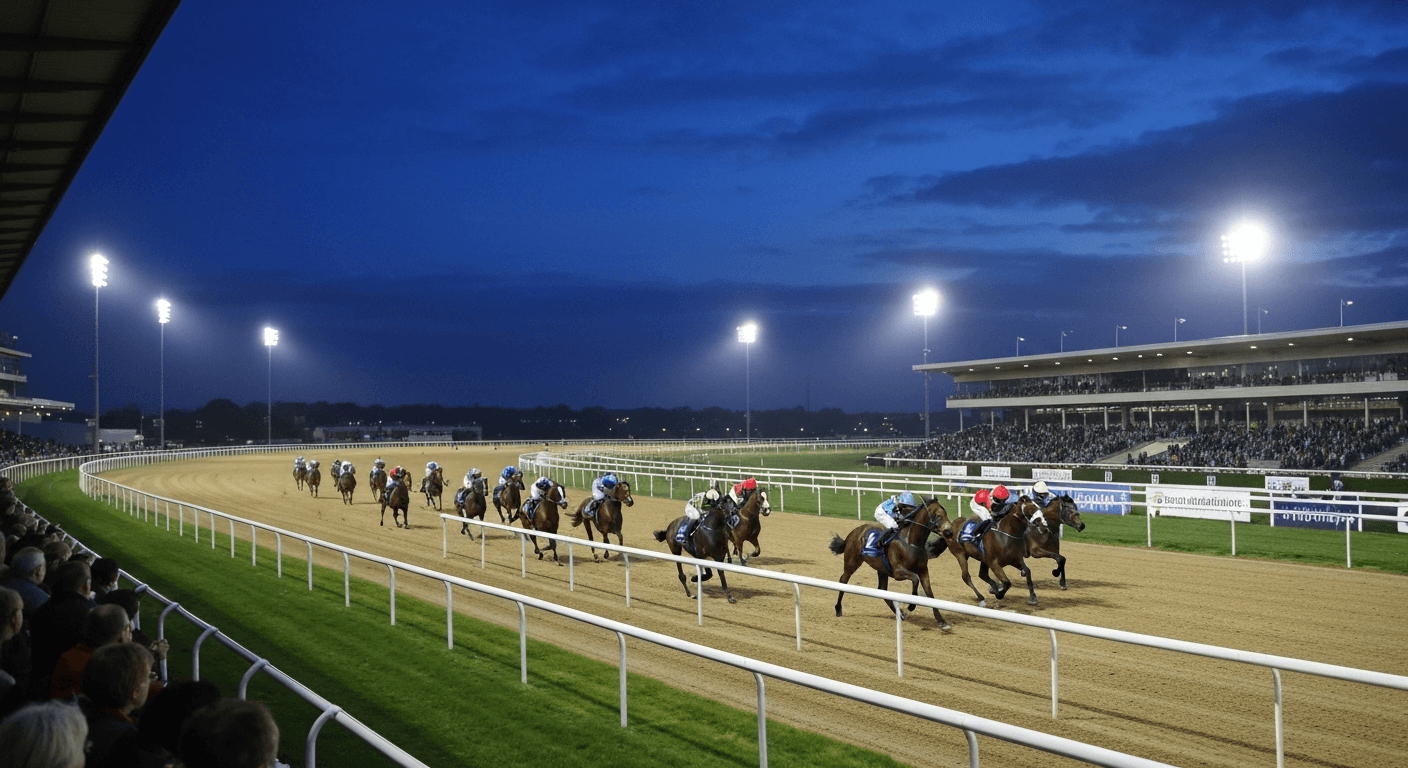
Dundalk: Ireland's Floodlit All-Weather Home
How Dundalk became the Republic's only floodlit all-weather Flat track and Europe's only combined horse-and-greyhound venue, racing on Friday nights.
Read more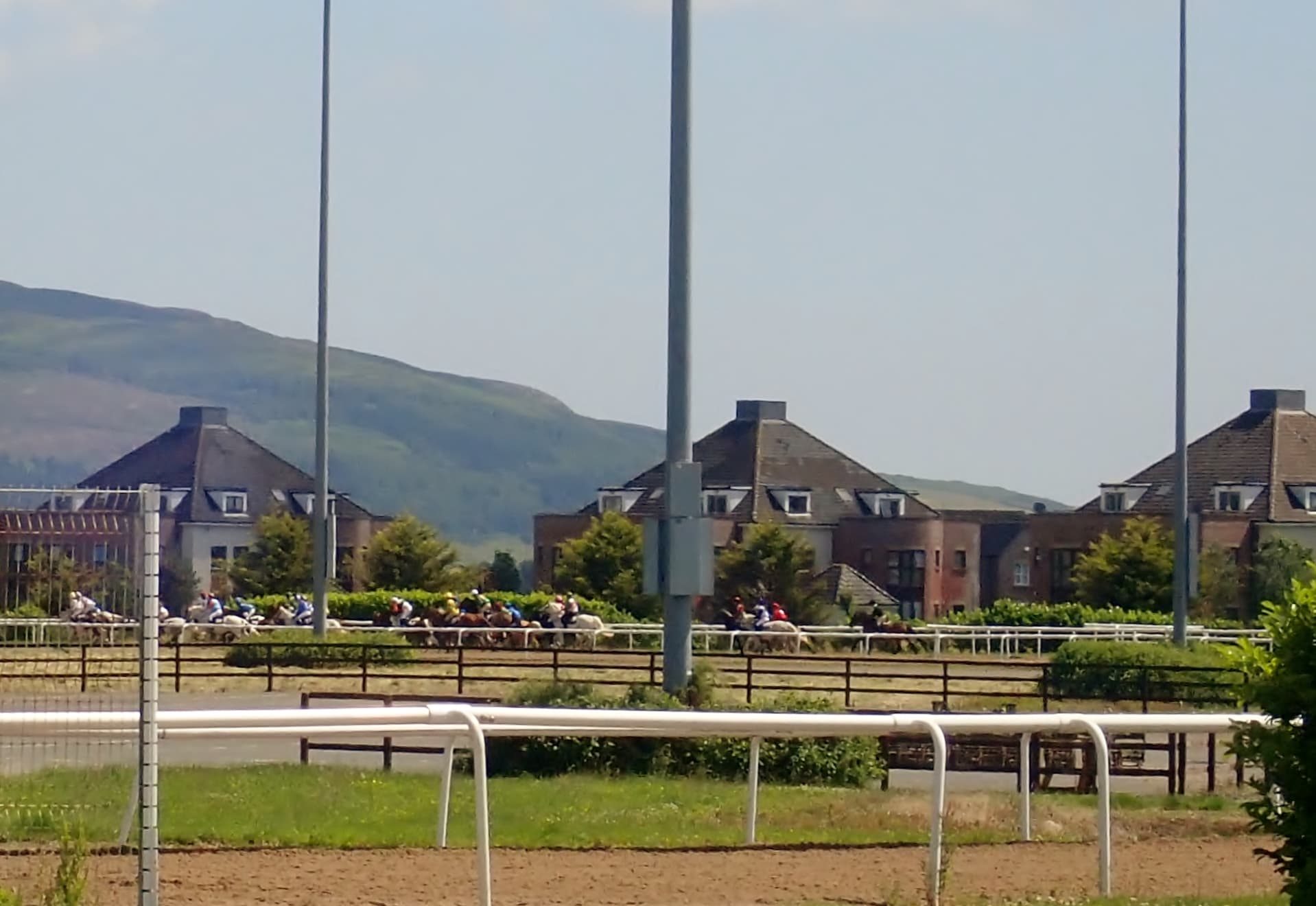
Betting at Dundalk Stadium
How Dundalk's floodlit Polytrack oval shapes betting, with the low-draw sprint bias, going, trainer and favourite form all set out honestly for the Friday-night Flat cards.
Read more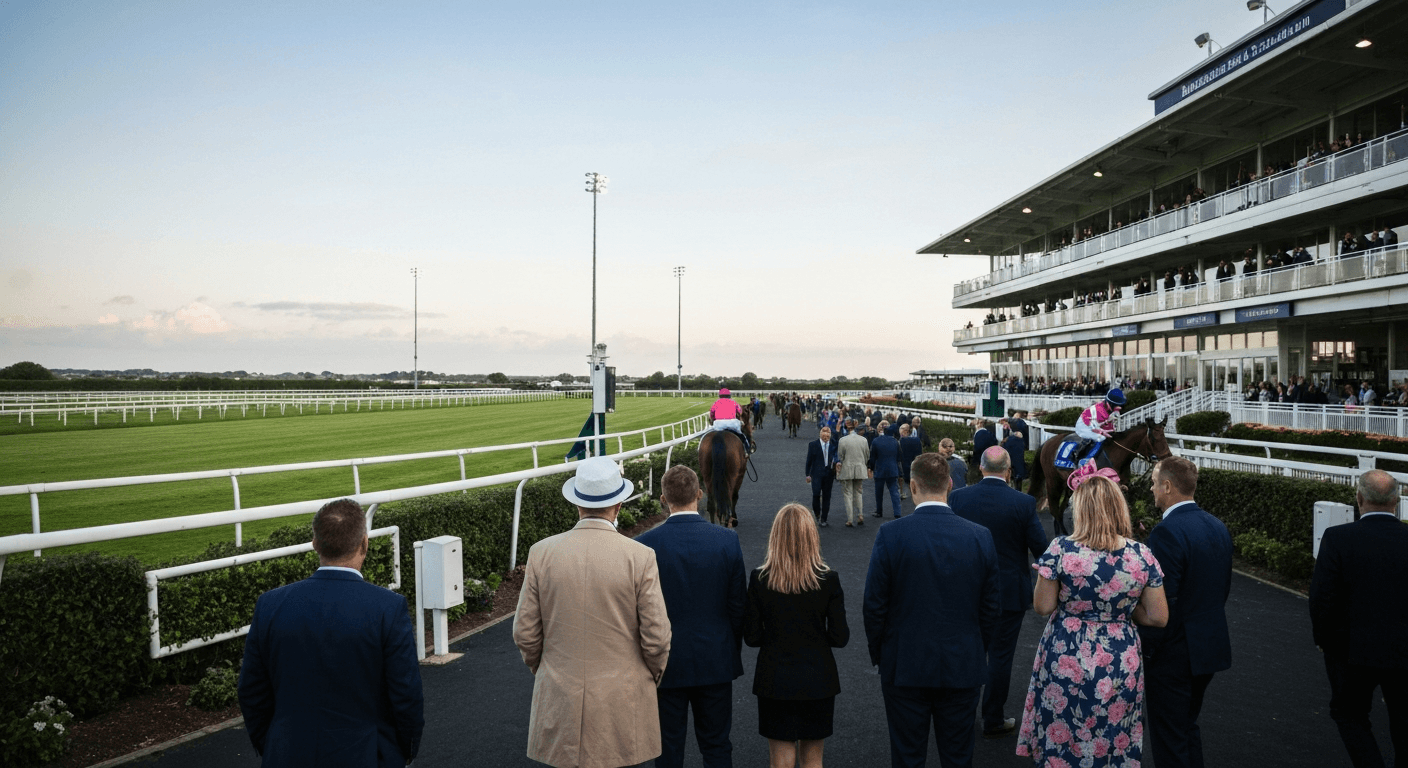
A Night Out at Dundalk Stadium
Plan a Friday night at Dundalk Stadium: getting there, tickets and the View Restaurant, food and bars, the best race nights, what to wear and first-visit tips.
Read morePhotos on this page are used under Creative Commons licences. Titles, sources and licence links for each one are on our image credits page.
Research the field with the AI Race Predictor
Our model publishes calibrated win-probability estimates for UK races — a second opinion to understand a race, not tips. It's open about its record: it doesn't beat the market, and we show exactly how it does.
Work it out & learn the basics
Gamble Responsibly
Gambling should be entertaining and not seen as a way to make money. Never bet more than you can afford to lose. If you or someone you know has a gambling problem, help and support is available.