
Founder & Editor · Last reviewed 2026-06-29
Galway: the festival track at Ballybrit
For one week at the end of July, a hillside in the townland of Ballybrit becomes one of the busiest places in Ireland. The Galway Races Summer Festival runs seven days, from the last Monday in July into early August, and it draws crowds that few sporting events in the country can match. In 2025 the week pulled in 125,997 racegoers, up nearly 10,000 on the year before, with Friday's 26,234 the single busiest day. This is not only a horse race meeting. It is a fixture in the social calendar of Galway city and the west of Ireland, with live music, packed pubs and a betting ring through which roughly a million euro passes on a good day.
Galway Racecourse, also known as Ballybrit, sits about 6 km northeast of Galway city, just off the N6. It is a dual-code track, staging both Flat racing and National Hunt jumps on turf, and it runs around 12 race days across the year: the seven-day summer festival, a two-day September meeting and October fixtures including a three-day meeting over the last weekend of the month. The Galway Race Committee owns and operates the course, with Michael Moloney as Chief Executive since 2015, succeeding his father John Moloney who managed the track from 1989.
The two races that define the place are both handicaps, not Grade 1s. The Tote Galway Plate, a chase first run in 1869, is the Wednesday centrepiece. The Guinness Galway Hurdle, added in 1913 and the richest hurdle race in Ireland, headlines Ladies' Day on the Thursday. Both carried a total prize fund of €270,000 in 2025. Large, competitive and hard to call, they are the betting heart of the week.
This guide is written for punters who want to understand Galway rather than be told what to back. It covers what the tight, undulating switchback circuit asks of a horse, the going and draw patterns that recur there, the two big handicaps as betting puzzles, and the trainers and jockeys whose records at the track are worth knowing. There are no tips here, and one honest theme runs throughout: over time, backing favourites to starting price loses money, because the price carries the bookmaker's margin.
This guide covers what the tight, sharp track asks of a horse, the going, draw and winning times, the Galway Plate and Galway Hurdle as handicap puzzles, the trainer and jockey angles worth knowing, the honest picture on favourites and form, and answers to common questions.
Where to Bet
Place your bets with a trusted, licensed bookmaker.

Promo code BETFRED50. New customers only. Register, deposit with a Debit Card, and place a first bet of £10+ at Evens (2.0)+ on Sports, to be settled within 7 days, to get £30 in Sports Free Bets and £20 in Bet Builder Free Bets within 24 hours of settlement. 7-day expiry. Eligibility & payment exclusions apply. Full T&Cs apply. Take Time to Think. BeGambleAware.org. 18+. Full T&Cs.

Promo code R30. New UK customers only, 18+. Register, deposit £10 or more, then place a £10 single cash bet at odds of 1/2 (1.5) or greater on any sports market (excluding Virtuals). Once the qualifying bet settles you get £30 in Free Bets (3 x £10) — the qualifying bet can win or lose. Free Bets are valid on any sports market excluding Virtuals, expire in 7 days, are non-withdrawable and must be used in full. Excluded deposit methods apply (including PayPal, Apple Pay, Skrill and NETELLER). Named bets such as Lucky 15 do not qualify. If you cash out the qualifying bet, or it is voided, you are no longer eligible for the offer. Ends 31.12.26. Full T&Cs apply. Please gamble responsibly. BeGambleAware.org. 18+. Full T&Cs.

Promo code BET40GET20. New UK customers, 18+. Register with the code and place a first bet of £40 or more at Evens (2.0) or greater. Receive 2 × £10 free bets: the first credited automatically once the qualifying bet settles, the second 24 hours later. Free bets must be placed at minimum odds of 4/1 (5.0), expire 24 hours after credit, and the free-bet stake is not returned with winnings. Debit card deposits only. Take Time to Think. BeGambleAware.org. 18+. T&Cs apply. Full T&Cs.

50% of your first-day net losses refunded as a free bet, capped at £25. New UK customers aged 18+ only. To qualify, deposit and place a first bet of £10 or more on any sport at minimum odds of evens (2.00), then place at least two further bets on different events, each worth at least 50% of your largest bet, all at evens (2.00) or greater. Losses are counted from your first settled bet until 23:59 the same day. Place a qualifying £10+ bet and you are guaranteed at least a £5 free bet. Bets placed at SP, void bets, cashed-out bets and bets struck with free bets do not count towards the offer. The free bet is credited the day after your qualifying bets settle and must be used within 7 days, after which it expires. It can be used at odds from 1/4 (1.25) up to 250/1 on singles and straight accumulators, but not on Trixie, Patent or Yankee style multiples. Free-bet stake is not returned with winnings. One offer per person, household, address, IP address and device. E-wallet deposits may not qualify, so check the cashier before depositing. Customers registered with GAMSTOP cannot claim. KYC identity verification must be completed before the free bet is credited. Take Time to Think. BeGambleAware.org. 18+. T&Cs apply. Full T&Cs.

New customers, 18+. Choose the sports bonus at sign-up, make a first deposit and receive a 100% bonus up to £50 in your Sports Bonus balance. To convert the bonus to cash, wager it 10x within 30 days. Single bets below Evens (2.00) do not qualify; accumulators do not qualify if any selection is below 1/2 (1.50). Virtual Sports, voided, cancelled, drawn, cashed-out and free-bet wagers do not count towards wagering. Only the first settled bet per event counts. Withdrawing before the wagering requirement is met forfeits the bonus balance including bonus winnings. Real-money funds are used before bonus funds. Deposits via Skrill or Neteller are not eligible. Not valid in conjunction with other promotions. Odds, bet and payment limits apply. 10bet general and promotion T&Cs apply. BeGambleAware.org. 18+. Full T&Cs.

New customers in Great Britain and Republic of Ireland, 18+. Place a £10 fixed-odds qualifying bet at minimum odds of 1/2 (1.50) — single or each-way (only the win part counts), pre-event or in-play, not cashed out early, within 28 days of opening the account. Receive up to £60 in bonuses credited over three days: 3 × £10 fixed-odds free bets (the first on settlement, then 24 and 48 hours later) plus 3 × £5 Total Goals FOOTBALL spread bets, 3 × £5 racing Winning Favourites spread bets and a £1 racing Race Index spread bet (the spread bets need a full spread-betting account). Free-bet stakes not returned with winnings; free bets valid 28 days from issue. IMPORTANT: the £5 credits are SPREAD bets — sports spread betting carries the risk that losses can exceed your stake. Sports spread-betting customers do not have Financial Ombudsman or FSCS recourse. Take Time to Think. BeGambleAware.org. 18+. T&Cs apply. Full T&Cs.

Promo code WELCOME15, entered under My Bonuses after registering. New UK customers, 18+. Place a first qualifying bet of at least £10 from your cash balance at odds of evens (2.0) or greater within 7 days of opening the account. Once the qualifying bet fully settles you receive £15 in free bets, credited as 3 x £5 tokens with set uses: one £5 accumulator free bet (minimum 4 legs, each leg at 2/5 or bigger), one £5 sports free bet (any market at evens or bigger) and one £5 Sub Cover free bet (selected football player markets at evens or bigger). Free-bet stakes are not returned with winnings. Free bets expire 7 days after they are credited. Void, cashed-out and partially cashed-out bets do not qualify. One offer per customer. Confirm the current terms on BetGoodwin's own welcome-offer page before claiming. Take Time to Think. BeGambleAware.org. 18+. T&Cs apply. Full T&Cs.

New UK customers, 18+. Minimum deposit £10. Place a £10 qualifying single at minimum odds of 1/2 (1.50), settled within 14 days. Receive £30 in free bets (stake not returned), split £20 for sportsbook use (2 x £10) and £10 for Bet Builder only (2 x £5); Bet Builder does not cover horse racing. Free bets must be accepted within 7 days and expire 7 days after acceptance. No promo code required. Best Odds Guaranteed on UK & Irish racing, subject to having staked over £25 in the previous seven days. Operated by LiveScore Betting and Gaming (Gibraltar) Ltd, UKGC 56859. Confirm the current terms on LiveScore Bet's own promotions page before claiming. Take Time to Think. BeGambleAware.org. 18+. T&Cs apply. Full T&Cs.
18+. BeGambleAware.org
What the tight, sharp, undulating track asks
Galway is a right-handed, undulating circuit of roughly a mile and a quarter to a mile and three furlongs (sources differ on the exact figure, and an official measurement is not published). It is best understood by its shape and its gradients rather than its length. The track is often called a "switchback": it climbs steeply through the back straight, drops sharply into a dip on the run to the home turn, and then asks for a stiff uphill finish of just over two furlongs, one of the toughest closing climbs anywhere in Britain or Ireland. The home straight itself is short, little more than a furlong. Put plainly, a horse has barely turned in before the line arrives, and it arrives uphill.
A premium on handiness
The single most important betting characteristic of Galway is that it rewards horses ridden prominently. The circuit is tight and constantly turning, and the run from the home turn to the line is too short for a hold-up horse to make up much ground. The numbers bear this out. Per Geegeez's Galway analysis, since 2009 hold-up horses in fields of eight or more in handicaps have won at just 4.18 per cent, one of the worst records for held-up horses at any Irish track. By contrast, a blanket bet on every front-runner in the same scenario would have returned a notional profit. The lesson is not that one running style guarantees anything, but that being out of position at Galway is expensive, and that tactical speed to race close to the pace is a genuine asset here.
That places weight on how a horse is likely to be ridden, on its early pace, and on the jockey's ability to get a handy pitch from the stalls or the start. In the big handicaps, where 18 to 22 runners can go to post, getting a clear early position matters even more, because the scramble to the first turn can leave slow-starting or wide-drawn horses with ground to make up that the track simply will not give back.
The jumping configuration
The jumps tracks add their own quirks. The chase course has seven fences per circuit, so the Galway Plate, run over two circuits, is contested over 14 fences. The final two fences are sited unusually close together in the back straight on the descent, and are widely described as the closest two fences of any course in the world. Clearing those in rhythm, on the drop and at speed, then mustering enough for the long uphill run-in, is a specific test. The hurdle course sits inside the chase course and is sharper still, with six flights per circuit; the Galway Hurdle is run over two miles and nine flights. On both codes, jumping fluently while travelling handily is the recurring theme. A horse that needs time to find its feet, or that wants to be produced late from off the pace, is fighting the track.
Going patterns, draw and winning times
Ground at Galway follows a seasonal rhythm worth keeping in mind when reading form. The summer festival is typically run on good to yielding ground. The course waters in dry spells to protect the surface, but Galway sits in the west of Ireland and rain frequently arrives mid-week, so the going can change across the seven days. The autumn meetings in September and October are run on softer ground as a rule. A horse that handled fast summer ground at the festival is not necessarily the same proposition on a soft October afternoon, and vice versa.
The draw on the Flat
Galway is unusual among turf tracks in showing a measurable draw bias on the Flat, a consequence of the short home straight and the always-turning, always-leaning-in shape of the circuit. Timeform's racecourse guide states it plainly: "The finishing straight is short at little more than a furlong. A low draw at 7f and 1m 100yds is a slight advantage." Geegeez's analysis adds that some residual bias persists even in longer-distance handicaps, most pronounced around 1m4f, where low-drawn or pace-pressing horses have held the edge, and notes that "some sort of advantage is gained at all flat distances for those on the lead."
Two caveats matter for punters. First, the edge is sensitive to ground: on firmer going low numbers are favoured more strongly, while on yielding or soft ground the draw advantage weakens. Second, and more importantly, position usually trumps the stalls. The consensus is that it matters less where a horse is drawn than how it is ridden. A high-drawn horse with the early pace to cross and lead can overcome an unfavourable berth, while a low-drawn horse that misses the break gives back its theoretical advantage. Treat the draw as one input that interacts with pace, not as a standalone signal.
Winning times and standard times
There is no published course-wide record or standard-times table from an authoritative source, so Galway is not a track where you can lean on a clean "course record" figure. What is available is the winning time for each individual race. As reference points, the 2023 Galway Hurdle was run in 3m 38.80s, and the 2025 Galway Hurdle in 3m 41.00s, the latter officially recorded as half a second slow of standard. Those single-race times reflect ground, pace and tactics as much as raw merit, so they are best read in context rather than as absolutes. For betting purposes, the going description and the likely pace shape of a race tell you more at Galway than any time figure will.
The Galway Plate and Galway Hurdle as handicap puzzles
The two races that frame the festival, and the two that attract the most betting money, are both big-field handicaps. That word matters. A handicap is designed to bring horses together on the weights, which makes both races genuinely competitive and genuinely hard to predict. Fields of 18 to 22 are common, and the winners come from a wide range of prices.
The Tote Galway Plate
The Plate is the Wednesday centrepiece, a Premier Handicap chase over 2m6½f and 14 fences for four-year-olds and up. It was first run in 1869, won by Absentee, and has been extended over the years to its current trip. In 2025 it carried €270,000 in total prize money, €162,000 to the winner. The race demands a horse that can jump the unusually close final two fences in rhythm on the descent and then stay on up the long uphill run-in, all from a handy position.
Recent winners and their starting prices tell the story of how open the race is:
| Year | Winner | Trainer | SP |
|---|---|---|---|
| 2025 | Western Fold | Gordon Elliott | 11/1 |
| 2024 | Pinkerton | Noel Meade | 20/1 |
| 2023 | Ash Tree Meadow | Gordon Elliott | 13/2 |
| 2022 | Hewick | Shark Hanlon | 16/1 |
| 2021 | Royal Rendezvous | Willie Mullins | 5/1 fav |
| 2020 | Early Doors | Joseph O'Brien | 7/1 |
| 2019 | Borice | Gordon Elliott | 9/1 |
| 2018 | Clarcam | Gordon Elliott | 33/1 |
| 2017 | Balko Des Flos | Henry de Bromhead | 6/1 |
| 2016 | Lord Scoundrel | Gordon Elliott | 10/1 |
Going further back, Carlingford Lough (2013) and Bob Lingo (2012) figure on the roll, while Ansar won back-to-back for Dermot Weld in 2004 and 2005, and Life Of A Lord did the same for Aidan O'Brien in 1995 and 1996. The most successful horse in the race's history is Tipperary Boy, who won three times around the turn of the twentieth century in 1899, 1901 and 1902. The pattern in the modern prices is clear: outsiders win this race regularly. Clarcam landed it at 33/1, Pinkerton at 20/1, and only a couple of recent winners started favourite. A short price is no guarantee of anything in a race built to be a leveller.
The Guinness Galway Hurdle
The Hurdle is the Thursday, Ladies' Day headline: a Premier Handicap over two miles and nine flights for four-year-olds and up, elevated to graded status in 2014 and the richest hurdle race in Ireland, also worth €270,000 in 2025. First run in 1913 and won by Red Damsel, it shares the Plate's character as a large-field, competitive puzzle.
| Year | Winner | Trainer | SP |
|---|---|---|---|
| 2025 | Ndaawi | Gordon Elliott | 13/2 |
| 2024 | Nurburgring | Joseph O'Brien | 13/2 |
| 2023 | Zarak The Brave | Willie Mullins | 9/2 |
| 2022 | Tudor City | Tony Martin | 22/1 |
| 2021 | Saldier | Willie Mullins | 18/1 |
| 2020 | Aramon | Willie Mullins | 7/1 |
| 2019 | Tudor City | Tony Martin | 10/1 |
| 2018 | Sharjah | Willie Mullins | 12/1 |
| 2017 | Tigris River | Joseph O'Brien | 5/1 |
| 2016 | Clondaw Warrior | Willie Mullins | 9/2 fav |
| 2015 | Quick Jack | Tony Martin | 9/2 |
| 2014 | Thomas Edison | Tony Martin | 7/2 fav |
The 2025 running added a stewards' twist: Helvic Dream passed the post first by a head but was demoted for causing interference, and the race was awarded to Ndaawi, a decision an IHRB Appeals Committee upheld on 13 August 2025. Tudor City (2019 and 2022) is the only dual winner since 1988 and ran at every festival from 2015, a reminder that a proven Galway specialist can outrun its odds when others bounce around. As with the Plate, double-figure prices are routine here, and favourites win only occasionally.
Completing the Plate and Hurdle in the same week is rare. Per Racing Post's count only four horses have ever done the Plate-Hurdle double, the most recent being Ansar, which is part of why his name still carries weight at Ballybrit.
Trainer and jockey angles: Weld, Mullins, Elliott and the rest
Galway is a track where a handful of names recur in the results year after year. Knowing who has the record there, and in which races, is part of reading the form intelligently, though a strong yard is no substitute for an honest assessment of price.
Dermot Weld, the King of Ballybrit
No trainer is more associated with the track than Dermot Weld. He has been crowned leading trainer at the summer festival on 30 occasions, per The Irish Times, and saddled his 500th career Galway winner at the track in 2022, with well over 500 in total. Of 735 races run at Galway across a recent multi-year count, 84 went to Weld. His link with the place runs deep: he first won there as a 15-year-old amateur, partnering Ticonderoga to win the big amateur race in 1964. His stable star Ansar is the ultimate Galway specialist, winning seven races at the festival across all three codes, including the 2001 Hurdle and back-to-back Plates in 2004 and 2005.
The modern jumps powers
In the National Hunt sphere, two yards dominate the headline races. Gordon Elliott is the outright record-holder in the Galway Plate with five wins: Lord Scoundrel (2016), Clarcam (2018), Borice (2019), Ash Tree Meadow (2023) and Western Fold (2025). His relationship with the Hurdle was the opposite story for years; he had gone 0-from-35 before finally landing it in 2025 with Ndaawi, completing a Plate-Hurdle double in the same week.
Willie Mullins holds the record in the Galway Hurdle with six wins: Mystical City (1996), Clondaw Warrior (2016), Sharjah (2018), Aramon (2020), Saldier (2021) and Zarak The Brave (2023). He has also won the Plate, with Royal Rendezvous in 2021, and was leading festival trainer for a tenth time in 2025. Tony Martin is the other Hurdle specialist to note, with four wins (Thomas Edison 2014, Quick Jack 2015, Tudor City 2019 and 2022). Noel Meade has taken two Plates (Road To Riches 2014, Pinkerton 2024) plus Hurdles including More Rainbows in 2005, and Joseph O'Brien has become a leading Flat trainer at the track while also winning the Plate (Early Doors 2020) and two Hurdles (Tigris River 2017, Nurburgring 2024).
The jockeys
In the saddle, Patrick Mullins is the leading Galway Hurdle rider since 1988 with three wins (Sharjah, Aramon, Saldier). The Galway-born Danny Gilligan has a strong recent Plate record, winning in both 2023 and 2025, while Donagh Meyler won the Plate in 2016 and again on Pinkerton in 2024. Paul Townend and Jack Kennedy lead the current National Hunt riding ranks at the festival, with Kennedy top jump jockey in 2025 on four winners. On the Flat, Dylan Browne McMonagle and Colin Keane are the riders to follow, McMonagle finishing top Flat jockey at the 2025 festival.
A note on strike rates
These names win because they bring large, strong teams, and the raw numbers reflect volume as much as a Galway edge. A 2024 sample shows the scale: Willie Mullins had 60 runners for 7 winners, Gordon Elliott 53 runners for 8 winners at a 15 per cent strike rate, and Joseph O'Brien 59 runners for 9 winners. Strong yards send a lot of horses to Ballybrit, and a lot of them get beaten. In 2024, 30 different trainers won races across the week. A fashionable trainer or jockey is a reason to look closely at a runner, never a reason to ignore the price.
Favourites, field sizes and form: the honest picture
For all the angles a punter can study at Galway, the festival's defining betting feature is that it is hard. The big races are large-field handicaps built to bring horses together on the weights, and the results spread across a wide band of prices. Field sizes of 18 to 22 in the Plate and Hurdle are normal, 30 different trainers won races across the 2024 week, and double-figure-priced winners are routine rather than exceptional. The form is competitive by design, which is precisely why the meeting is such a magnet for both punters and bookmakers.
What the prices tell you
Look back at the headline rolls of honour and the favourite's record is patchy. In the Galway Plate, recent winners have come in at 33/1 (Clarcam), 20/1 (Pinkerton), 16/1 (Hewick) and 11/1 (Western Fold), with only the odd favourite, such as Royal Rendezvous in 2021, getting the job done. The Galway Hurdle is much the same: 22/1 (Tudor City), 18/1 (Saldier) and 12/1 (Sharjah) winners sit alongside the occasional well-backed favourite like Clondaw Warrior or Thomas Edison. That spread is not random noise. It is what a competitive handicap is supposed to produce.
The honest line on favourites
It is worth being clear about a point that no amount of course knowledge changes. Backing favourites is not a profitable strategy. Over time, backing every favourite to starting price produces a loss, because the SP carries the bookmaker's margin, the overround built into the prices. This is a well-established feature of betting markets, not a Galway quirk, and it holds across every track and every meeting. The short price on a strong yard's runner reflects information the market has already absorbed; it does not hand you an edge.
Nothing in this guide is advice, and no staking method, system or "back the favourite" approach beats starting price in the long run. What the guide offers instead is context: a tight, undulating, right-handed switchback that punishes hold-up horses and rewards handiness; a draw and pace pattern that interacts with the ground; two valuable handicaps that reward proven course form and stamina for the uphill finish; and a roster of trainers and jockeys whose records are worth knowing. Use those factors to understand a race more fully. Treat them as inputs into your own judgement of value, and remember that at a meeting this competitive, discipline about price matters more than any single angle.
Frequently Asked Questions
Share this article
More about this racecourse
All galway guides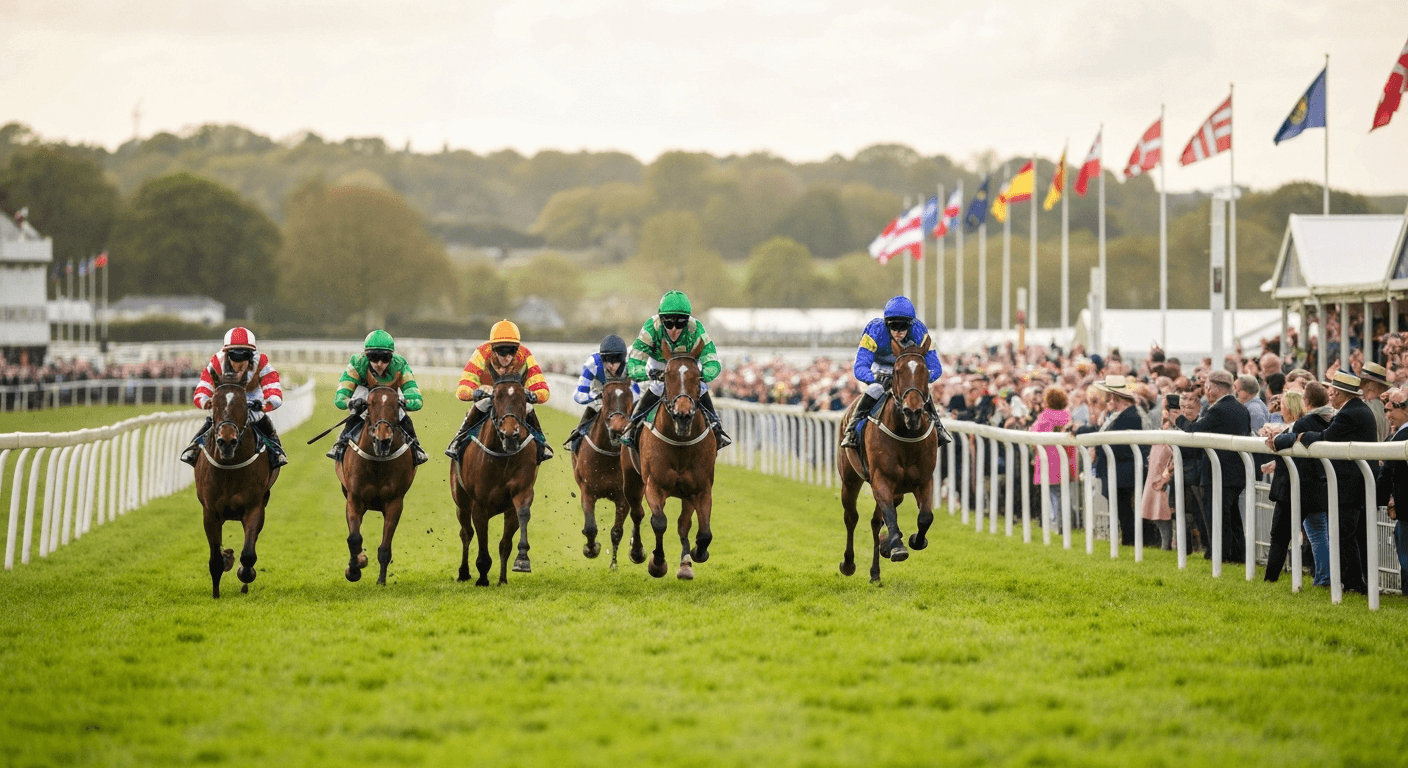
The Galway Festival: A Complete Guide
Your complete guide to the seven-day Galway Festival at Ballybrit: the day-by-day shape, the Galway Plate and Hurdle, Ladies' Day and going to Galway.
Read more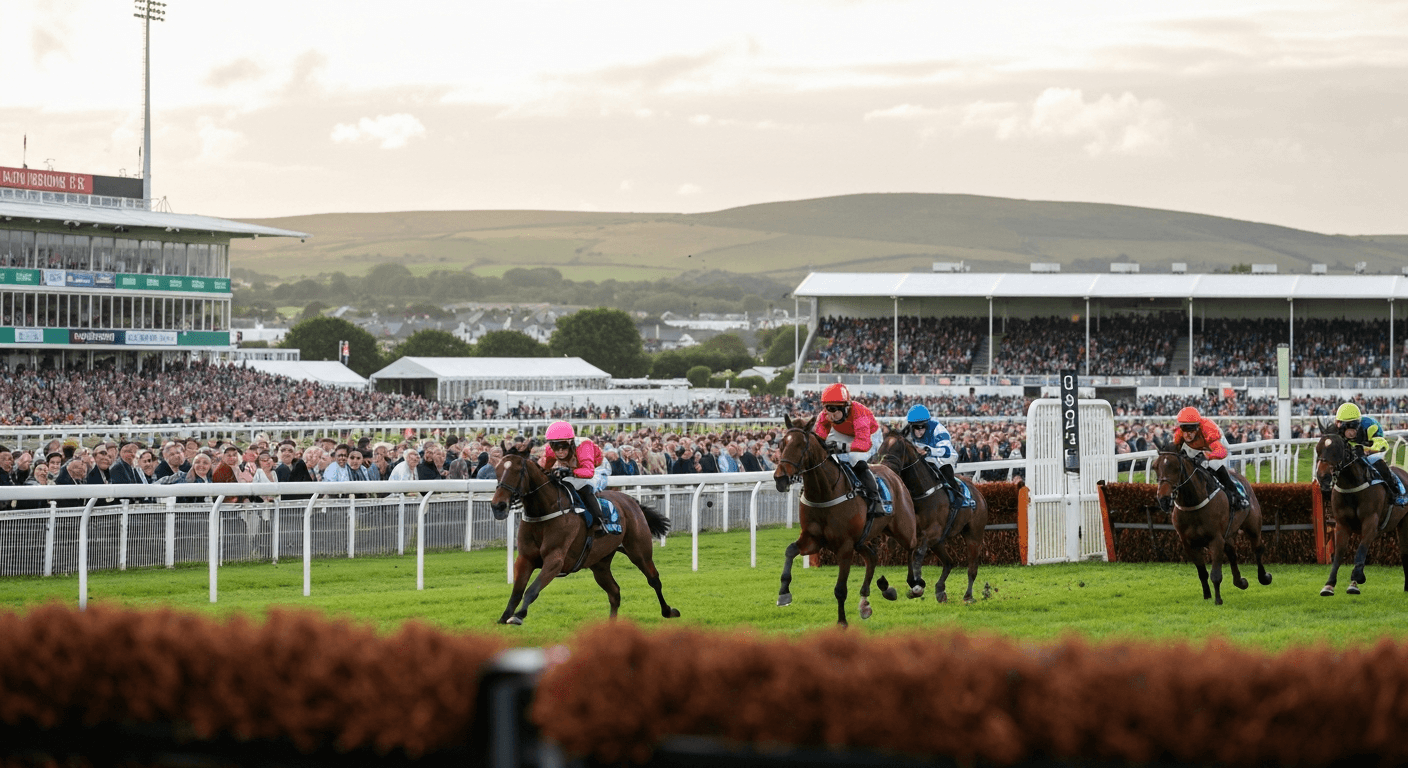
Galway Racecourse: The Complete Guide
Galway (Ballybrit) in full: the tight, undulating switchback right-hander, the seven-day summer festival day by day, the Galway Plate and Galway Hurdle with their winners, the records, tickets, travel, venue hire and how to visit.
Read moreThe Guinness Galway Hurdle: Race Guide
The Guinness Galway Hurdle explained: the 2m Ballybrit handicap run on Ladies' Day, its 1913 history, winners from Ansar to Ndaawi, trends and TV.
Read moreResearch the field with the AI Race Predictor
Our model publishes calibrated win-probability estimates for UK races — a second opinion to understand a race, not tips. It's open about its record: it doesn't beat the market, and we show exactly how it does.
Betting offers for Galway Festival
Work it out & learn the basics
Gamble Responsibly
Gambling should be entertaining and not seen as a way to make money. Never bet more than you can afford to lose. If you or someone you know has a gambling problem, help and support is available.