
Founder & Editor · Last reviewed 2026-07-13
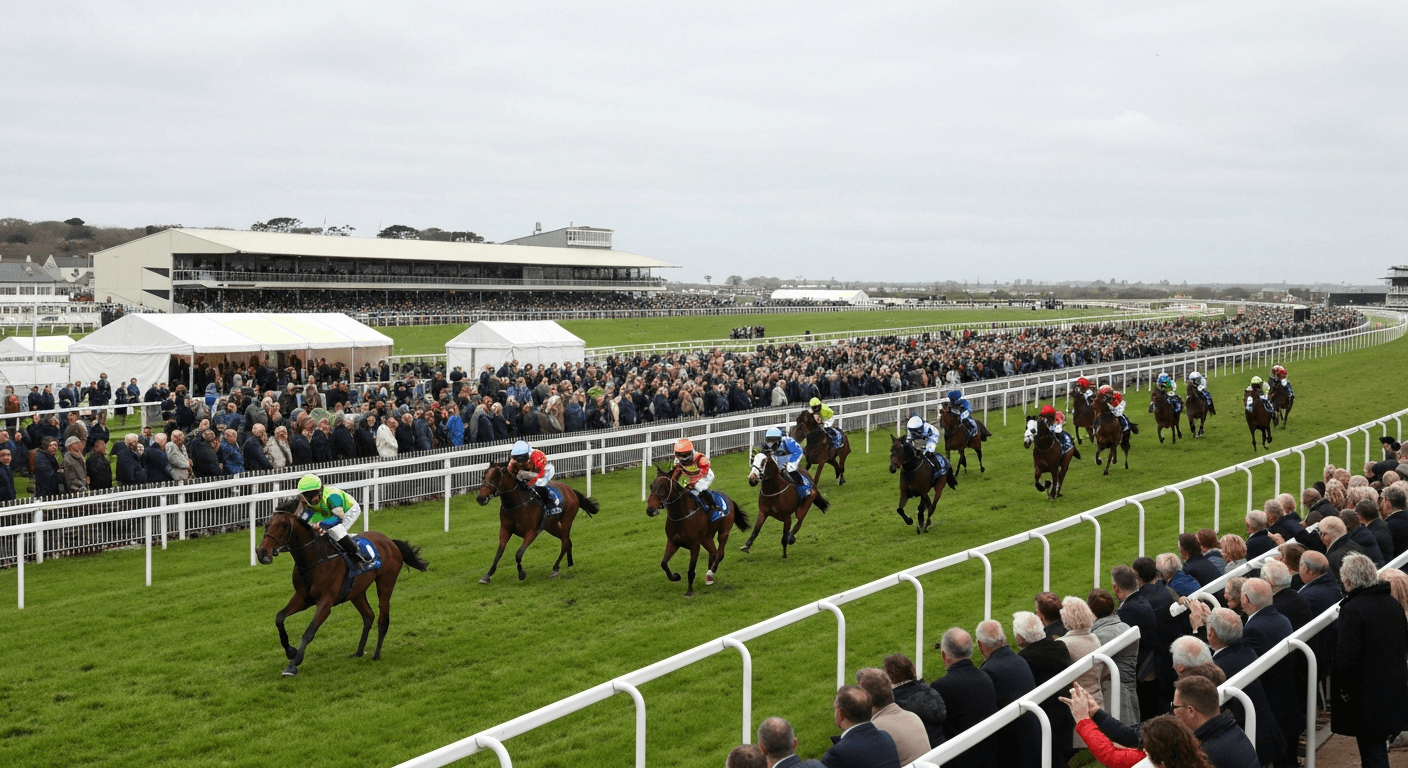
The Laytown Strand Races are the only racing under the Rules of Racing anywhere in Ireland or Britain run on a beach. There is no graded race, no single feature contest and no famous horse at the heart of it. The occasion is the beach itself: a card of roughly six Flat races run on the tidal sand of the Co. Meath coast, one afternoon each September, with the whole thing built and dismantled inside a day.
Everything about Laytown is dictated by the sea. The course exists only after the tide goes out, marked with white rails on the firmest bank the committee can find, and the first-race time changes every year because it is set by low water rather than a fixture list. For 364 days a year there is no racecourse at Laytown at all. The one permanent building on the site is a block of toilets.
The meeting dates to 1868, when the horses were a sideshow to the Boyne Regatta, and it survives today under Irish Horseracing Regulatory Board (IHRB) rules, run by a voluntary local committee. It is Flat racing only, over six and seven furlongs on a straight course, with modest prize money and no black-type. Crowds are reported by Horse Racing Ireland as being in excess of 5,000 every year.
This guide explains how a race meeting is staged on a beach, the history that shaped it, the days people remember, and how betting works when there are no permanent facilities on the sand. For the full profile of the course, see the Laytown Racecourse Complete Guide.
In this guide
Where to Bet
Place your bets with a trusted, licensed bookmaker.

Promo code BETFRED50. New customers only. Register, deposit with a Debit Card, and place a first bet of £10+ at Evens (2.0)+ on Sports, to be settled within 7 days, to get £30 in Sports Free Bets and £20 in Bet Builder Free Bets within 24 hours of settlement. 7-day expiry. Eligibility & payment exclusions apply. Full T&Cs apply. Take Time to Think. BeGambleAware.org. 18+. Full T&Cs.

Promo code R30. New UK customers only, 18+. Register, deposit £10 or more, then place a £10 single cash bet at odds of 1/2 (1.5) or greater on any sports market (excluding Virtuals). Once the qualifying bet settles you get £30 in Free Bets (3 x £10) — the qualifying bet can win or lose. Free Bets are valid on any sports market excluding Virtuals, expire in 7 days, are non-withdrawable and must be used in full. Excluded deposit methods apply (including PayPal, Apple Pay, Skrill and NETELLER). Named bets such as Lucky 15 do not qualify. If you cash out the qualifying bet, or it is voided, you are no longer eligible for the offer. Ends 31.12.26. Full T&Cs apply. Please gamble responsibly. BeGambleAware.org. 18+. Full T&Cs.

Promo code BET40GET20. New UK customers, 18+. Register with the code and place a first bet of £40 or more at Evens (2.0) or greater. Receive 2 × £10 free bets: the first credited automatically once the qualifying bet settles, the second 24 hours later. Free bets must be placed at minimum odds of 4/1 (5.0), expire 24 hours after credit, and the free-bet stake is not returned with winnings. Debit card deposits only. Take Time to Think. BeGambleAware.org. 18+. T&Cs apply. Full T&Cs.

50% of your first-day net losses refunded as a free bet, capped at £25. New UK customers aged 18+ only. To qualify, deposit and place a first bet of £10 or more on any sport at minimum odds of evens (2.00), then place at least two further bets on different events, each worth at least 50% of your largest bet, all at evens (2.00) or greater. Losses are counted from your first settled bet until 23:59 the same day. Place a qualifying £10+ bet and you are guaranteed at least a £5 free bet. Bets placed at SP, void bets, cashed-out bets and bets struck with free bets do not count towards the offer. The free bet is credited the day after your qualifying bets settle and must be used within 7 days, after which it expires. It can be used at odds from 1/4 (1.25) up to 250/1 on singles and straight accumulators, but not on Trixie, Patent or Yankee style multiples. Free-bet stake is not returned with winnings. One offer per person, household, address, IP address and device. E-wallet deposits may not qualify, so check the cashier before depositing. Customers registered with GAMSTOP cannot claim. KYC identity verification must be completed before the free bet is credited. Take Time to Think. BeGambleAware.org. 18+. T&Cs apply. Full T&Cs.

New customers, 18+. Choose the sports bonus at sign-up, make a first deposit and receive a 100% bonus up to £50 in your Sports Bonus balance. To convert the bonus to cash, wager it 10x within 30 days. Single bets below Evens (2.00) do not qualify; accumulators do not qualify if any selection is below 1/2 (1.50). Virtual Sports, voided, cancelled, drawn, cashed-out and free-bet wagers do not count towards wagering. Only the first settled bet per event counts. Withdrawing before the wagering requirement is met forfeits the bonus balance including bonus winnings. Real-money funds are used before bonus funds. Deposits via Skrill or Neteller are not eligible. Not valid in conjunction with other promotions. Odds, bet and payment limits apply. 10bet general and promotion T&Cs apply. BeGambleAware.org. 18+. Full T&Cs.

New customers in Great Britain and Republic of Ireland, 18+. Place a £10 fixed-odds qualifying bet at minimum odds of 1/2 (1.50) — single or each-way (only the win part counts), pre-event or in-play, not cashed out early, within 28 days of opening the account. Receive up to £60 in bonuses credited over three days: 3 × £10 fixed-odds free bets (the first on settlement, then 24 and 48 hours later) plus 3 × £5 Total Goals FOOTBALL spread bets and 3 × £5 racing Winning Favourites spread bets, with a £1 racing Race Index spread bet as an extra on top. The spread bets need a full spread-betting account, opened within 28 days of the fixed-odds account and subject to Spreadex's eligibility and appropriateness checks. Free-bet stakes not returned with winnings; free bets valid 28 days from issue. IMPORTANT: the £5 credits are SPREAD bets — sports spread betting carries the risk that losses can exceed your stake. Sports spread-betting customers do not have Financial Ombudsman or FSCS recourse. Take Time to Think. BeGambleAware.org. 18+. T&Cs apply. Full T&Cs.

Promo code WELCOME15, entered under My Bonuses after registering. New UK customers, 18+. Place a first qualifying bet of at least £10 from your cash balance at odds of evens (2.0) or greater within 7 days of opening the account. Once the qualifying bet fully settles you receive £15 in free bets, credited as 3 x £5 tokens with set uses: one £5 accumulator free bet (minimum 4 legs, each leg at 2/5 or bigger), one £5 sports free bet (any market at evens or bigger) and one £5 Sub Cover free bet (selected football player markets at evens or bigger). Free-bet stakes are not returned with winnings. Free bets expire 7 days after they are credited. Void, cashed-out and partially cashed-out bets do not qualify. One offer per customer. Confirm the current terms on BetGoodwin's own welcome-offer page before claiming. Take Time to Think. BeGambleAware.org. 18+. T&Cs apply. Full T&Cs.

New UK customers, 18+. Minimum deposit £10. Place a £10 qualifying single at minimum odds of 1/2 (1.50), settled within 14 days. Receive £30 in free bets (stake not returned), split £20 for sportsbook use (2 x £10) and £10 for Bet Builder only (2 x £5); Bet Builder does not cover horse racing. Free bets must be accepted within 7 days and expire 7 days after acceptance. No promo code required. Best Odds Guaranteed on UK & Irish racing, subject to having staked over £25 in the previous seven days. Operated by LiveScore Betting and Gaming (Gibraltar) Ltd, UKGC 56859. Confirm the current terms on LiveScore Bet's own promotions page before claiming. Take Time to Think. BeGambleAware.org. 18+. T&Cs apply. Full T&Cs.
18+. BeGambleAware.org
How the Meeting Works
Laytown is a proper race meeting held under IHRB rules, with stewards, official starters and handicappers, dope testing and identity checks, staged on a beach. Chairman Joe Collins put the point plainly to CNN, saying it runs under the same rules as any Cheltenham fixture. The difference is that the track has to be created from scratch on the morning of racing and taken away again afterwards.
The tide sets everything. The strand is closed early and work on the course begins while the water is still going out. By the time the first race is due, the tide has receded far enough to expose the firm, wet sand. Because low water falls at a different time each year, the fixture date and the first-race time move annually, and the card can run later in the day than most Irish meetings. Organisers have only a few hours to prepare the course once the sea has gone.
Committee members survey the strand weeks ahead to pick the firmest bank, then pat the sand down on the day to form the racing line and mark it out with white racecourse rails. Parts of the strand can still hold pools of seawater, so since a 2002 wet-weather abandonment the organisers dam certain areas and use water tankers to draw off excess water during racing.
Around the course, a temporary world goes up for the afternoon: a parade ring, a judge's box, bookmakers' pitches, and marquees for the weigh room, the jockeys' room, the bars and the restaurants. Spectators watch mainly from the elevated field above the beach, with steps cut into the dunes serving as an improvised stand. None of it is permanent. There are no enclosures, no grandstand and no buildings beyond the toilet block.
The card is six races, Flat only, on sand, over six and seven furlongs on a straight, near-level track. Fields are capped, with a maximum of around 10 runners the norm. Starting stalls replaced the traditional flag start in 2015.
| How the meeting works | Detail |
|---|---|
| Code | Flat only, under IHRB rules |
| Surface | Tidal beach sand |
| Card | Roughly six races |
| Distances | 6f and 7f, straight course |
| Field size | Capped, around 10 runners maximum |
| Fixture | One day each September |
| First-race time | Set by the tide, moves each year |
| Permanent buildings | Toilet block only |
History
The first recorded meeting at Laytown was in 1868, held in conjunction with the Boyne Regatta. The rowing took place at high tide and the racing began once the water receded, so the horses started life as a sideshow to the regatta. Racing was intermittent through the late 1800s, held only when the tides allowed. Beach racing was fairly common in Ireland at the time, with meetings also at Baltray, Termonfeckin and Milltown Malbay in Co. Clare. Laytown is the one that endured.
A local parish priest was central to the early organisation, though sources differ on the detail. The official account holds that the original priest, backed by the Bishop of Meath, was opposed to the races, and that a supportive priest arrived in 1901, after which the meeting began to thrive again. Meath County Council's version instead credits a priest with organising an early meeting in 1876 and landowner Paddy Delany with establishing the modern fixture in 1901. The Delany family connection has run for generations: in 2025 Alan Delany, a committee member and assistant to his father Eamon, noted that the family's previous winner on the strand came in 1965, trained by his grandfather Eamon Delany.
Laytown gathered plenty of colour along the way. Charles Stewart Parnell, leader of the Home Rule movement, was one of its first stewards; the 1875 card included a penny-farthing bicycle race; racing was suspended in the final two years of the First World War and again from 1942 to 1945; and in 1949 the Aga Khan III and the Begum attended. In the 1950s and 1960s the meeting mattered to trainers preparing horses for the Galway Festival, when sand was prized for work in the days before all-weather tracks.
The defining moment came on 4 August 1994. A horse was spooked, reportedly by a small stream on the course, and bolted into the crowd, causing panic among the other runners. Three horses were put down, a jockey was taken to hospital and several spectators were injured. The safety review that followed reshaped the meeting. The old U-shaped turn at Bettystown was removed to make the course straight; distances were cut to six and seven furlongs; field sizes were capped; headgear on horses was banned; only horses aged four and older could run and apprentices claiming more than 5lb were barred; and traders, bookmakers and vehicles were cleared off the beach, with the crowd moved back to the field above. The changes took effect from 1995. Racing was later abandoned in 2002 after heavy rain, cancelled in 2020 during the pandemic, and moved to 1 November in 2021.
Memorable Laytown Days
Laytown has no roll of honour in the usual sense. With six handicaps, maidens and claimers over 6f and 7f once a year, no horse dominates and there is no reliably documented all-time record holder on the strand. What the meeting has instead is a collection of days and characters that people remember.
The best-known story belongs to a horse that refused to run. In 2016 Labaik lined up for a 7f maiden at Laytown and simply declined to leave the stalls, deciding, as Racing Post put it, that a day at the beach was for leisure. Gordon Elliott switched him to hurdles, and six months later the grey belied odds of 25-1 to win the 2017 Supreme Novices' Hurdle at Cheltenham under a 17-year-old Jack Kennedy. It is the meeting's most famous horse anecdote, notable precisely because he would not race.
The strand has drawn serious riders. The committee lists champion jockeys who have won there, including Ruby Walsh, Colin Keane, Pat Smullen, Joseph O'Brien and Declan McDonogh, alongside leading amateurs such as Nina Carberry, Patrick Mullins, Jamie Codd, Katie Walsh and Derek O'Connor. A Laytown winner is one of the harder boxes for a jockey to tick, given there are only six races a year to go at.
Dermot Weld has long been an enthusiast, calling it exciting, different and challenging. Other trainers historically tied to the meeting include Kevin Prendergast, Mick O'Toole, Tommy Stack and Michael Cunningham, while in the modern era David Marnane and Adrian McGuinness have strong records. McGuinness landed a double at the 2025 meeting. Marnane's Jered Maddox won on the strand in both 2023 and 2024, one of the few horses to take the same beach fixture in consecutive years.
The 2025 meeting also carried a neat piece of family history when Alan Delany, assistant to his father Eamon and a member of the organising committee, won the Pride Of Place Maiden with Lohengrin, extending a Delany association that stretches back through generations of the meeting.
| Year | Winner | Trainer | Jockey |
|---|---|---|---|
| 2023 | Jered Maddox | David Marnane | n/a |
| 2024 | Jered Maddox | David Marnane | n/a |
| 2025 | Lohengrin | Alan Delany | n/a |
Some widely repeated Laytown claims do not stand up. A supposed multiple-winning record holder called Bolero Dancer traces only to a betting-affiliate site and cannot be corroborated in any racing database, so it is left out here.
Betting at a Beach Meeting
Betting at Laytown is a beach affair, not a racecourse-facility affair. There are no permanent betting shops or Tote windows on the strand, because for most of the year there is nothing there at all. On race day, independent on-course bookmakers set up pitches near the rails and Tote (Tote.ie) facilities operate, usually in the hospitality area. Mobile signal and WiFi on the beach are poor, so online betting can be difficult on site. It is worth having a rough plan before you arrive rather than relying on your phone at the rail.
The conditions make Laytown genuinely hard to read. The sand differs slightly every year, the track is built only hours before racing, and course or beach experience counts for something you cannot see in the ratings. The wet, compacted sand rides firm and fast, which favours front-runners and horses that handle good-to-firm ground. Making up ground from behind is difficult, and hold-up horses tend to fare poorly. Fields are small and the runners race in a straight line, so there is no reliable conventional draw bias, whatever percentage-beaten figures might suggest from a small sample.
Treat all of that as context, not a system. It describes how the meeting tends to unfold; it does not describe a way to make money. Backing favourites blindly loses to starting price over time, and no policy of backing favourites, and no betting system, is profitable over the long run. Laytown's novelty pulls in plenty of people who rarely bet, and the once-a-year, unusual nature of the track makes it less predictable than an ordinary Flat card, not more.
If you fancy a bet on the day, keep it small and treat it as part of the outing. Set a budget before you go, take enough cash for the on-course bookmakers and Tote given the patchy signal, and accept that losing your stake is a real possibility however confident you feel. The point of Laytown is the spectacle on the sand; a bet is a bit of fun on top of it, not the reason to be there.
For where the strand sits in the racing week and how to get there, see the Laytown Racecourse Complete Guide.
Remember: all betting should be done responsibly. You must be 18 or over to bet. For support with gambling, visit BeGambleAware.org.
Attending and Watching
The Laytown Strand Races are held on a single day each September, timed around low tide. The 2025 meeting ran on Thursday 4 September, with the six races off at 16:30, 17:05, 17:40, 18:10, 18:40 and 19:10. The official calendar lists the 2026 fixture for Thursday 10 September. The off-times shift from year to year because they follow the tide rather than a fixed schedule, so always confirm the current year's date and first-race time on the official site or with Horse Racing Ireland before you travel.
Most racegoers watch from the elevated grassy field above the strand, with a mound and steps cut into the dunes forming a natural viewing bank. There is also a small fenced area on the beach near the winning post, and from the open sand spectators can stand close to the action. The setting is Laytown strand at Ninch, a long beach on the Irish Sea, with the village about 45km north of Dublin.
Getting there is easiest by rail. Laytown has its own station right beside the strand on the Dublin to Belfast line, with services running via Dublin Connolly and Drogheda; from the station it is about a 1km walk or a free race-day shuttle bus to the course. By road it is roughly a 20-minute drive from Drogheda and about 45 minutes from Dublin, with free temporary car parks set up around the town on the day. Arrive early, as the small resort is not built for heavy traffic.
Admission is charged and tickets should be booked in advance, as the meeting's novelty draws people from far and wide, including many who do not usually go racing. There are no permanent enclosures; access is to the race field and the small fenced beach area. Catering, bars and betting are all in temporary structures within the field.
For television, the meeting is covered by Racing TV, which began broadcasting Irish racing in 2019. In 2021, when the fixture was rescheduled to 1 November, TG4 broadcast it live on national television for the first time. Laytown has also featured in BBC programmes, including its own documentary, Racing the Tide, and segments on Coast and Countryfile.
For the full visitor detail, see visiting the Laytown Strand Races.
Frequently Asked Questions
Share this article
More about this racecourse
All laytown guides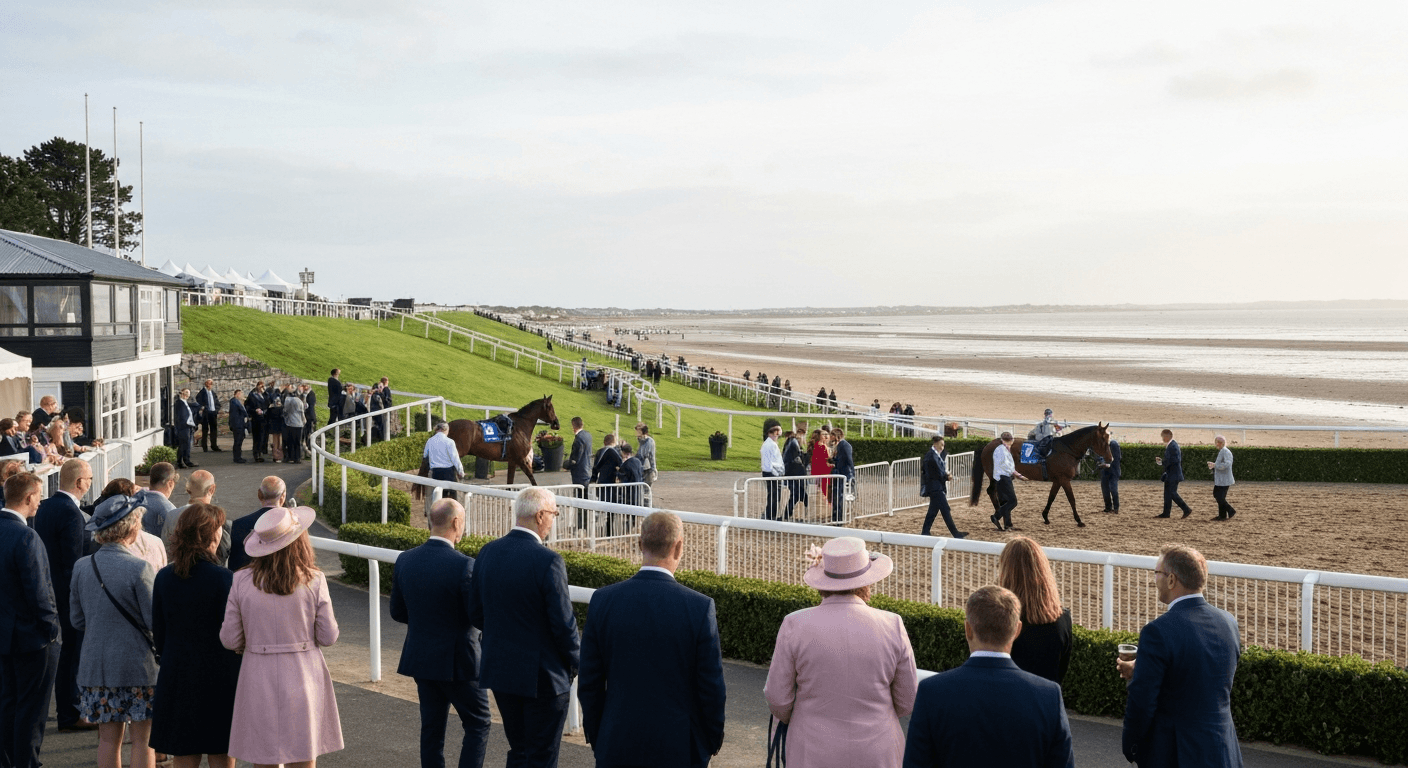
Visiting the Laytown Strand Races: What to Expect
Planning a day at the Laytown Strand Races: how to get there, what the beach meeting is actually like, tickets, what to bring and answers to common questions.
Read more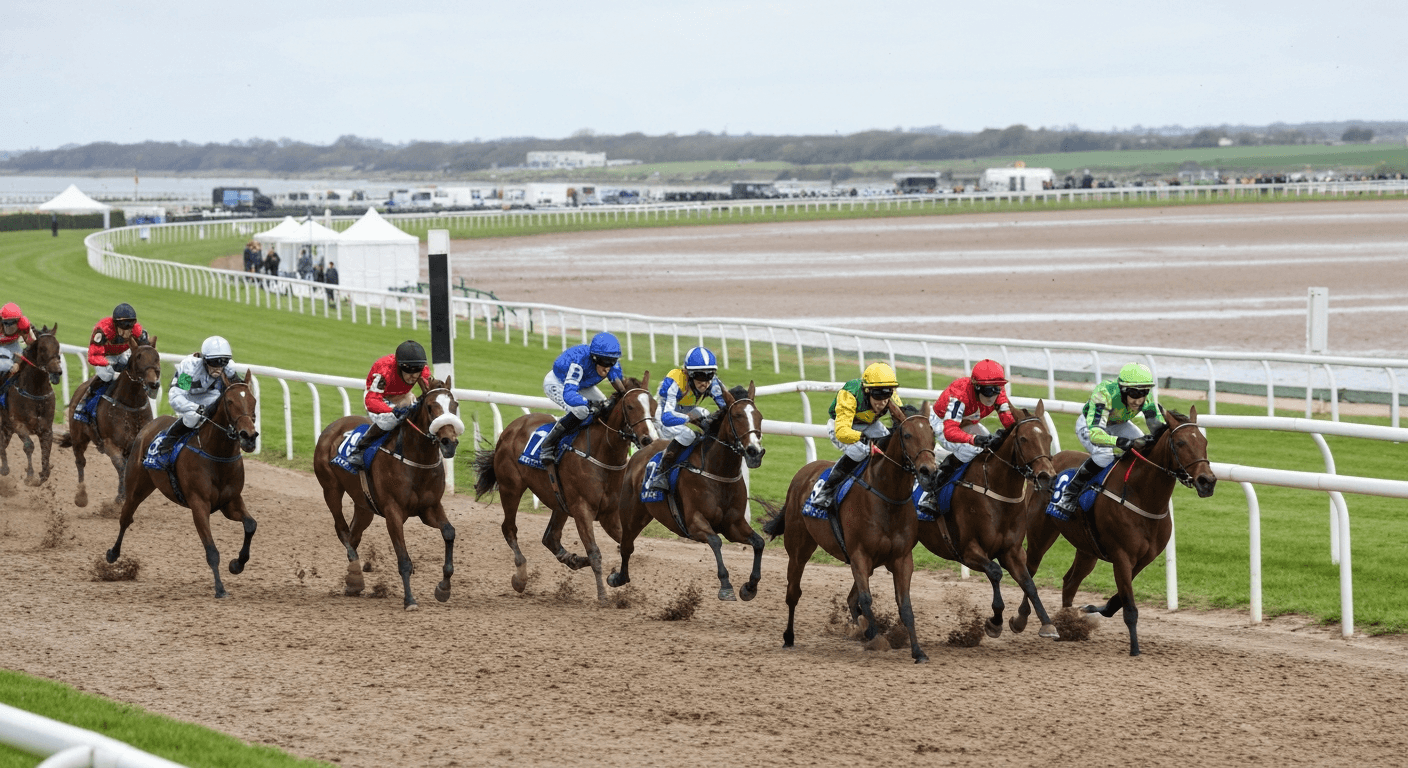
Betting at Laytown: The Beach-Racing Guide
A factual betting and form guide to Laytown, Europe's only beach meeting under Rules of Racing: the wet-sand strand, small fields, and the honest read on favourites.
Read more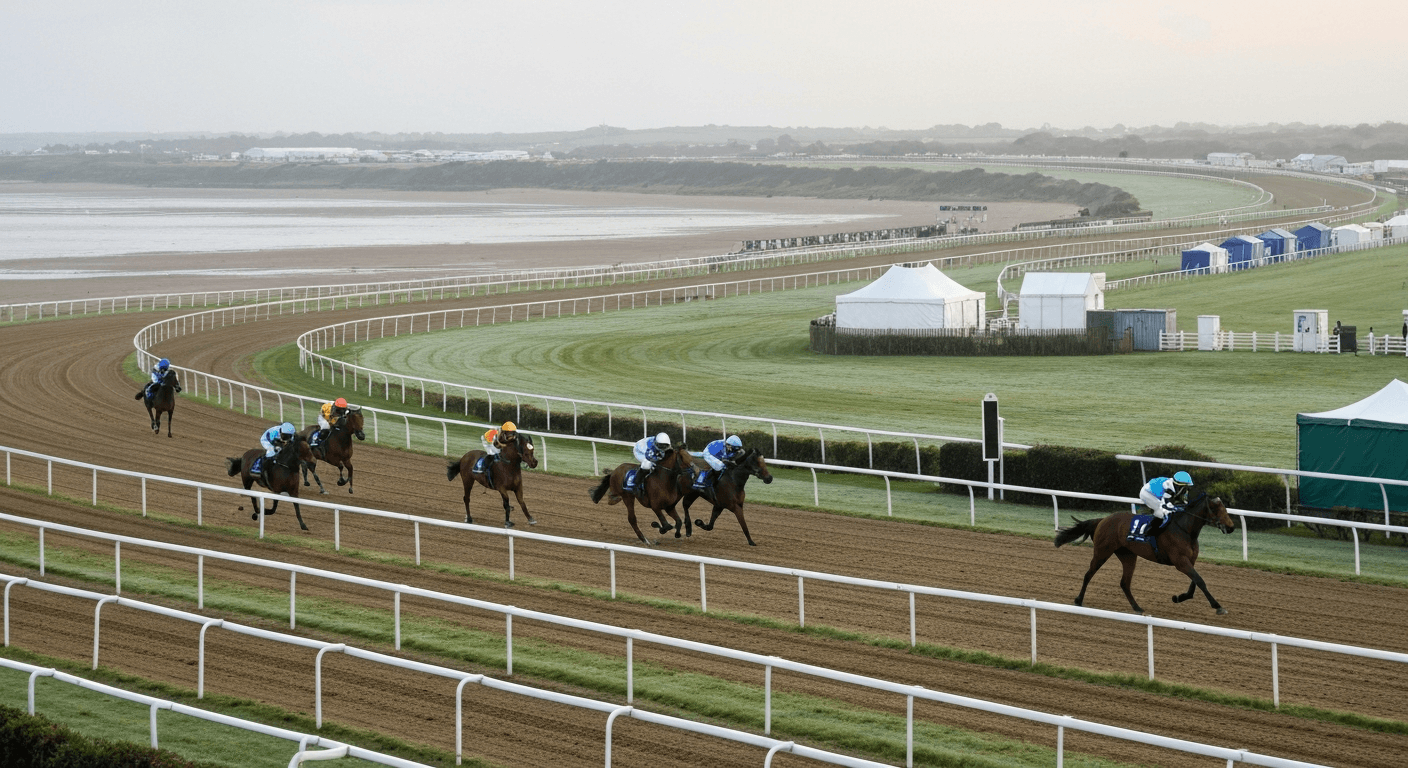
The History of Laytown Strand Races
How Laytown Strand Races grew from an 1868 sideshow to the Boyne Regatta into Ireland's only beach racing under Rules, reshaped by the 1994 tragedy.
Read moreResearch the field with the AI Race Predictor
Our model publishes calibrated win-probability estimates for UK races — a second opinion to understand a race, not tips. It's open about its record: it doesn't beat the market, and we show exactly how it does.
Work it out & learn the basics
Gamble Responsibly
Gambling should be entertaining and not seen as a way to make money. Never bet more than you can afford to lose. If you or someone you know has a gambling problem, help and support is available.