
Founder & Editor · Last reviewed 2026-06-29
Dublin's racecourse, and one of the best days out in Ireland
Most big racecourses ask you to drive an hour into the countryside, queue in a field and trudge back to the car park in the dark. Leopardstown does the opposite. It sits in Foxrock, on the southern edge of Dublin, roughly 8 kilometres from the city centre, close enough that you can take a tram from St Stephen's Green and be at the rail watching the horses go down well before the first race. It is the only racecourse in the Irish capital, and for ease of access alone it is hard to beat.
It is also not just a Flat track, and not just a jumps track. Leopardstown is Ireland's premier dual-purpose course, the only Irish venue to stage both Group 1 Flat racing and Grade 1 racing over jumps. In September it hosts the Irish Champion Stakes, a Group 1 over a mile and a quarter that has been won by Sea The Stars, Giant's Causeway, High Chaparral and a long line of the best middle-distance horses in the world. Over the winter it switches codes entirely and becomes the home of the Dublin Racing Festival and the four-day Christmas Festival, two of the most important jumps meetings in the calendar, where the Irish Gold Cup, the Savills Chase and the Irish Champion Hurdle are run.
That range is part of the appeal. You can go in February to watch novice chasers being launched towards Cheltenham, then return in September to see Classic-winning colts and fillies on good to yielding ground. The track itself is a wide, left-handed turf oval of about a mile and three-quarters, with a long, deceptively stiff three-furlong uphill run-in that tends to find out anything short of a true stayer.
The course is owned and run by Horse Racing Ireland, which bought it in 1967 and has reshaped it several times since, most recently with a redevelopment worth around €20 million that finished in 2017. The result is a modern, comfortable venue with good sightlines, plenty of bars and restaurants, and a relaxed dress code. This guide walks through how to get there, where to stand, what to eat, which days are worth building a trip around, and how to make the most of a first visit.
This guide covers getting there, the enclosures and stands, accessibility, food and bars, the best days to visit, what to wear, watching from home, tips for a first visit, making a weekend of it in Dublin, and answers to common questions.
Where to Bet
Place your bets with a trusted, licensed bookmaker.

Promo code BETFRED50. New customers only. Register, deposit with a Debit Card, and place a first bet of £10+ at Evens (2.0)+ on Sports, to be settled within 7 days, to get £30 in Sports Free Bets and £20 in Bet Builder Free Bets within 24 hours of settlement. 7-day expiry. Eligibility & payment exclusions apply. Full T&Cs apply. Take Time to Think. BeGambleAware.org. 18+. Full T&Cs.

Promo code R30. New UK customers only, 18+. Register, deposit £10 or more, then place a £10 single cash bet at odds of 1/2 (1.5) or greater on any sports market (excluding Virtuals). Once the qualifying bet settles you get £30 in Free Bets (3 x £10) — the qualifying bet can win or lose. Free Bets are valid on any sports market excluding Virtuals, expire in 7 days, are non-withdrawable and must be used in full. Excluded deposit methods apply (including PayPal, Apple Pay, Skrill and NETELLER). Named bets such as Lucky 15 do not qualify. If you cash out the qualifying bet, or it is voided, you are no longer eligible for the offer. Ends 31.12.26. Full T&Cs apply. Please gamble responsibly. BeGambleAware.org. 18+. Full T&Cs.

Promo code BET40GET20. New UK customers, 18+. Register with the code and place a first bet of £40 or more at Evens (2.0) or greater. Receive 2 × £10 free bets: the first credited automatically once the qualifying bet settles, the second 24 hours later. Free bets must be placed at minimum odds of 4/1 (5.0), expire 24 hours after credit, and the free-bet stake is not returned with winnings. Debit card deposits only. Take Time to Think. BeGambleAware.org. 18+. T&Cs apply. Full T&Cs.

50% of your first-day net losses refunded as a free bet, capped at £25. New UK customers aged 18+ only. To qualify, deposit and place a first bet of £10 or more on any sport at minimum odds of evens (2.00), then place at least two further bets on different events, each worth at least 50% of your largest bet, all at evens (2.00) or greater. Losses are counted from your first settled bet until 23:59 the same day. Place a qualifying £10+ bet and you are guaranteed at least a £5 free bet. Bets placed at SP, void bets, cashed-out bets and bets struck with free bets do not count towards the offer. The free bet is credited the day after your qualifying bets settle and must be used within 7 days, after which it expires. It can be used at odds from 1/4 (1.25) up to 250/1 on singles and straight accumulators, but not on Trixie, Patent or Yankee style multiples. Free-bet stake is not returned with winnings. One offer per person, household, address, IP address and device. E-wallet deposits may not qualify, so check the cashier before depositing. Customers registered with GAMSTOP cannot claim. KYC identity verification must be completed before the free bet is credited. Take Time to Think. BeGambleAware.org. 18+. T&Cs apply. Full T&Cs.

New customers, 18+. Choose the sports bonus at sign-up, make a first deposit and receive a 100% bonus up to £50 in your Sports Bonus balance. To convert the bonus to cash, wager it 10x within 30 days. Single bets below Evens (2.00) do not qualify; accumulators do not qualify if any selection is below 1/2 (1.50). Virtual Sports, voided, cancelled, drawn, cashed-out and free-bet wagers do not count towards wagering. Only the first settled bet per event counts. Withdrawing before the wagering requirement is met forfeits the bonus balance including bonus winnings. Real-money funds are used before bonus funds. Deposits via Skrill or Neteller are not eligible. Not valid in conjunction with other promotions. Odds, bet and payment limits apply. 10bet general and promotion T&Cs apply. BeGambleAware.org. 18+. Full T&Cs.

New customers in Great Britain and Republic of Ireland, 18+. Place a £10 fixed-odds qualifying bet at minimum odds of 1/2 (1.50) — single or each-way (only the win part counts), pre-event or in-play, not cashed out early, within 28 days of opening the account. Receive up to £60 in bonuses credited over three days: 3 × £10 fixed-odds free bets (the first on settlement, then 24 and 48 hours later) plus 3 × £5 Total Goals FOOTBALL spread bets, 3 × £5 racing Winning Favourites spread bets and a £1 racing Race Index spread bet (the spread bets need a full spread-betting account). Free-bet stakes not returned with winnings; free bets valid 28 days from issue. IMPORTANT: the £5 credits are SPREAD bets — sports spread betting carries the risk that losses can exceed your stake. Sports spread-betting customers do not have Financial Ombudsman or FSCS recourse. Take Time to Think. BeGambleAware.org. 18+. T&Cs apply. Full T&Cs.

Promo code WELCOME15, entered under My Bonuses after registering. New UK customers, 18+. Place a first qualifying bet of at least £10 from your cash balance at odds of evens (2.0) or greater within 7 days of opening the account. Once the qualifying bet fully settles you receive £15 in free bets, credited as 3 x £5 tokens with set uses: one £5 accumulator free bet (minimum 4 legs, each leg at 2/5 or bigger), one £5 sports free bet (any market at evens or bigger) and one £5 Sub Cover free bet (selected football player markets at evens or bigger). Free-bet stakes are not returned with winnings. Free bets expire 7 days after they are credited. Void, cashed-out and partially cashed-out bets do not qualify. One offer per customer. Confirm the current terms on BetGoodwin's own welcome-offer page before claiming. Take Time to Think. BeGambleAware.org. 18+. T&Cs apply. Full T&Cs.

New UK customers, 18+. Minimum deposit £10. Place a £10 qualifying single at minimum odds of 1/2 (1.50), settled within 14 days. Receive £30 in free bets (stake not returned), split £20 for sportsbook use (2 x £10) and £10 for Bet Builder only (2 x £5); Bet Builder does not cover horse racing. Free bets must be accepted within 7 days and expire 7 days after acceptance. No promo code required. Best Odds Guaranteed on UK & Irish racing, subject to having staked over £25 in the previous seven days. Operated by LiveScore Betting and Gaming (Gibraltar) Ltd, UKGC 56859. Confirm the current terms on LiveScore Bet's own promotions page before claiming. Take Time to Think. BeGambleAware.org. 18+. T&Cs apply. Full T&Cs.
18+. BeGambleAware.org
Getting there: the most accessible big course in Ireland
The single biggest reason Leopardstown is such a good day out is that getting there is easy. The full address is Leopardstown Racecourse, Foxrock, Dublin 18, Eircode D18 C9V6, in the Dún Laoghaire-Rathdown area on the southern fringe of the city. It is about 8 kilometres, or 5 miles, from the centre of Dublin, and roughly 14 miles, about an hour, from Dublin Airport.
By Luas (the tram)
For most visitors the Luas Green Line is the simplest option. It runs from St Stephen's Green out to Sandyford in around 20 minutes. From the Sandyford stop the course is a short walk, about 10 minutes, and on racedays there is a complimentary shuttle bus from the Luas stop to the gates. The wider area is also served by other Green Line stops, including Central Park, Glencairn, The Gallops and Leopardstown Valley, but Sandyford is the one to aim for, because that is where the racecourse shuttle runs from. If you are staying in central Dublin and would rather not drive, the tram is the stress-free choice: no parking, no traffic, and you can have a drink without worrying about the road home.
By bus
Dublin Bus route 114 runs to and from Blackrock DART station and stops right at the main gate, which makes it one of the handiest services. The E1 and E2 run on the nearby N11, and the S8 and the 118 also serve the area. Coming in from the airport, the 700 Aircoach runs between Dublin Airport and Leopardstown and stops at the Clayton Hotel in Foxrock, a few minutes from the course.
By car
If you drive, the best approach is junction 15 off the M50. Aim for Car Park G, which helps you avoid the worst of the congestion on Leopardstown Road itself. There are two car park entrances, one off Leopardstown Road and one near the M50 junction 15. Parking is free for all racegoers, and there is a free shuttle from the car parks to the stands. On festival days in particular, allow plenty of extra time, because the roads around the course fill up quickly.
By DART and from the airport
During the Christmas Festival there is a complimentary shuttle from Blackrock DART station, with priority for people holding Race and Rail tickets, although it does not run on Boxing Day. For major festivals there are sometimes additional services from Heuston. If you are flying in, Dublin Airport is about an hour away, with a 24-hour Aircoach service from both terminals.
The enclosures, stands and parade ring
Leopardstown is straightforward to navigate, which is a relief on a busy day. There are two main ticket options for most fixtures, and the layout is built around a single large grandstand overlooking the finishing straight, the parade ring and the winning post.
General Admission
General Admission is the standard ticket and it gives you the run of the place: access to the grandstand and to the course itself, so you can move between the rail, the parade ring and the bars as you please. For a first visit this is usually all you need. You can stand right by the running rail to feel the speed of the horses on the run-in, then drift back up into the stand for a wider view of the whole circuit. The home straight after the final bend is short, only about three furlongs, so the climax of every race plays out directly in front of the main grandstand, which keeps the action close.
Premium Level
The step up is the Premium Level, which gives you a reserved seat on the third floor of the grandstand along with access to exclusive bars and lounges. At the Dublin Racing Festival, for example, the two headline choices are General Admission and Premium Level, the latter being the dedicated third-floor option with its own bars. If you want a guaranteed seat, a bit more space and somewhere warm to retreat to between races, particularly in the depths of winter, the upgrade is worth considering.
The parade ring and saddling area
Part of the 2016 to 2017 redevelopment, within an overall €20 million project, was a new saddling area, a new weigh-room and reconfigured betting and entertainment spaces. The upshot is that the walk from parade ring to stand is well organised and the pre-race viewing is good. Take the time before a big race to watch the horses being saddled and led round, especially at the festivals, when the best jumpers and Flat horses in Ireland are on show and the parade ring is where the trainers and jockeys gather before the off.
One practical note on the stands: the grandstand has some steep steps, with railings provided. If steps are difficult, factor that in when choosing where to base yourself, and lean towards the lower levels or the Premium seating.
Accessibility at Leopardstown
Leopardstown describes itself as fully accessible for wheelchair users and disabled racegoers, with most areas of the venue reachable by a number of lifts. If you have specific needs, the course asks that you email ahead so it can accommodate you fully on the day, and ramps are available to reach many of the viewing stands.
There are two main lifts to know about. One sits just outside the racing hall and serves the second and third levels of the Grandstand building, taking you up to the Panoramic Suite, the Private Suite and the Circle Lounge. A second lift inside the main Grandstand building reaches all floors, including the 1888 Restaurant and the Leopardstown Lounge, so the premium dining and viewing areas are all within reach without using the stairs.
Accessible parking is provided, and there is a drop-off point at the main entrance so anyone with limited mobility can be set down close to the gates rather than walking from the car park. Combined with the largely level layout around the parade ring and lower grandstand, this makes getting in and finding a spot at the rail straightforward.
Accessible toilets are spread across the site rather than clustered in one place. You will find them in the Tote Hall, downstairs and to the left of the Tote counters, on the third floor near the ramp before the Larkspur Bar, by the Circle Lounge, in the converted area opposite the Racing Hall, behind the winners' suite, and in the Pavilion. The Leopardstown Pavilion itself is fully wheelchair accessible and has both an accessible toilet and baby-changing facilities, which is handy if you are visiting with a young family on one of the busier festival days.
On tickets, the course operates a carer policy worth knowing about. Wheelchair users and patrons with a disability may bring a carer free of charge, with a complimentary General Admission ticket offered for the companion. To arrange this, contact the racecourse office on +353 1 289 0500 or by email before your visit. As with the access arrangements generally, a quick message in advance is the best way to make sure everything is ready for you when you arrive.
Food, bars and hospitality
You will not go hungry or thirsty at Leopardstown. The redevelopment added new restaurants, bars and food outlets, and on any given raceday there are numerous places to eat and drink both inside and outside the grandstands.
Bars and casual food
The Champions Bar at ground level was enlarged during the 2015 phase of works and is one of the main social hubs on a busy day. Around it sit a range of bars and food outlets, including the Paddock Food Hall and, historically, the Fillies Café Bar, plus Madigans pub on site. For a relaxed day this is the way most people do it: grab food and a drink from one of the outlets, find a spot near the rail or in the stand, and dip in and out between races. At the festivals there is also live music in a marquee, which keeps the atmosphere going through the afternoon.
Restaurants and hospitality
If you want to make more of an occasion of it, there are two standout sit-down options to know about.
- Molly Malones, at the Pavilion, is a buffet restaurant that overlooks the final bend and comes with its own viewing lawn, so you can eat and still watch the racing unfold in front of you.
- The 1888 Restaurant, on the second floor, overlooks the parade ring, which makes it a fine place to size up the horses over lunch before heading down to the stand.
Beyond those, the Pavilion building houses further restaurants and bars, and there is a fitness centre and an 18-hole parkland golf course, the Leopardstown Golf Centre, sitting inside the track for non-racedays.
Hospitality and packages
For groups, anniversaries or corporate days there are hospitality packages built around the restaurants and the Premium Level lounges. At the festivals, Race and Stay packages bundle accommodation, breakfast, tickets and transport together, starting from roughly €157 to €177 per guest, which can take a lot of the planning hassle out of a big trip. If you are travelling a distance for the Christmas Festival or the Dublin Racing Festival, those packages are worth pricing up against booking everything separately.
The best days: Christmas, the Dublin Racing Festival and Champions
Leopardstown stages around 23 race days a year, from summer Thursday-evening Group cards to the depths of the winter jumps season. Most of them are enjoyable, low-key afternoons. But three meetings stand above the rest, and if you can plan a visit around one of them you will see the course at its absolute best. Two are over jumps, one is on the Flat, which is exactly the point of a dual-code track.
The Leopardstown Christmas Festival (26 to 29 December)
The Christmas Festival is the busiest and most atmospheric meeting of the year, four days of jumps racing run every year from 26 to 29 December. It drew more than 62,000 spectators across the four days in 2024. Gates open around 10am, the first race is usually around noon, and there are seven races a day.
Each day has its own character. Day 1, 26 December, is Racing Post Chase Day. Day 2, 27 December, is Paddy Power Chase Day, built around the valuable Paddy Power Steeplechase handicap, and regularly draws crowds of 18,000 or more. Day 3, 28 December, is Savills Chase Day, the centrepiece, when the Grade 1 Savills Chase over three miles is run alongside the staying Christmas Hurdle. Day 4, 29 December, is Matheson Hurdle Day and Family Day, with the Grade 1 Matheson Hurdle over two miles, free entry for under-12s and the Savills Style Awards.
The Savills Chase has been won by some genuine greats, from Best Mate in 2003 and Denman in 2007 to Galopin Des Champs, who took it in both 2023 and 2024. In the 2025 renewal Galopin Des Champs, the 6/5 favourite, was beaten in his bid to win three in a row, finishing third behind 7/1 Affordale Fury. That is a useful reminder for anyone betting: even the best horse at short odds does not always win, and over time the favourite loses money to its starting price.
The Dublin Racing Festival (late January or early February)
The Dublin Racing Festival, created in 2018, is the standout jumps fixture of the new year: two days, 15 races and eight Grade 1s, with over €2 million in prize money and attendances approaching 25,000. It combined what used to be two separate Saturday and Sunday cards into one major weekend, and it now sits at the heart of the spring staging post on the road to Cheltenham.
Saturday features the Irish Gold Cup, a Grade 1 over about three miles. Sunday is headed by the Irish Champion Hurdle, a Grade 1 over two miles, first run back in 1950 and won that year by Hatton's Grace for Vincent O'Brien. Recent runnings have been dominated by Willie Mullins, who leads the Irish Champion Hurdle trainers with nine wins, and by horses such as Istabraq, Hurricane Fly, Honeysuckle and State Man, the last of whom won it three years running from 2023 to 2025. The 2026 festival was disrupted by heavy rain from Storm Chandra, which forced the Saturday card to be put back, so racing ran on the Sunday and Monday instead, a reminder that winter fixtures can move at short notice.
The Irish Champions Festival (September)
For Flat racing, the day to target is the first day of the Irish Champions Festival, held at Leopardstown in September, with the second day at the Curragh the following day. In 2026 that is Saturday 12 September. Day 1 is a nine-race card headed by the Group 1 Irish Champion Stakes, worth €1.25 million in 2025, and the Group 1 Matron Stakes for fillies and mares.
The Irish Champion Stakes, first run in 1976, is one of the best middle-distance races in the world. Its roll of honour includes Sea The Stars in 2009, Giant's Causeway, High Chaparral, Dylan Thomas and, more recently, Auguste Rodin in 2023 and Delacroix in 2025. Aidan O'Brien is far and away its most successful trainer, with 13 wins. From 2026 the meeting gains a third Flat Group 1, after the Juvenile Stakes (registered as the Golden Fleece Stakes) was upgraded to Group 1 and extended to nine furlongs. September racing here is typically run on good to yielding ground, and the lighter clothing and warmer weather make it a very different day out from a frosty Boxing Day.
What to wear
Leopardstown is refreshingly relaxed about clothes. There is no strict dress code. Smart casual is recommended, and you are encouraged to dress up on Ladies' Days, but there are no firm requirements that will see you turned away for wearing the wrong thing. That makes it an easy course for a first visit, because you do not have to worry about hiring a suit or buying a hat to fit in.
The far bigger consideration is the weather, and that depends entirely on which meeting you pick.
The Christmas Festival
If you are going over Christmas, dress for cold Irish December weather and dress in layers. You will be standing outside for long stretches, often in damp, raw conditions, and the going at that time of year is usually soft to yielding, which tells you how wet underfoot it can be. A warm coat, a hat, gloves and decent waterproof footwear will make the difference between a great day and a miserable one. Sensible shoes also help on the grandstand's steep steps. You can always warm up in one of the bars or restaurants between races, but plan for the cold rather than hoping it stays mild.
The Dublin Racing Festival
The Dublin Racing Festival in late January or early February is much the same: winter clothing, layers and waterproofs. As the postponed 2026 renewal showed, the weather can be genuinely disruptive at this time of year, so check the forecast and pack accordingly.
The Irish Champions Festival
September is the gentler option. The Irish Champions Festival is run in early autumn on typically good to yielding ground, so you can dress for a pleasant late-summer afternoon. This is the meeting where people tend to dress up a little more, smart-casual outfits and the occasional bit of finery, without any of the formality of a major English Flat festival. Even so, bring a light jacket, because an Irish September afternoon can turn.
Watching from home
If you cannot get to Foxrock in person, Leopardstown is well covered on television and online, both in Ireland and across the water in the UK.
The home of Leopardstown's racing is Racing TV, the channel run by Racecourse Media Group. Leopardstown is a Racing TV course rather than a Sky Sports Racing one, and it sits alongside the Curragh, Galway and Punchestown on the channel's list of Irish tracks. Racing TV carries British and Irish racing including, by its own account, around 90% of all Group and Grade 1 races, so the big Leopardstown days are part of its core schedule. In Ireland the channel is available on Virgin and Vodafone, and in the UK it is on Sky channel 424 and Virgin 536, with subscription pricing published directly by Racing TV.
There is plenty of free-to-air coverage too. In Ireland, RTÉ covers the major Flat days and the Irish Champions Festival, and the Christmas Festival has aired on RTÉ2, so the headline meetings reach a wide audience at no extra cost. In the UK, ITV picks up selected major Leopardstown fixtures, notably during Irish Champions Weekend and the big festival days, meaning the very best racing here often turns up on terrestrial television on both sides of the Irish Sea.
For streaming, you have a couple of options. Racing TV offers app and online streaming for subscribers, along with free race replays, which are useful if you want to study a contest after the event. Bookmaker streams are the other route: several firms, bet365 among them, show Leopardstown to funded account-holders, so if you have an active betting account you can often watch the racing live through the bookmaker's site or app. Between Racing TV, the free-to-air broadcasters and the bookmaker streams, there is rarely a reason to miss a Leopardstown card wherever you are.
Tips for a first visit
A few simple things will make a first trip to Leopardstown go smoothly.
Book tickets early
Tickets are bookable online or on the day, and you can print them at home. For ordinary fixtures that is easy enough, but the festivals sell out, so book ahead if you are aiming for the Christmas Festival, the Dublin Racing Festival or Champions day. As a rough guide, Christmas Festival admission has been around €30 for adults, about €20 for students and OAPs, and around €60 for top-tier grandstand. Other fixtures run nearer €15 to €20 for general admission and €30 to €50 for upper-level seats. Prices change year to year, so always check the official site when booking.
Use the tram and leave the car
If you can, take the Luas Green Line to Sandyford and the free shuttle, rather than driving. On festival days the roads around the course get busy and parking, though free, means queuing. The tram lets you avoid all of that and have a drink without worrying about the trip home. If you do drive, allow extra time and head for Car Park G off the M50 at junction 15.
Get there in good time
Gates at the Christmas Festival open around 10am with the first race near noon. Arriving early gives you time to walk the parade ring, find your bearings, get a feel for the betting ring and grab food before the queues build. It also means you are settled before the opening race rather than rushing.
Understand the track before you bet
Leopardstown is a stiff, galloping, left-handed course with a long uphill three-furlong run-in that tends to find out non-stayers, so the best horse usually wins and hard-luck stories are rare. Front-runners and prominent racers do well across both codes, and held-up horses can struggle. None of that is a betting tip. It is just context. Favourites win their share, but over time backing the favourite loses money to its starting price, so only ever stake what you are happy to lose and treat it as part of the entertainment.
Plan for families on 29 December
The final day of the Christmas Festival, 29 December, is a designated Family Day, with free entry for under-12s and children's activities. If you are bringing kids, that is the day to choose.
Nearby: making a weekend of it in Dublin
One of the quiet pleasures of Leopardstown is that the whole of Dublin is on the doorstep. The city centre is only about 8 kilometres away, roughly 20 minutes on the Luas, so a day at the races can easily become a weekend without any long transfers.
Where to stay
The closest hotel to the course is the Clayton Hotel Leopardstown, less than a mile away. It is popular with racegoers and sells out early around the festivals, so book well ahead if you want to be within walking distance. Beyond that there are options in the surrounding suburbs of Foxrock, Stillorgan and Sandyford, all close to the track, and a string of hotels along the Dún Laoghaire seafront if you would rather be by the sea. For nightlife and a bigger choice of restaurants and bars, base yourself in central Dublin and let the tram do the work.
Making a weekend of it
Because the course is on the southern edge of the city rather than out in the country, you can combine the racing with the rest of what Dublin offers without much planning. The coastal towns of the southside, from Dún Laoghaire round to Dalkey, are a short DART ride away and make for an easy morning before an afternoon at the races, or a gentle recovery the day after. The city centre, with its pubs, museums and restaurants, is close enough that you can have lunch in town, head out to Leopardstown for the afternoon and be back for dinner.
That accessibility is the thread running through the whole day. Leopardstown gives you top-class Flat and jumps racing, two of Ireland's great festivals and a comfortable, modern course, all within easy reach of a capital city. Whether you go for a quiet summer evening card or brave the cold for the Christmas Festival, it is one of the most convenient great days out in Irish racing, and an ideal first racecourse if you have never been before.
Frequently Asked Questions
Share this article
More about this racecourse
All leopardstown guides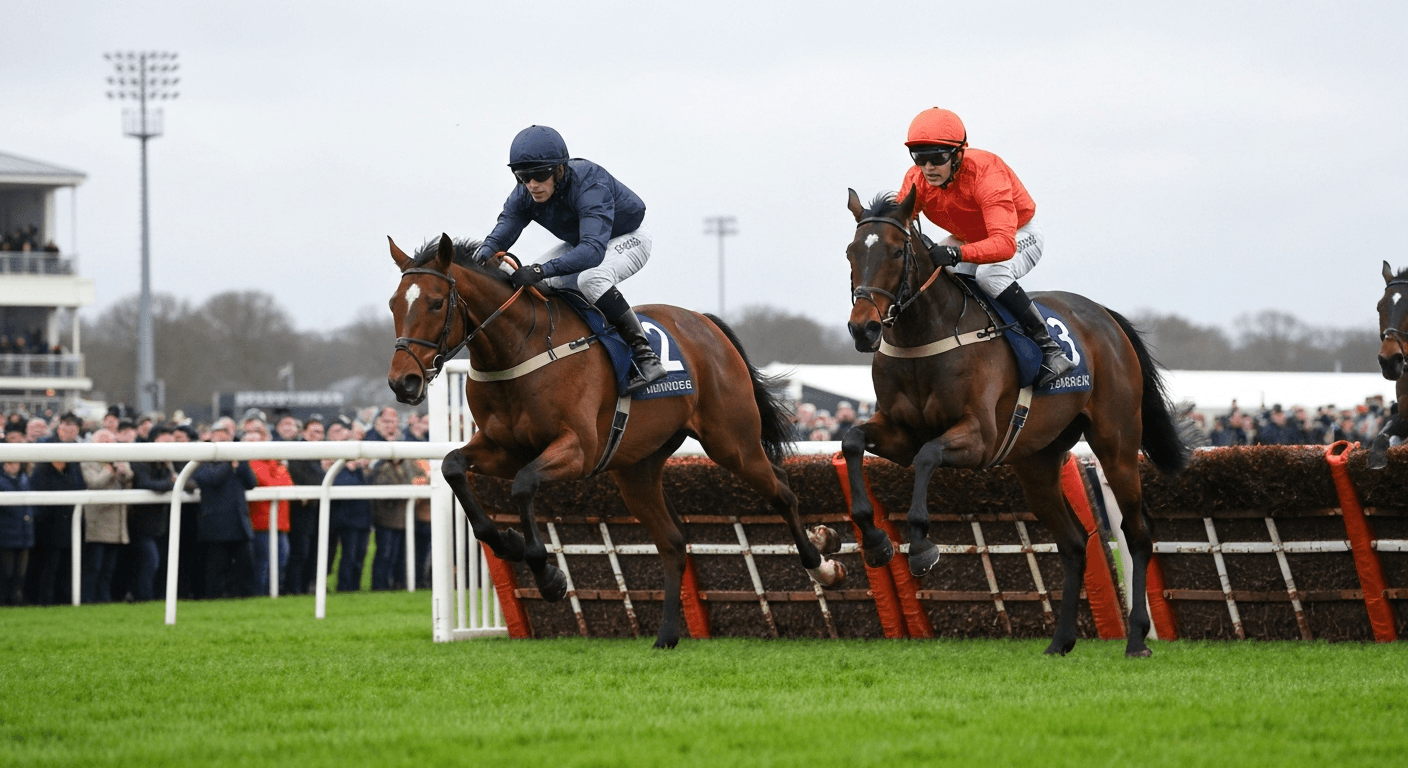
The Dublin Racing Festival: A Complete Guide
A complete guide to Leopardstown's Dublin Racing Festival: eight Grade 1s across one early-February weekend, the key Cheltenham trial, and how to go.
Read more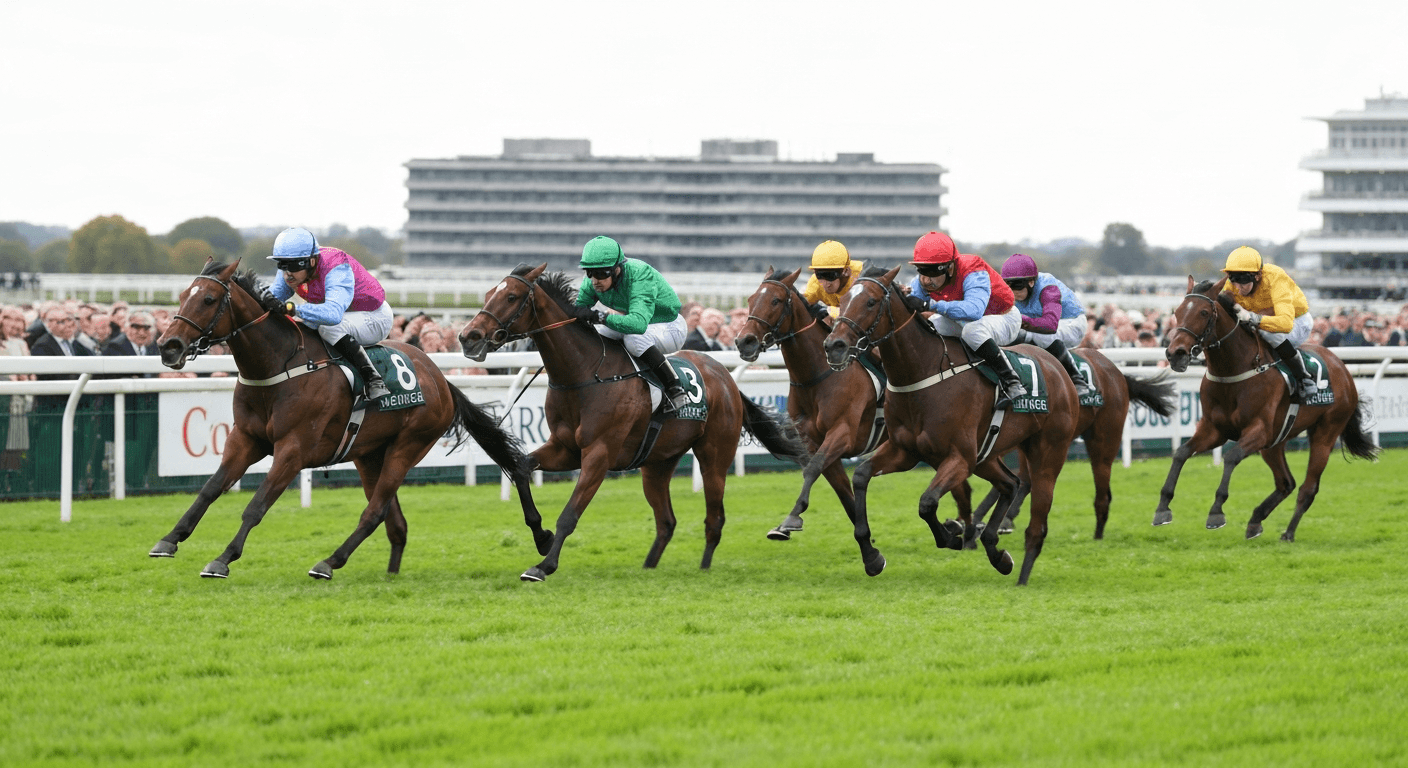
The Irish Champions Festival: A Complete Guide
A complete guide to the Irish Champions Festival: Leopardstown then the Curragh, six Group 1s including the Irish Champion Stakes, and how to go.
Read more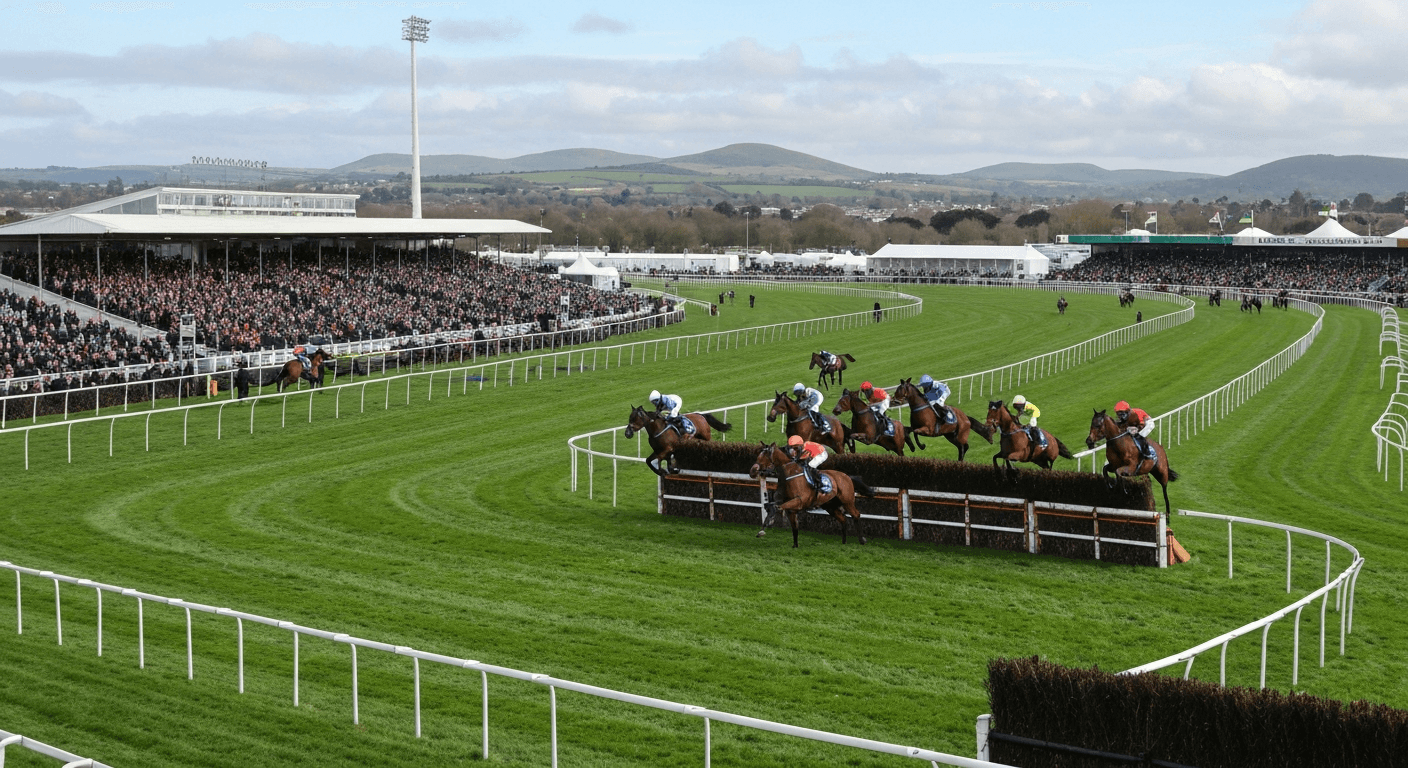
Betting at Leopardstown: A Course Guide
A betting-focused guide to Leopardstown: the galloping Flat track, the jumps course, going, the draw, trainer and jockey angles, and how favourites really fare.
Read moreResearch the field with the AI Race Predictor
Our model publishes calibrated win-probability estimates for UK races — a second opinion to understand a race, not tips. It's open about its record: it doesn't beat the market, and we show exactly how it does.
Work it out & learn the basics
Gamble Responsibly
Gambling should be entertaining and not seen as a way to make money. Never bet more than you can afford to lose. If you or someone you know has a gambling problem, help and support is available.