
Founder & Editor · Last reviewed 2026-07-13
On an early-October afternoon in 2001, a two-year-old colt by Sadler's Wells won a maiden at Tipperary by two and a half lengths. There was no fanfare. He had been beaten a short head on his debut at Punchestown a week or so earlier, and this was simply the next step, a green colt from Aidan O'Brien's Ballydoyle yard getting his head in front for the first time. His name was High Chaparral. Within eight months he had won the Epsom Derby. Within two years he had won two Derbys and, uniquely, two Breeders' Cup Turfs. Tipperary was where the winning started.
Tipperary sits at Limerick Junction, and it is the nearest racecourse to Ballydoyle. That geography matters. O'Brien has long used the track as a proving ground for the best young horses in his string, running them close to home over a flat, fair, galloping oval before the big targets arrive. High Chaparral's maiden win was one small race on an ordinary card, but it was the race immediately before he stepped up to Group 1 company and won the Racing Post Trophy at Doncaster. The launchpad and the rocket were only a fortnight apart.
His visit to Tipperary was brief. He ran there once, won there once, and moved on to Epsom, the Curragh, Arlington, Leopardstown and Santa Anita. The wider career, the Classics and the international championships, all happened elsewhere. What Tipperary holds is the beginning: the first evidence in the form book that this was a colt worth following, produced on a Munster track two miles from Tipperary town.
This article tells the complete story of High Chaparral's connection to Tipperary. It covers the horse himself, his breeding and his overall career; the maiden he won at the track and why that race mattered; the defining moments of that October afternoon; and his legacy, both as one of the great middle-distance horses of his era and as part of Tipperary's long thread of future champions who started there.
Where to Bet
Place your bets with a trusted, licensed bookmaker.

Promo code BETFRED50. New customers only. Register, deposit with a Debit Card, and place a first bet of £10+ at Evens (2.0)+ on Sports, to be settled within 7 days, to get £30 in Sports Free Bets and £20 in Bet Builder Free Bets within 24 hours of settlement. 7-day expiry. Eligibility & payment exclusions apply. Full T&Cs apply. Take Time to Think. BeGambleAware.org. 18+. Full T&Cs.

Promo code R30. New UK customers only, 18+. Register, deposit £10 or more, then place a £10 single cash bet at odds of 1/2 (1.5) or greater on any sports market (excluding Virtuals). Once the qualifying bet settles you get £30 in Free Bets (3 x £10) — the qualifying bet can win or lose. Free Bets are valid on any sports market excluding Virtuals, expire in 7 days, are non-withdrawable and must be used in full. Excluded deposit methods apply (including PayPal, Apple Pay, Skrill and NETELLER). Named bets such as Lucky 15 do not qualify. If you cash out the qualifying bet, or it is voided, you are no longer eligible for the offer. Ends 31.12.26. Full T&Cs apply. Please gamble responsibly. BeGambleAware.org. 18+. Full T&Cs.

Promo code BET40GET20. New UK customers, 18+. Register with the code and place a first bet of £40 or more at Evens (2.0) or greater. Receive 2 × £10 free bets: the first credited automatically once the qualifying bet settles, the second 24 hours later. Free bets must be placed at minimum odds of 4/1 (5.0), expire 24 hours after credit, and the free-bet stake is not returned with winnings. Debit card deposits only. Take Time to Think. BeGambleAware.org. 18+. T&Cs apply. Full T&Cs.

50% of your first-day net losses refunded as a free bet, capped at £25. New UK customers aged 18+ only. To qualify, deposit and place a first bet of £10 or more on any sport at minimum odds of evens (2.00), then place at least two further bets on different events, each worth at least 50% of your largest bet, all at evens (2.00) or greater. Losses are counted from your first settled bet until 23:59 the same day. Place a qualifying £10+ bet and you are guaranteed at least a £5 free bet. Bets placed at SP, void bets, cashed-out bets and bets struck with free bets do not count towards the offer. The free bet is credited the day after your qualifying bets settle and must be used within 7 days, after which it expires. It can be used at odds from 1/4 (1.25) up to 250/1 on singles and straight accumulators, but not on Trixie, Patent or Yankee style multiples. Free-bet stake is not returned with winnings. One offer per person, household, address, IP address and device. E-wallet deposits may not qualify, so check the cashier before depositing. Customers registered with GAMSTOP cannot claim. KYC identity verification must be completed before the free bet is credited. Take Time to Think. BeGambleAware.org. 18+. T&Cs apply. Full T&Cs.

New customers, 18+. Choose the sports bonus at sign-up, make a first deposit and receive a 100% bonus up to £50 in your Sports Bonus balance. To convert the bonus to cash, wager it 10x within 30 days. Single bets below Evens (2.00) do not qualify; accumulators do not qualify if any selection is below 1/2 (1.50). Virtual Sports, voided, cancelled, drawn, cashed-out and free-bet wagers do not count towards wagering. Only the first settled bet per event counts. Withdrawing before the wagering requirement is met forfeits the bonus balance including bonus winnings. Real-money funds are used before bonus funds. Deposits via Skrill or Neteller are not eligible. Not valid in conjunction with other promotions. Odds, bet and payment limits apply. 10bet general and promotion T&Cs apply. BeGambleAware.org. 18+. Full T&Cs.

New customers in Great Britain and Republic of Ireland, 18+. Place a £10 fixed-odds qualifying bet at minimum odds of 1/2 (1.50) — single or each-way (only the win part counts), pre-event or in-play, not cashed out early, within 28 days of opening the account. Receive up to £60 in bonuses credited over three days: 3 × £10 fixed-odds free bets (the first on settlement, then 24 and 48 hours later) plus 3 × £5 Total Goals FOOTBALL spread bets and 3 × £5 racing Winning Favourites spread bets, with a £1 racing Race Index spread bet as an extra on top. The spread bets need a full spread-betting account, opened within 28 days of the fixed-odds account and subject to Spreadex's eligibility and appropriateness checks. Free-bet stakes not returned with winnings; free bets valid 28 days from issue. IMPORTANT: the £5 credits are SPREAD bets — sports spread betting carries the risk that losses can exceed your stake. Sports spread-betting customers do not have Financial Ombudsman or FSCS recourse. Take Time to Think. BeGambleAware.org. 18+. T&Cs apply. Full T&Cs.

Promo code WELCOME15, entered under My Bonuses after registering. New UK customers, 18+. Place a first qualifying bet of at least £10 from your cash balance at odds of evens (2.0) or greater within 7 days of opening the account. Once the qualifying bet fully settles you receive £15 in free bets, credited as 3 x £5 tokens with set uses: one £5 accumulator free bet (minimum 4 legs, each leg at 2/5 or bigger), one £5 sports free bet (any market at evens or bigger) and one £5 Sub Cover free bet (selected football player markets at evens or bigger). Free-bet stakes are not returned with winnings. Free bets expire 7 days after they are credited. Void, cashed-out and partially cashed-out bets do not qualify. One offer per customer. Confirm the current terms on BetGoodwin's own welcome-offer page before claiming. Take Time to Think. BeGambleAware.org. 18+. T&Cs apply. Full T&Cs.

New UK customers, 18+. Minimum deposit £10. Place a £10 qualifying single at minimum odds of 1/2 (1.50), settled within 14 days. Receive £30 in free bets (stake not returned), split £20 for sportsbook use (2 x £10) and £10 for Bet Builder only (2 x £5); Bet Builder does not cover horse racing. Free bets must be accepted within 7 days and expire 7 days after acceptance. No promo code required. Best Odds Guaranteed on UK & Irish racing, subject to having staked over £25 in the previous seven days. Operated by LiveScore Betting and Gaming (Gibraltar) Ltd, UKGC 56859. Confirm the current terms on LiveScore Bet's own promotions page before claiming. Take Time to Think. BeGambleAware.org. 18+. T&Cs apply. Full T&Cs.
18+. BeGambleAware.org
High Chaparral: The Horse
High Chaparral was a bay colt foaled on 1 March 1999 at Coolmore Stud in County Tipperary. He was by Sadler's Wells, the most influential European sire of his generation, out of the Darshaan mare Kasora, and was bred by Sean Coughlan. As a yearling he went through the ring at the 2000 Tattersalls September Sale, where Demi O'Byrne bought him for 270,000 guineas on behalf of Michael Tabor and Sue Magnier. He went into training with Aidan O'Brien at Ballydoyle, and over three seasons he was partnered mainly by Mick Kinane and Johnny Murtagh.
His racing record was exceptional. From 13 starts between 2001 and 2003 he won 10 races, was second once and third twice, and earned US$5,331,231. As BloodHorse summarised it, "Trained by Aidan O'Brien for Susan Magnier and Michael Tabor, High Chaparral compiled a 10-1-2 career line from 13 starts and earned $5,331,231 in three seasons." Six of those wins came at the highest level, in Group or Grade 1 company, which places him among the best middle-distance horses Ballydoyle has produced.
From maiden to Classic colt
The shape of his career was set almost immediately. After being beaten a short head on his debut at Punchestown, he broke his maiden at Tipperary, and then stepped straight up to Group 1 level to win the Racing Post Trophy at Doncaster as a two-year-old in 2001. That progression, from a modest Irish maiden to a European Group 1 in the space of a few weeks, told everyone what O'Brien already suspected.
His three-year-old season in 2002 was the making of him. He won the Ballysax Stakes and the Derrinstown Stud Derby Trial, then took the Epsom Derby, beating his stablemate Hawk Wing. He followed up in the Irish Derby at the Curragh, and later that year travelled to Arlington in the United States to win his first Breeders' Cup Turf, beating With Anticipation. He also ran in the Prix de l'Arc de Triomphe at Longchamp, where he finished third.
A champion at four
Many top colts are retired to stud after a Classic-winning three-year-old campaign. High Chaparral stayed in training at four, and he repaid the decision. In 2003 he won the Royal Whip Stakes at the Curragh, then took the Irish Champion Stakes at Leopardstown, beating Falbrav with Alamshar back in fourth. His season, and his career, ended with a second Breeders' Cup Turf, this time at Santa Anita, where he dead-heated with Johar in the first and only dead-heat in Breeders' Cup history. That result made him the first horse to win the Breeders' Cup Turf twice.
His consistency at the top was recognised on both sides of the Atlantic. He was voted the Eclipse Award for Outstanding Male Turf Horse in the United States in both 2002 and 2003. A colt who had started his career winning a maiden at Tipperary retired as a dual Derby winner, a dual Breeders' Cup Turf winner and a two-time American champion.
He was retired to stud at the end of 2003 and stood at Coolmore, shuttling to the southern hemisphere, where he became a highly successful sire. He died on 21 December 2014, aged 15, following colic surgery at the Fethard Equine Hospital in County Tipperary, close to where he had been foaled.
One point of housekeeping is worth making for anyone searching his name. This High Chaparral is the racehorse. He shares his name with an American Western television series of the late 1960s and with an Australian Group 3 sprint, neither of which has any connection to the Ballydoyle colt described here.
The Race at Tipperary
High Chaparral ran at Tipperary once, winning a two-year-old maiden in early October 2001. That single appearance is his entire Tipperary record. It was not a graded race and it drew no headlines at the time, but its place in his story is fixed: it was the day he first won, and it was the last run before he stepped up to Group 1 class.
Why Ballydoyle runs its best at Tipperary
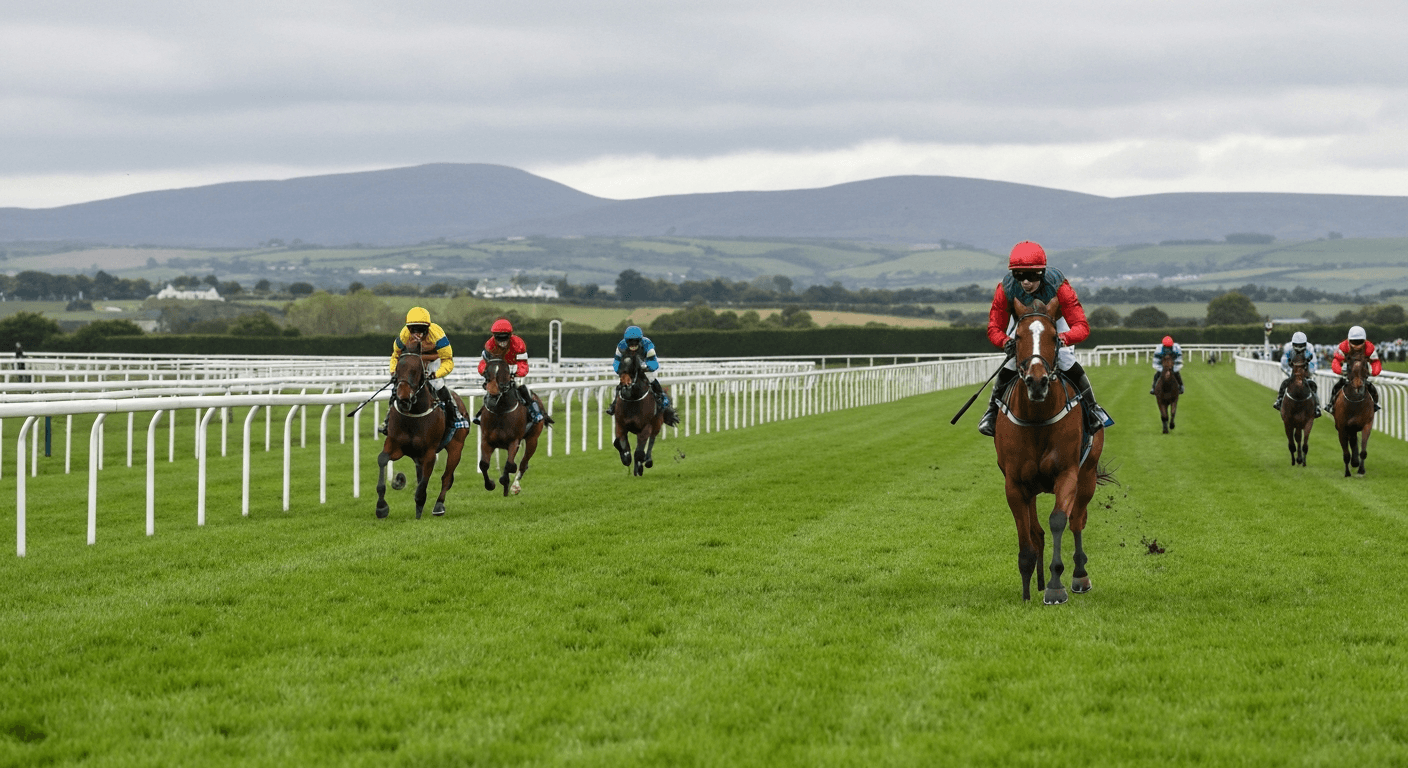
To understand the race, it helps to understand the track. Tipperary sits at Limerick Junction, about two miles from Tipperary town, and it is the nearest racecourse to Ballydoyle, Aidan O'Brien's stable. It is a left-handed, flat, galloping oval of about a mile and two furlongs, with a straight five-furlong sprint track. There is nothing tricky or quirky about it. It is a fair, honest circuit that lets a good horse settle, travel and gallop.
That combination of proximity and fairness is exactly why O'Brien has long used Tipperary to introduce his most promising juveniles. A green two-year-old with a big future can be sent there without a long journey, run over a straightforward test, and learn its trade close to home before the important targets arrive. High Chaparral was one of a line of Ballydoyle colts who began that way.
The maiden: early October 2001
High Chaparral had made his racecourse debut at Punchestown, where he was beaten a short head by Hot Trotter. It was a promising first run rather than a winning one. About a week later he reappeared at Tipperary for a two-year-old maiden, and this time he got the job done, winning by two and a half lengths.
The bare result understates its significance. A two-and-a-half-length maiden win is the kind of performance that happens on Irish cards every week. What made this one matter was what O'Brien did next. Rather than campaign the colt quietly through further nursery or maiden company, he sent him straight to Doncaster for the Racing Post Trophy, one of the most important two-year-old Group 1 races in the European calendar, and High Chaparral won it. The maiden at Tipperary and a Group 1 at Doncaster were separated by only a fortnight.
Some of the finer detail of the Tipperary maiden is not fully documented in the public record. The winning distance of two and a half lengths is confirmed, as is the early-October timing, roughly a week after the 30 September Punchestown debut. Beyond that, the exact race title, the going and the riding arrangements are not reliably established, so this account does not state them. What is certain, and what matters, is the outcome: he won, and he won well enough to be trusted immediately with far better horses.
His Tipperary record
| Season | Race | Result | Margin | Grade |
|---|---|---|---|---|
| 2001 (early Oct) | Two-year-old maiden | Won | 2½ lengths | Maiden |
That is the whole of it. One start, one win, and a career worth more than US$5 million set in motion.
Reading a Ballydoyle maiden at Tipperary
For anyone trying to spot the next good one, the High Chaparral pattern is instructive, and it repeats. The signals are not in the winning distance alone, which can be modest, but in the context around the run.
A close debut followed by a maiden win. High Chaparral was beaten a short head first time out, then won next time. A well-bred Ballydoyle colt who runs with obvious promise on debut and then confirms it in a maiden is showing the normal upward curve of a good horse, not the flat line of a limited one.
The step that follows the win. The most telling evidence with an O'Brien juvenile is where it goes next. A maiden winner sent straight to Group company, as High Chaparral was, is a horse the yard rates. The maiden is treated as a formality to be cleared, not a level to be campaigned at.
Track aptitude counts for less at Tipperary than at a turning track. Because Tipperary is flat and galloping, a win there is more about raw ability and attitude than about handling a specialised circuit. A colt who travels and quickens on the Limerick Junction oval is showing ability that should transfer to the bigger, fairer tracks where the Classics are run. High Chaparral's later record at Epsom, the Curragh, Leopardstown and in the United States bore that out.
Beware reading too much into the bare figure. A two-and-a-half-length maiden win, taken in isolation, proves very little. Plenty of horses win maidens by that margin and never progress. The value in High Chaparral's Tipperary run is only clear with hindsight and in the company of everything around it: the yard, the sire, the promising debut, and the immediate promotion to Group 1 level. On its own, it was a maiden. In its place in the story, it was the first line of a championship career.
For punters, the practical lesson is to watch which of O'Brien's two-year-old maiden winners at Tipperary are then aimed high rather than kept in easy company. That is the tell. High Chaparral was pointed at Doncaster within two weeks, and the market never got another cheap price about him again.
Great Moments
A single maiden win does not usually earn a chapter of its own. High Chaparral's does, because of everything it turned out to be the start of. The defining moment at Tipperary was not a dramatic finish or a famous duel. It was a quiet, correct piece of work that, read forward, becomes the first frame of a great career.
The turn from beaten to winner
The moment worth dwelling on is the shift between his two runs. At Punchestown he was beaten a short head, close enough to suggest ability, short enough to leave the question open. A short-head defeat on debut can mean a green horse who will improve, or it can mean a horse who finds just enough not to win. The Tipperary maiden answered the question in the simplest way available: he went and won it, by two and a half lengths, doing it comfortably rather than scrambling.
For a yard that sees hundreds of two-year-olds, that clean confirmation is the moment a horse moves from "promising" to "trusted." O'Brien did not need to see High Chaparral win a nursery, or grind out a second maiden. One good win at his local track was enough to persuade him to aim the colt at a Group 1 next time. The Tipperary run was the evidence on which that decision rested.
The fortnight that changed everything
The detail that gives the Tipperary maiden its weight is what came immediately afterwards. Within about two weeks, High Chaparral was at Doncaster contesting the Racing Post Trophy, and he won it. A colt who had a short-head defeat and a maiden win to his name was suddenly a Group 1 winner and a Derby favourite for the following spring.
That compression, from Limerick Junction to a European championship in a fortnight, is what makes the Tipperary race a genuine great moment rather than a footnote. Most Classic horses have a longer, gentler apprenticeship. High Chaparral's was almost brutally short, and Tipperary was the hinge it turned on. The maiden was the last ordinary day of his career. Everything after it was run at the top level.
The making of a production line
The other reason the moment resonates is that it was not a one-off. Tipperary's role as the nearest track to Ballydoyle means O'Brien has repeatedly used it to launch horses who became champions. High Chaparral's stablemate Hawk Wing, foaled in the same year, also made a winning start at Tipperary in 2001 before going on to win three Group 1 races. Dylan Thomas is another top-class O'Brien horse associated with an early Tipperary start.
Seen in that company, High Chaparral's maiden is part of a pattern rather than an accident. The track's flat, fair galloping surface, two miles from the yard, is where the best of Ballydoyle have often been asked their first serious question. High Chaparral answered it and kept going all the way to two Derbys and two Breeders' Cup Turfs.
What the day actually showed
Stripped of hindsight, the Tipperary maiden showed a well-bred colt handling his job with the minimum of fuss on a straightforward track. There is no need to dress it up with drama it did not have. Its greatness is entirely retrospective. It matters because of the horse High Chaparral became, and because the people who trained him read the run correctly and acted on it at once.
That is the honest version of the moment. A good colt won a maiden at his local course, and the men who knew him best backed their judgement immediately. The form book did the rest, and Tipperary keeps its place as the track where one of the finest middle-distance horses of his generation first got his head in front.
Legacy and Significance
High Chaparral's legacy runs on two tracks. There is his standing in the sport, earned on the world's biggest stages, and there is his smaller but real place in Tipperary's own story as a nursery for champions. The two meet at the point where his career began.
The horse and the breed
On the racecourse he was one of the outstanding middle-distance horses of the early 2000s: a dual Derby winner, the first horse to win the Breeders' Cup Turf twice, and a two-time American champion. At stud he was arguably more influential still. Standing at Coolmore and shuttling to the southern hemisphere, he sired 135 stakes winners, including 23 at Group 1 level. His best sons carried his line onward. So You Think became a sire of 57 stakes winners of his own, among them 11 Group 1 winners, while Toronado and Dundeel also established themselves as significant stallions. Other top performers by High Chaparral included Wrote, Rekindling, who won the 2017 Melbourne Cup, and the dual-code star Altior.
That record makes him not just a great racehorse but an important sire of sires, a horse whose influence is still being felt through his descendants. For a colt by Sadler's Wells, bred at Coolmore in County Tipperary, it was a fitting continuation of one of the great breeding dynasties.
Tipperary's thread of champions
The local legacy is more specific. High Chaparral is one of the clearest examples of why Tipperary matters out of proportion to its status as a track. It is a country course that stages good but not championship racing, yet because it is the nearest racecourse to Ballydoyle it has repeatedly been the first winning post for horses who went on to the very top.
High Chaparral and Hawk Wing, both foaled in 1999 and both trained by Aidan O'Brien, both made winning starts at Tipperary in 2001 before becoming Group 1 champions. Dylan Thomas is another name associated with an early Tipperary run. That is a remarkable roll for a single ordinary season, and it gives the track a genuine claim: future champions have started here, and High Chaparral is the headline example.
For visitors and punters, that thread is the real point. A maiden at Tipperary is not just a maiden. On the right day, with the right yard, it can be the first appearance of a horse who will win a Derby. High Chaparral is the proof.
The verdict
The lasting significance of High Chaparral at Tipperary is one of scale and beginnings. The Derbys, the Breeders' Cup Turfs and the stud career all happened far from Limerick Junction, and this page has been careful to place them where they belong. But every one of those achievements traces back through a single line in the form book to an early-October maiden on a flat Munster oval. Tipperary did not make him a champion. It was simply where a champion, correctly judged and immediately promoted, first showed what he was. That is a legacy worth keeping, and one the track can fairly claim as its own.
Frequently Asked Questions
Share this article
More about this racecourse
All tipperary guides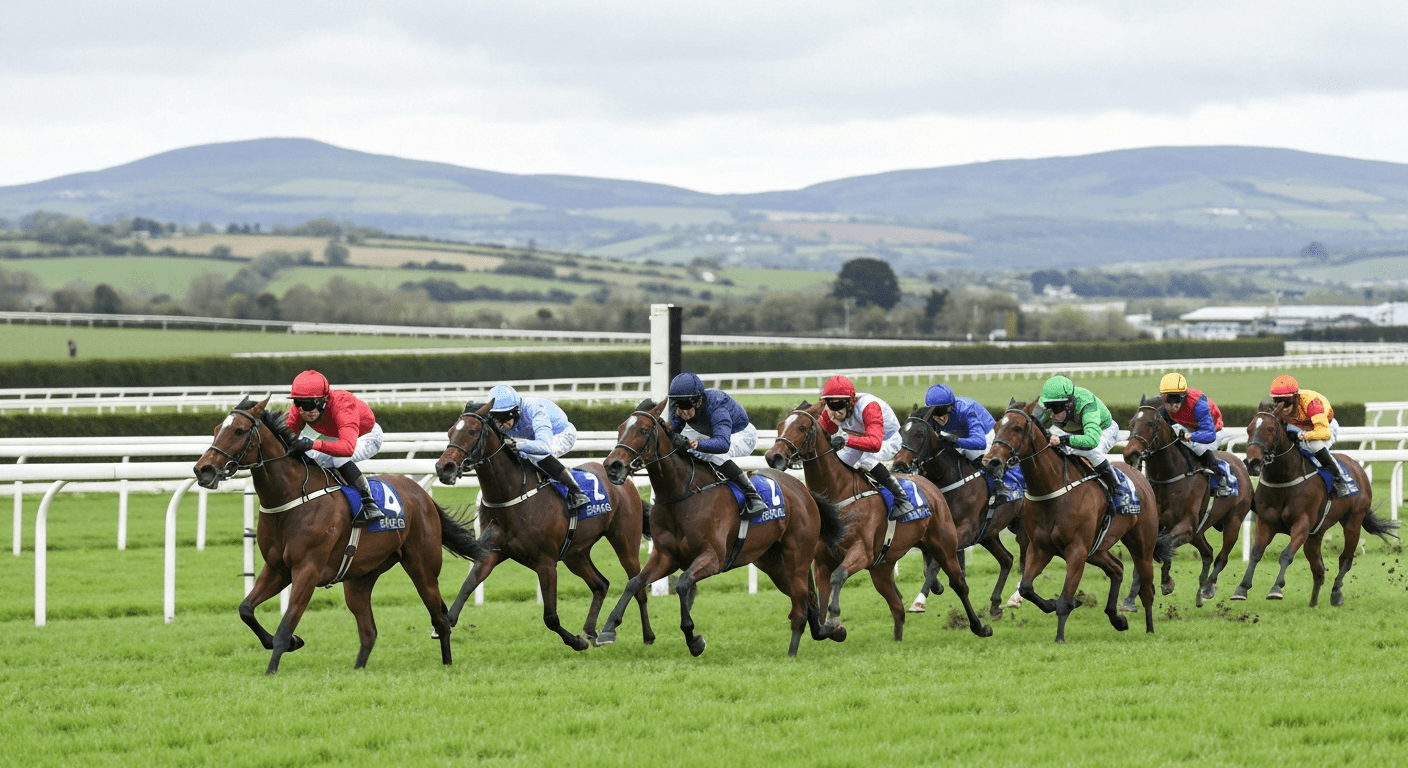
Betting at Tipperary Racecourse
How Tipperary's fast, flat, left-handed dual-code track beside Limerick Junction shapes the betting, with the Concorde Stakes, the 5f draw, going and form framed honestly.
Read more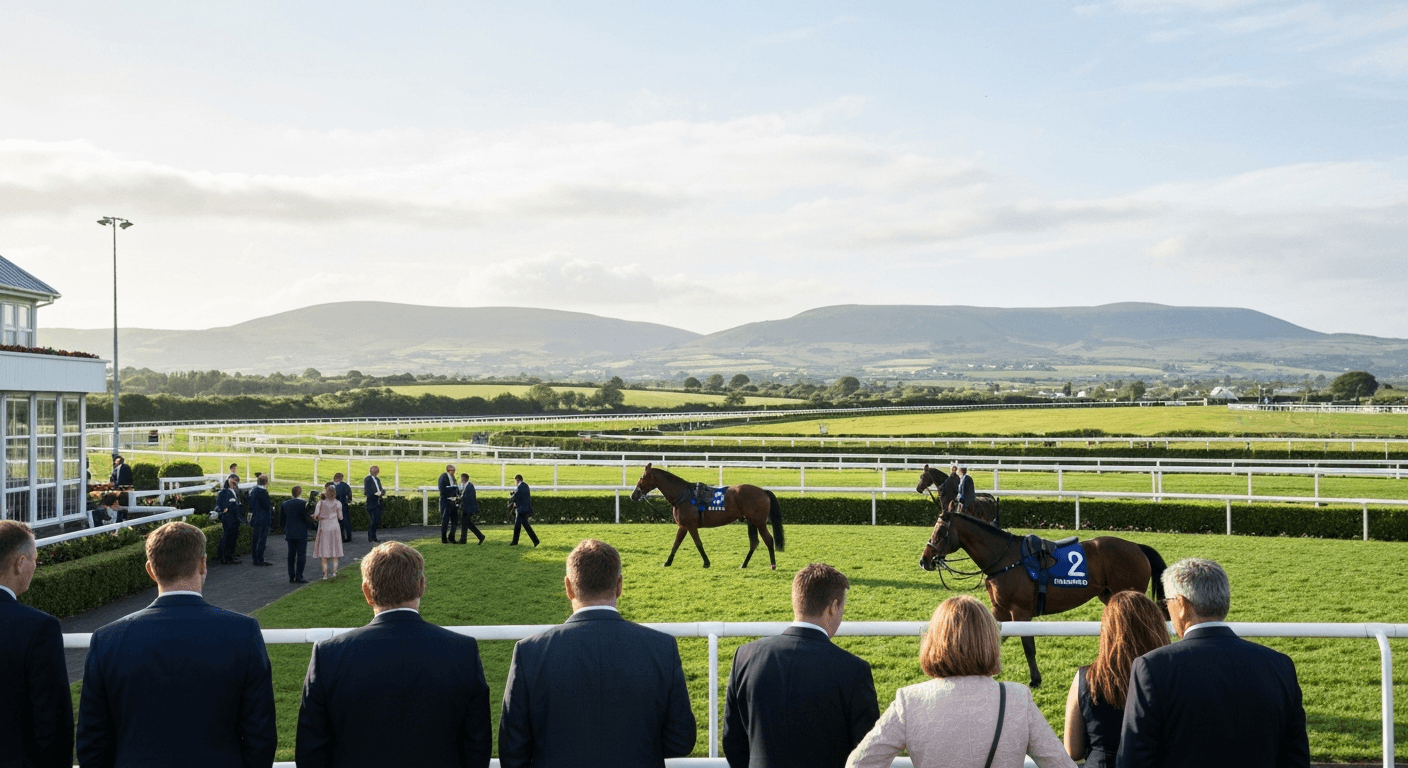
A Day Out at Tipperary Racecourse
Plan a day at Tipperary Racecourse: trains to Limerick Junction, admission and enclosures, food and bars, Super Sunday and practical first-visit tips.
Read more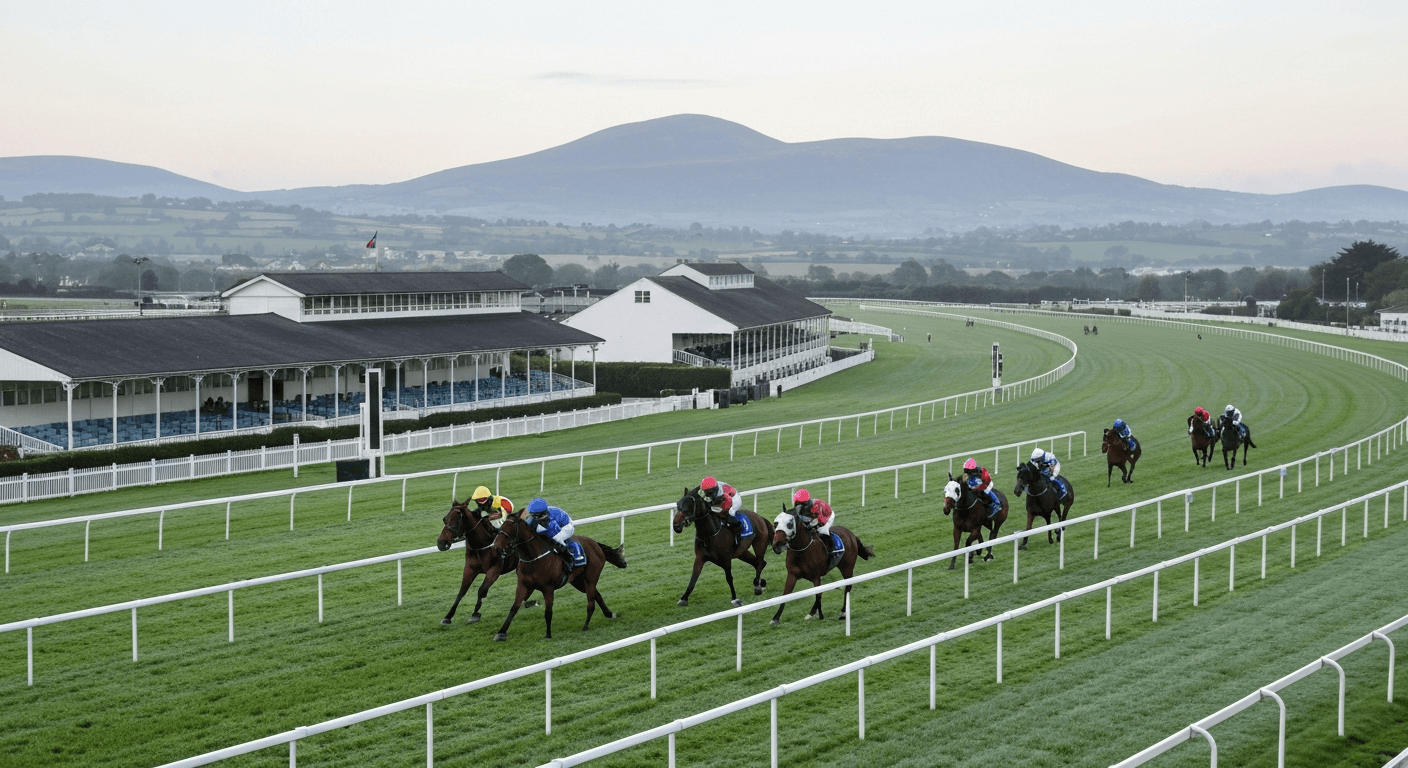
The History of Tipperary Racecourse
The history of Tipperary Racecourse at Limerick Junction, from the first races in 1848 to the Concorde Stakes and the champions who started out at the track.
Read moreResearch the field with the AI Race Predictor
Our model publishes calibrated win-probability estimates for UK races — a second opinion to understand a race, not tips. It's open about its record: it doesn't beat the market, and we show exactly how it does.
Work it out & learn the basics
Gamble Responsibly
Gambling should be entertaining and not seen as a way to make money. Never bet more than you can afford to lose. If you or someone you know has a gambling problem, help and support is available.