
Founder & Editor · Last reviewed 2026-06-30
A field in Kildare that grew champions
On a Thursday morning in June 1924, a few hundred people walked out across a freshly laid-out field on the eastern edge of a Co. Kildare market town to watch the first race meeting at Naas. The country around them was barely two years out of civil war. The track was raw, the buildings were thin, and there was little to suggest that this patch of farmland would one day be marketed, with some justification, as the "Nursery of Champions".
A century on, the claim is hard to argue with. By its own centenary count, the horses that have raced over Naas have gone on to win the thick end of three dozen Aintree Grand Nationals, more than two dozen Cheltenham Gold Cups and a handful of King George VI Chases. Arkle, the greatest steeplechaser in Timeform's history, recorded the second win of his career here. Envoi Allen, Bob Olinger, Annie Power, Espoir D'Allen and a long line of Classic fillies all passed through on the way up.
Naas is not just a place where good horses won. It is a place where they were tested before the world had caught on. That is the thread running through everything here: a left-handed, galloping oval of about a mile and a half, with a long uphill home straight that demands genuine stamina and rewards an honest, prominent type. It is a track that flatters nothing and tells you the truth.
It is dual-code, too, which gives it an unusually broad story. Over jumps, Naas stages the Grade 1 that opens the Irish National Hunt year, the first serious examination of each season's novice hurdlers. On the Flat, it is one of the most important trial grounds in the country, a stepping-stone before the Curragh Classics and Royal Ascot, and home to the €300,000 Irish EBF Ballyhane Stakes, one of Europe's richest races for two-year-olds.
This is the story of how a Civil War-era subscription scheme became all of that: the founding, the slow build, the modern track and the redevelopment, and above all the horses and the people who made Naas matter.
This guide covers the origins and founding, the growth of the course, the modern track and how it rides, its legendary horses and legendary people, and the modern era and redevelopment, before answers to common questions.
The origins and founding
Horses had been raced around Naas for a very long time before there was a formal racecourse. The area has a racing pedigree stretching back at least 260 years, but the course as we know it is a twentieth-century creation, and a remarkably well-timed one given the circumstances.
A company born in turbulent times
The plans took shape around 1921. In 1922, at the height of the Irish Civil War, a group of local farmers and gentlemen came together to form the Naas Race Company. The sources differ on the exact headcount and composition. Some describe eight like-minded farmers and gentlemen joined by a retired army general; others mention a wider body of local businessmen and farmers subscribing to the scheme. What is consistent is that this was a local, privately funded venture, not a state project, and that each founding subscriber put in £200, a serious sum at the time.
The driving force is generally credited to a local businessman, Thomas Whelan (his surname appears as both Whelan and Whelen in different records). Under his and the other founders' direction, the company bought just over 100 acres of farmland on the east side of the town, off what is now the Tipper Road, and laid out a course on it.
Laying out the track
The shape they chose has defined the place ever since: a left-handed, broadly oval circuit of about a mile and a half, galloping in character, with a long home straight that climbs uphill to the line. That uphill finish was not an accident of the ground so much as the making of the course's identity. It turned Naas into a stamina test from the very beginning, a track that suits the strong, long-striding stayer over the quick, sharp sort.
The first meeting took place on Thursday 19 June 1924. In its early years the course ran a modest programme, originally just seven meetings a year, and was decidedly short of facilities. But the foundations, in every sense, were laid.
A line that runs unbroken
The connection between that founding era and the modern course is closer than at most tracks. Board member Richard Brophy descends directly from Edward Brophy, one of the founding fathers. Many of the great Irish training and riding families, the Mullinses, the Hartys, the O'Gradys, the Prendergasts, the Rogerses and the Myerscoughs, have been associated with Naas across several generations. The course was built by the local racing community, and it has stayed in its hands.
The growth of the course
For a long stretch of its life, Naas grew quietly. It was a country course that did its job well, sending out good horses and giving Kildare a fixture of its own, without the scale or the spending power of the bigger Irish tracks. The development came in stages, building by building, decade by decade.
From thin facilities to a proper venue
The early Naas was working off very little. Improvements through the 1950s began to address that: a new tote building, modifications to the enclosure buildings, a new entrance from the Dublin Road and better standing facilities for spectators. None of it was glamorous, but it turned a bare field with a track on it into a venue that could comfortably hold a crowd.
The bigger jumps in quality came later, and they are worth setting out plainly:
| Year | Development | Detail |
|---|---|---|
| 1997 | New grandstand | Built at a cost of €2.2 million, opened by the then Minister for Finance, Charlie McCreevy |
| 2003 | Public bar and weigh room | New buildings added to the enclosure |
| 2005 | Track widening | The racing surface was widened |
| 2009 | New stable yard | Over €1.7 million spent on stabling |
The 1997 grandstand was the single most important step of the lot. A modern stand changed what Naas could offer racegoers and connections, and it set the course up for the busier programme and bigger race days that followed.
A galloping track takes its modern shape
The widening of the track in 2005 was part of a wider effort to make the surface fairer. Extensive levelling work flattened out ridges in the first three furlongs of the home straight, smoothing the run-in without softening the fundamental test. The defining features were kept: the long four-furlong straight, the climb to the line, the minor undulations elsewhere.
The course also developed the chutes that give it flexibility. A two-furlong chute joins the home straight so that five- and six-furlong races can be run on a straight course, while seven-furlong and one-mile starts come from a separate chute at the top of the track, with a long run to the home turn.
From seven meetings to twenty
The clearest measure of the growth is the fixture list. The course originally hosted seven meetings a year. By recent seasons that had grown to around twenty, taking in both Flat and National Hunt cards across the calendar. More than 6,000 races have been run at Naas since 1924. A country course had become a year-round operation, and one of the busiest quality middle-tier tracks in Ireland.
The modern track and how it rides
To understand why Naas has produced so many champions, it helps to understand how the track actually rides. This is not a sharp, speed-favouring circuit where a quick horse can steal a race. It is a galloping, uphill test, and it asks honest questions of every runner.
A galloping, stamina-sapping oval
Naas is left-handed and broadly oval, about a mile and a half round, all on turf, with no all-weather surface. The signature is the home straight: roughly four furlongs long and climbing uphill all the way to the line. That finish is what makes the track. A horse has to be fully proven at its trip, or beyond it, because the closing stages punish anything short of genuine stamina. Long-striding, strong stayers are suited; out-and-out speedsters and habitual hold-up horses are not.
Pace judgement matters more here than at most courses. Because the climb saps so much energy late, it generally pays to race handy or prominently, and out-and-out hold-up horses have a poor record. That is especially true over jumps, where hold-up hurdlers have shown a very low impact value across all distances.
The jumps track
Both jumps codes share the same left-handed circuit, with the chase course on the outside and the hurdles course on the inner, which makes the hurdles track fractionally sharper. The chase course has eight fences per circuit, including two open ditches, with the final two fences in the home straight and a run-in of just over a furlong. The fences are stiff but fair, and Naas typically records one of the lowest faller rates in Irish racing, a useful detail in a sport where a clean round is never guaranteed. The Grade 1 over 2m4f is run over 11 flights of hurdles.
Going and draw
The going at Naas can turn genuinely testing through the winter National Hunt season, riding soft to heavy after rain. One quirk matters: the section of track from the winning post to the seven-furlong start drains more slowly than the rest of the circuit and tends to ride softer, so the ground is not always uniform.
The Flat draw bias is modest and ground-dependent rather than strong. Over five and six furlongs, low-drawn runners have historically held a slight edge on better ground, with the field tending to congregate towards the middle as the track narrows. In soft or heavy ground the field often tacks across to the stands rail, which can help higher draws. Over seven furlongs and a mile, the long run to the turn means the draw matters little. Some recent-season data even suggests medium-to-high stalls have fared well, which is a reminder that the bias is not a rule to lean on.
Legendary horses
The "Nursery of Champions" label rests on the horses, and Naas has a roll of honour that punches well above the size of the course. Some won here at the start of their careers and went on to greatness elsewhere. Others were already great and simply passed through. Either way, the list is long.
Arkle and the old greats
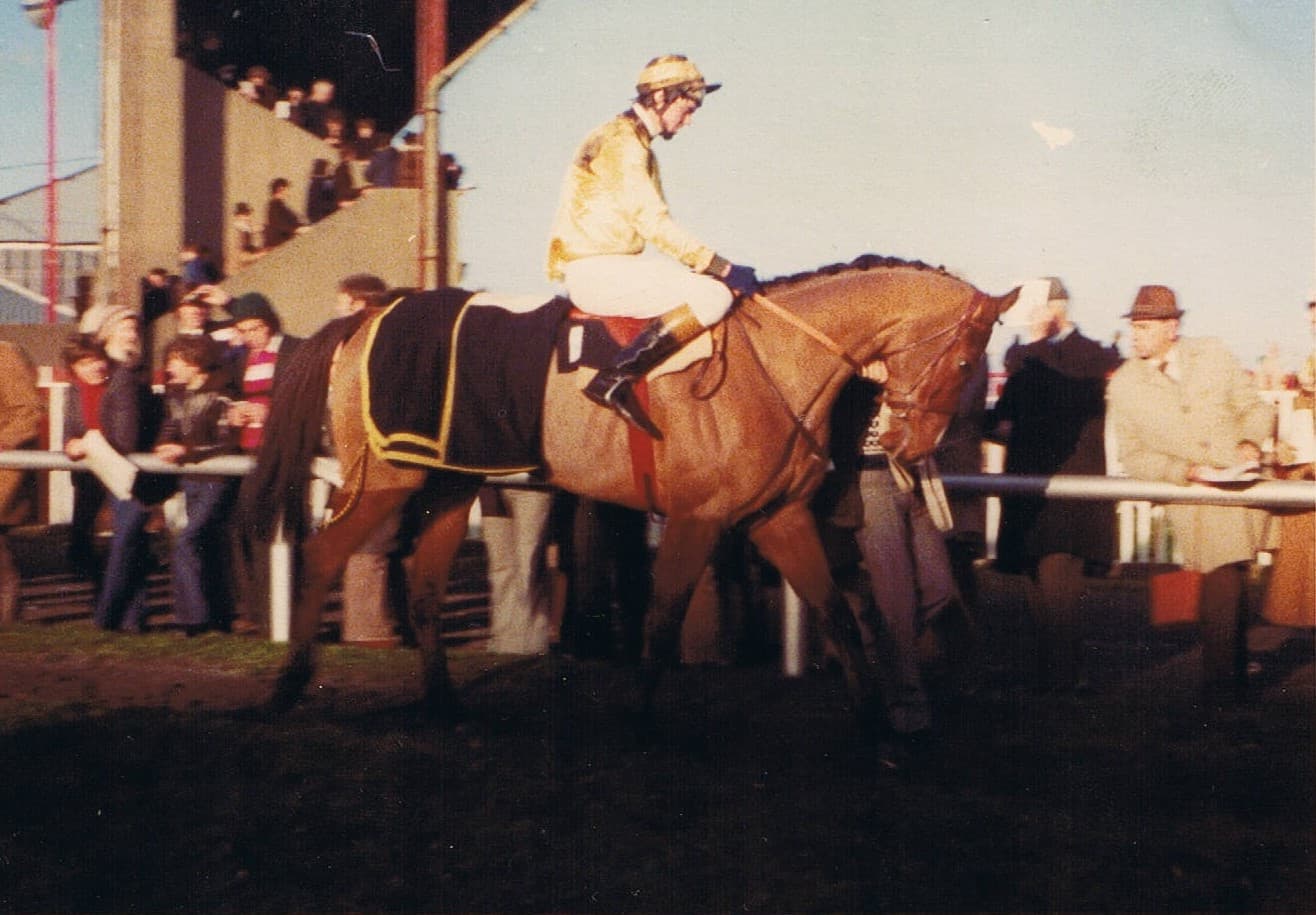
Arkle, the greatest steeplechaser in Timeform's history at a rating of 212 and a three-time Cheltenham Gold Cup winner in 1964, 1965 and 1966, recorded the second victory of his career at Naas. On 10 March 1962, ridden by Pat Taaffe for the first time and sent off the 2/1 favourite in a field of ten, he won the two-mile Rathconnel Handicap Hurdle by four lengths. A horse who would come to define National Hunt racing took an early step at Naas.
Ragusa, the 1963 Irish Derby and Eclipse Stakes winner, returned to action at Naas as a four-year-old in 1964 by winning the Ardenode Stakes.
Limestone Lad is the horse most bound up with the place. Trained locally by James Bowe at Knockmullen, Co. Carlow, the great staying hurdler won a bumper at Naas late in his novice campaign and recorded many of his big wins here, including the Bank of Ireland Hurdle, the race later renamed the Limestone Lad Hurdle in his honour, and the Brown Lad Handicap Hurdle. He won 35 races in all and famously beat Istabraq in the 2000 Hatton's Grace Hurdle.
The Grade 1 graduates
Since 2015, Naas has staged the Grade 1 that opens the Irish jumps year, and its winners have gone straight to the top.
Envoi Allen won it in 2020 at 1/4 for Gordon Elliott and Davy Russell, then took the Ballymore Novices' Hurdle at the Cheltenham Festival and became a multiple Grade 1 winner over fences. Bob Olinger did the same double the following year, winning the 2021 running for Henry de Bromhead and Rachael Blackmore before following up in the Ballymore. The race is one of the most reliable Cheltenham pointers in the calendar.
Rule The World won the 2013 Slaney/Lawlor's Novice Hurdle for Mouse Morris and Davy Russell, then wrote his own headline three years later by winning the 2016 Aintree Grand National. The Grade 1 era has also crowned Death Duty (2017), Battleoverdoyen (2019), Champ Kiely (2023) and The Yellow Clay (2025), each among the leading novice prospects of their seasons. The very first Grade 1 running, in 2015, produced the race's biggest shock when Mckinley scored at 33/1 for Willie Mullins. Going back further, Golden Cygnet won the race in 1978 before taking the Cheltenham Supreme Novices' Hurdle. The most recent winner, I'll Sort That, took the 2026 renewal at 5/1.
Champions made over hurdles and on the Flat
The other Naas features have a similar habit of catching future stars early.
- Annie Power won the Johnstown Novice Hurdle in 2013 for Willie Mullins before becoming a Champion Hurdle heroine.
- Espoir D'Allen won the Limestone Lad Hurdle in 2019 for Gavin Cromwell, then landed a shock Champion Hurdle later that year.
- Alpha Centauri won the Fillies' Sprint Stakes at Naas as a two-year-old in 2017 before developing into a brilliant multiple Group 1-winning miler.
- Pleascach won the Blue Wind Stakes in 2015 for Jim Bolger ahead of Irish 1,000 Guineas and Yorkshire Oaks success.
The Coolmore Stud Irish EBF Fillies Sprint Stakes alone reads like a who's who of top fillies, with You'resothrilling, Lillie Langtry, Sky Lantern, Mother Earth, Meditate, Porta Fortuna, Fairy Godmother and Lady Iman all on its roll.
Not every great horse won here. Flooring Porter, the popular dual Cheltenham Stayers' Hurdle winner, ran at Naas and notably fell in the Lismullen Hurdle staged at the course, a reminder that the track tests even the best. By the course's centenary count, the horses who honed their skills at Naas have gone on to win 31 Aintree Grand Nationals, 28 Cheltenham Gold Cups and eight King George VI Chases.
Legendary people
Champions need people behind them, and Naas has drawn the very best trainers and jockeys in Ireland to its feature races. The honours boards are dominated by a handful of familiar names.
The trainers
Willie Mullins, Ireland's champion National Hunt trainer, dominates the Naas jumps Pattern. He has at least nine wins in the Lawlor's/Slaney Grade 1 (Homer Wells 2005, Mikael D'haguenet 2009, Gagewell Flyer 2011, Briar Hill 2014, Mckinley 2015, Bellshill 2016, Next Destination 2018, Champ Kiely 2023 and Readin Tommy Wrong 2024), eight in the Limestone Lad Hurdle, and a long list of Johnstown, Newlands and Poplar Square successes. In the Grade 1 era he and his chief rival have shared the spoils almost evenly.
That rival is Gordon Elliott, who has won the Lawlor's Grade 1 several times over, including with Death Duty (2017), Battleoverdoyen (2019), Envoi Allen (2020), Ginto (2022) and The Yellow Clay (2025).
Henry de Bromhead is the most successful trainer in the Newlands Chase, with five wins, and a multiple winner of the Poplar Square Chase. Paired with jockey Rachael Blackmore, he has a strong Naas record.
On the Flat, Aidan O'Brien is the dominant force at the trials, with five wins in the Group 3 Lacken Stakes and many Fillies' Sprint Stakes successes. Naas's two-year-old maidens have launched a stream of Ballydoyle Classic and Royal Ascot horses. Dermot Weld and Jim Bolger are the other great Flat names here: Bolger is the joint-record holder in the Blue Wind Stakes with six wins, every one of them ridden by Kevin Manning, while Weld won the same race with the high-class Tarnawa in 2019.
The jockeys
Over jumps, Ruby Walsh is the leading historic rider in the Grade 1, with four wins (Homer Wells 2005, Mikael D'haguenet 2009, Briar Hill 2014 and Bellshill 2016). Paul Townend leads the Limestone Lad Hurdle with seven wins, and Rachael Blackmore and Mark Walsh have posted strong recent strike rates at the course.
On the Flat, Ryan Moore has four Lacken Stakes wins and an exceptionally high course strike rate linked to Ballydoyle, while Colin Keane has ridden the most Flat winners at Naas in recent years. Kevin Manning and Shane Foley complete the standout list.
The people who run the place
Naas is owned and run not by the national governing body but by The Naas Race Company Limited, the private company descended from the 1920s founders. Its chairman is Dermot Cantillon, a prominent breeder at Tinnakill House and a former Horse Racing Ireland board member and former Tote chairman.
The executive has had real continuity. Margaret McGuinness was the long-serving early manager. Tom Ryan ran the course from 2007 to 2019, overseeing major facility upgrades before leaving for a senior racing role in Saudi Arabia. Eamonn McEvoy managed Naas from 2019 to 2024 before joining Tattersalls Ireland, and Aidan McGarry, a Naas native and former manager of Navan, took over in June 2024.
The modern era and redevelopment
The Naas of today is a long way from the bare field of 1924, and most of that transformation has come in the last decade. The course has spent heavily, won awards, added a Grade 1, and reached its centenary as one of the most respected middle-tier tracks in Irish racing.
A Grade 1 and a new generation of races
The single biggest sporting milestone of the modern era came in 2015, when the Lawlor's of Naas Novice Hurdle was upgraded to Grade 1, the first ever Grade 1 staged at the course. The race had climbed steadily, gaining Grade 3 status in 1993 and Grade 2 in 2005 before the final promotion. As the first Grade 1 of the Irish National Hunt year, it gave Naas a genuine national headline fixture. From the 2026 running it carries Ballymore Properties as title sponsor, run as the Ballymore Novice Hurdle, with prize money of €100,000.
Alongside it, Naas built out a serious Flat identity as a trials course. Its Royal Ascot Trials Day in May, featuring the Group 3 Lacken Stakes and the Group 3 Coolmore Stud Irish EBF Fillies Sprint Stakes, has produced a stream of subsequent Royal Ascot winners and has been shown live on terrestrial television. In 2020, Joe Foley of Ballyhane Stud founded the Irish EBF Ballyhane Stakes, a €300,000 sales-type race for two-year-olds run on the August Bank Holiday Monday. The racecourse describes it as one of Europe's most lucrative juvenile races, and it is now the richest day in the Naas calendar.
Spending on the fabric
The redevelopment has been substantial. From 2018 onwards, the course states it has spent over €3.2 million as part of a Horse Racing Ireland Capital Development Scheme. The centrepiece is The Circle, a €1.7 million cylindrical feature building opened in January 2019, with a public bar on the ground floor and the Goffs Owners & Trainers Lounge above it offering 180-degree views. The scheme also delivered The Post self-service restaurant, a café, a Members Lounge, and upgrades to the grandstand first floor, the Panoramic Restaurant and the private suites.
The course also grew its programme, adding a new weekend festival in October 2023 and building towards its roughly twenty meetings a year. That work has been recognised: Naas was named Racecourse of the Year at the Association of Irish Racehorse Owners Awards in 2022, 2023 and 2024, three years running.
A centenary and what comes next
In 2024 Naas celebrated its centenary. The milestone was marked by a book, The Centenary of Naas Racecourse (1924-2024): Nursery of Champions by the historian Turtle Bunbury, launched in late 2023, and by a free centenary race day on 19 May 2024. The course has also begun to look outward in how it welcomes racegoers, introducing a dedicated Neurodiverse Day for the 2025 Ballyhane Stakes meeting with a wheelchair-accessible Sensory Express Bus and designated quiet-zone suites.
Watching from home
For those who cannot get to Tipper Road, Naas, like all 26 Irish racecourses, is broadcast on Racing TV, the subscription channel owned by Racecourse Media Group, under a five-year deal running from 2024 to the end of 2029. It is a Racing TV course, not a Sky Sports Racing one. The biggest days reach a wider audience on terrestrial television, with the Royal Ascot Trials Day having been carried live on ITV in Britain and TG4 in Ireland. A century after that first June meeting, the field in Kildare is still in the business of growing champions, and more people than ever can watch it happen.
A note on the betting
Naas has a reputation in some quarters as a "punter's graveyard", though the course guides themselves describe the track as fair and easy to read. Whatever the local lore, one thing holds true here as everywhere in racing: backing favourites blindly loses money to the starting price over time. Short-priced market leaders win their share, but level-stakes backing of them produces a long-term loss, and no staking method changes that underlying fact. Treat any figure here as history, not a tip.
Frequently Asked Questions
Share this article
More about this racecourse
All naas guides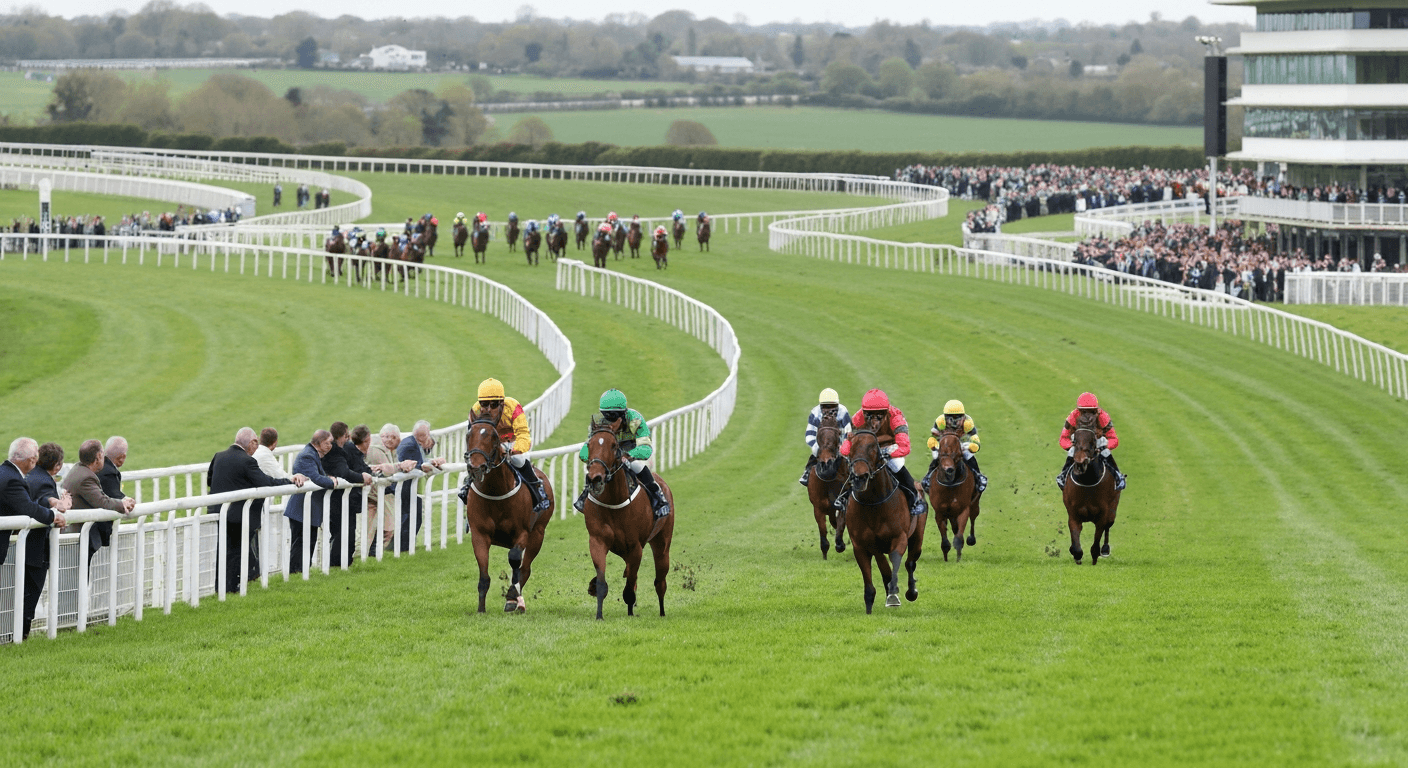
The Lawlor's of Naas Novice Hurdle: Race Guide
A guide to the Grade 1 Lawlor's of Naas Novice Hurdle, the first Grade 1 of the Irish jumps year, its winners and its role as a Cheltenham trial.
Read moreA Day at Naas, Visitor Guide
Plan a day at Naas Racecourse in Co. Kildare, getting there from Dublin, the stands, accessibility, food and bars, the best days and how to watch.
Read moreBetting at Naas, A Course Guide
How Naas's galloping, uphill track shapes Flat trials and Grade 1 jumps form, plus draw, going and the honest favourite picture.
Read moreGamble Responsibly
Gambling should be entertaining and not seen as a way to make money. Never bet more than you can afford to lose. If you or someone you know has a gambling problem, help and support is available.