
Founder & Editor · Last reviewed 2026-06-30
The first Grade 1 of the Irish jumps year
The Christmas racing is barely cleared away, the National Hunt season is at its mid-winter peak, and the first big question of the year arrives early. Which of this season's novice hurdlers is the real thing? On a soft January afternoon at Naas, in the heart of Co. Kildare, a clutch of the most promising young jumpers in Ireland line up to start answering it. This is the Lawlor's of Naas Novice Hurdle, and it carries a distinction nothing else in the calendar can match: it is the first Grade 1 of the Irish National Hunt year.
That timing is the whole point. By the time the field jumps off, the trainers know which of their novices have wintered well and which have not, and they are ready to put their best forward. The race sits at a natural pinch point in the season, late enough that the form lines have started to firm up, early enough that there is still everything to play for before the Cheltenham Festival in March. A win here is the first hard evidence that a horse belongs in the top tier, and it sends connections home to plan a spring campaign with real ambition.
Naas is a galloping, left-handed track with a long, stiff home straight that climbs all the way to the line. It is a thorough test of stamina rather than a place for quick, nimble types to steal a race, and over two and a half miles of soft winter ground the Lawlor's asks a young horse to stay every yard and jump under pressure. That is exactly why it has become such a respected trial. The horses that win it tend to be the ones built to go further and last longer, the profile that travels well to Cheltenham and beyond.
The race is registered as the Slaney Novice Hurdle, and for many years it was sponsored by the Lawlor's of Naas hotel in the town centre, the name most racing followers still use for it. From the 2026 running, Ballymore Properties took over as title sponsor. Whatever the name on the day, the meaning is the same. This is where the Irish jumps season properly gets serious.
This guide covers the race itself and its distance and test, how it grew from Grade 3 to Naas's first Grade 1, the great winners who have lifted it, its standing as a genuine Cheltenham trial, and how to go about watching the race on course or from home, before rounding off with answers to some common questions.
Where to Bet
Place your bets with a trusted, licensed bookmaker.

Promo code BETFRED50. New customers only. Register, deposit with a Debit Card, and place a first bet of £10+ at Evens (2.0)+ on Sports, to be settled within 7 days, to get £30 in Sports Free Bets and £20 in Bet Builder Free Bets within 24 hours of settlement. 7-day expiry. Eligibility & payment exclusions apply. Full T&Cs apply. Take Time to Think. BeGambleAware.org. 18+. Full T&Cs.

Promo code R30. New UK customers only, 18+. Register, deposit £10 or more, then place a £10 single cash bet at odds of 1/2 (1.5) or greater on any sports market (excluding Virtuals). Once the qualifying bet settles you get £30 in Free Bets (3 x £10) — the qualifying bet can win or lose. Free Bets are valid on any sports market excluding Virtuals, expire in 7 days, are non-withdrawable and must be used in full. Excluded deposit methods apply (including PayPal, Apple Pay, Skrill and NETELLER). Named bets such as Lucky 15 do not qualify. If you cash out the qualifying bet, or it is voided, you are no longer eligible for the offer. Ends 31.12.26. Full T&Cs apply. Please gamble responsibly. BeGambleAware.org. 18+. Full T&Cs.

Promo code BET40GET20. New UK customers, 18+. Register with the code and place a first bet of £40 or more at Evens (2.0) or greater. Receive 2 × £10 free bets: the first credited automatically once the qualifying bet settles, the second 24 hours later. Free bets must be placed at minimum odds of 4/1 (5.0), expire 24 hours after credit, and the free-bet stake is not returned with winnings. Debit card deposits only. Take Time to Think. BeGambleAware.org. 18+. T&Cs apply. Full T&Cs.

50% of your first-day net losses refunded as a free bet, capped at £25. New UK customers aged 18+ only. To qualify, deposit and place a first bet of £10 or more on any sport at minimum odds of evens (2.00), then place at least two further bets on different events, each worth at least 50% of your largest bet, all at evens (2.00) or greater. Losses are counted from your first settled bet until 23:59 the same day. Place a qualifying £10+ bet and you are guaranteed at least a £5 free bet. Bets placed at SP, void bets, cashed-out bets and bets struck with free bets do not count towards the offer. The free bet is credited the day after your qualifying bets settle and must be used within 7 days, after which it expires. It can be used at odds from 1/4 (1.25) up to 250/1 on singles and straight accumulators, but not on Trixie, Patent or Yankee style multiples. Free-bet stake is not returned with winnings. One offer per person, household, address, IP address and device. E-wallet deposits may not qualify, so check the cashier before depositing. Customers registered with GAMSTOP cannot claim. KYC identity verification must be completed before the free bet is credited. Take Time to Think. BeGambleAware.org. 18+. T&Cs apply. Full T&Cs.

New customers, 18+. Choose the sports bonus at sign-up, make a first deposit and receive a 100% bonus up to £50 in your Sports Bonus balance. To convert the bonus to cash, wager it 10x within 30 days. Single bets below Evens (2.00) do not qualify; accumulators do not qualify if any selection is below 1/2 (1.50). Virtual Sports, voided, cancelled, drawn, cashed-out and free-bet wagers do not count towards wagering. Only the first settled bet per event counts. Withdrawing before the wagering requirement is met forfeits the bonus balance including bonus winnings. Real-money funds are used before bonus funds. Deposits via Skrill or Neteller are not eligible. Not valid in conjunction with other promotions. Odds, bet and payment limits apply. 10bet general and promotion T&Cs apply. BeGambleAware.org. 18+. Full T&Cs.

New customers in Great Britain and Republic of Ireland, 18+. Place a £10 fixed-odds qualifying bet at minimum odds of 1/2 (1.50) — single or each-way (only the win part counts), pre-event or in-play, not cashed out early, within 28 days of opening the account. Receive up to £60 in bonuses credited over three days: 3 × £10 fixed-odds free bets (the first on settlement, then 24 and 48 hours later) plus 3 × £5 Total Goals FOOTBALL spread bets, 3 × £5 racing Winning Favourites spread bets and a £1 racing Race Index spread bet (the spread bets need a full spread-betting account). Free-bet stakes not returned with winnings; free bets valid 28 days from issue. IMPORTANT: the £5 credits are SPREAD bets — sports spread betting carries the risk that losses can exceed your stake. Sports spread-betting customers do not have Financial Ombudsman or FSCS recourse. Take Time to Think. BeGambleAware.org. 18+. T&Cs apply. Full T&Cs.

Promo code WELCOME15, entered under My Bonuses after registering. New UK customers, 18+. Place a first qualifying bet of at least £10 from your cash balance at odds of evens (2.0) or greater within 7 days of opening the account. Once the qualifying bet fully settles you receive £15 in free bets, credited as 3 x £5 tokens with set uses: one £5 accumulator free bet (minimum 4 legs, each leg at 2/5 or bigger), one £5 sports free bet (any market at evens or bigger) and one £5 Sub Cover free bet (selected football player markets at evens or bigger). Free-bet stakes are not returned with winnings. Free bets expire 7 days after they are credited. Void, cashed-out and partially cashed-out bets do not qualify. One offer per customer. Confirm the current terms on BetGoodwin's own welcome-offer page before claiming. Take Time to Think. BeGambleAware.org. 18+. T&Cs apply. Full T&Cs.

New UK customers, 18+. Minimum deposit £10. Place a £10 qualifying single at minimum odds of 1/2 (1.50), settled within 14 days. Receive £30 in free bets (stake not returned), split £20 for sportsbook use (2 x £10) and £10 for Bet Builder only (2 x £5); Bet Builder does not cover horse racing. Free bets must be accepted within 7 days and expire 7 days after acceptance. No promo code required. Best Odds Guaranteed on UK & Irish racing, subject to having staked over £25 in the previous seven days. Operated by LiveScore Betting and Gaming (Gibraltar) Ltd, UKGC 56859. Confirm the current terms on LiveScore Bet's own promotions page before claiming. Take Time to Think. BeGambleAware.org. 18+. T&Cs apply. Full T&Cs.
18+. BeGambleAware.org
The race itself
The Lawlor's of Naas Novice Hurdle is a Grade 1 contest for novice hurdlers, and it is the only Grade 1 that Naas stages all year. It is run over about 2 miles 4 furlongs, a distance recorded as 4,023 metres, with 11 flights of hurdles to negotiate. The conditions are open to horses aged four and upwards, having historically been confined to five-year-olds and older. Prize money stands at 100,000 euro, with 60,000 euro going to the winner, which makes it both the richest jumps race on the Naas calendar and a serious target for any yard with a leading novice.
As a Grade 1 it is run at level weights, with the standard novice allowances applying. There is no handicapping to bunch the field together. Every runner carries the same burden bar age and sex allowances, so the race is a straight test of which horse is best on the day. That clean, weight-for-age format is part of what makes a win here so meaningful. A novice that beats its rivals on equal terms at this level has nothing to hide behind.
The distance and the test
Two and a half miles is a telling trip for a young hurdler in mid-winter. It is far enough to expose any horse that does not truly stay, and at Naas the demand is sharpened by the track. The home straight runs about four furlongs and climbs uphill to the line, so the closing stages are run into a stamina-sapping rise rather than on the flat. A sound judgement of pace is essential, and the course has a long record of rewarding horses that race handy or prominently. Out-and-out hold-up horses have a poor record over jumps here, where the uphill finish leaves little room to make up ground late.
The going is the other variable that shapes the race. Naas can ride genuinely testing through the winter, soft to heavy, and the section of track from the winning post back towards the seven-furlong start drains more slowly and rides softer than the rest of the circuit. The 2025 Lawlor's was run on heavy ground, and the 2026 Grade 1 over the same trip was run in 5 minutes 5.10 seconds on soft. Those are not conditions for a flashy speedster. They favour a strong, galloping stayer that can jump efficiently and keep finding under pressure, which is precisely the type the race tends to throw up.
The slot in the calendar
The Lawlor's is run in early January, at the head of the Irish jumps Pattern for the new year. It shares its card with the Grade 3 Limestone Lad Hurdle, another quality two-mile hurdle, so the day functions as Naas's flagship National Hunt fixture. The meeting also stages a Best Dressed competition, a nod to the fact that this is a day out as well as a serious piece of racing. Winter weather can intervene: the 2025 fixture was abandoned on 5 January for frost and rescheduled to 10 January, a reminder that an early-January Grade 1 in Ireland is always at the mercy of the cold.
From Grade 3 to Naas's first Grade 1
The race that is now a Grade 1 began life as a far more modest affair, and its rise tracks the rise of Naas itself. It is registered as the Slaney Novice Hurdle, and in its early years it was run over 2 miles 3 furlongs before settling at its current trip of 2 miles 4 furlongs in 1995. For its first decades it sat well down the Pattern, a useful novice event rather than a championship pointer.
The first formal upgrade came in 1993, when the race was awarded Grade 3 status. That gave it a place on the graded ladder and marked it out as a contest worth winning, but it was still some way short of the top. The next step came in 2005, when it was raised to Grade 2. By then the quality of horse it was attracting had begun to outgrow its billing, with leading Irish yards using it as a winter target for their better novices.
The defining moment arrived in 2015. The race was promoted to Grade 1, and in doing so it became the first Grade 1 ever staged at Naas. For a course that had spent its history as a respected dual-code track and a noted Flat trial venue, but without a top-flight jumps prize of its own, this was a genuine landmark. The track that markets itself as the Nursery of Champions finally had a championship-level race to call its own, and the timing in early January handed it a unique role as the first Grade 1 of the Irish jumps year.
The sponsors
For most of its Grade 1 era the race carried the name of a local backer. Lawlor's of Naas, the hotel in the town centre, was title sponsor from 2015 through to 2025, and the Lawlor's name became the one most racing people used. From the 2026 running the title sponsorship passed to Ballymore Properties, and the race was run that year as the Ballymore Novice Hurdle. The registered name, the Slaney, has stayed constant underneath the changing sponsors, which is why the same race can appear under several titles depending on the year and the source.
A race that grew with its course
The elevation to Grade 1 in 2015 did not happen in isolation. It came during a long period of investment at Naas, from the grandstand built in 1997 through to the more than 3.2 million euro the course says it has spent on redevelopment from 2018 onwards, including the cylindrical feature building known as The Circle. A track investing heavily in its facilities and pushing for a higher profile needed a flagship race to match, and the Lawlor's became exactly that. Within a few seasons of its promotion it had drawn in the best novices in the country and produced winners who went on to the sport's biggest stages, which is the surest sign that the upgrade was deserved.
The great winners
The roll of honour is what gives the Lawlor's its standing. In the Grade 1 era especially, the race has been won by some of the best young hurdlers in training, and several of them went on to far bigger things. The list reads as a who's who of recent Irish novice hurdling.
The Grade 1 roll of honour
The table below sets out the winners through the modern renewals, with their trainers, jockeys and starting prices where confirmed.
| Year | Winner | Trainer | Jockey | SP |
|---|---|---|---|---|
| 2026 | I'll Sort That | Declan Queally | Mr D.L. Queally | 5/1 |
| 2025 | The Yellow Clay | Gordon Elliott | Sam Ewing | 11/4 |
| 2024 | Readin Tommy Wrong | Willie Mullins | Daryl Jacob | 16/1 |
| 2023 | Champ Kiely | Willie Mullins | Danny Mullins | 10/3 |
| 2022 | Ginto | Gordon Elliott | Jack Kennedy | 5/4f |
| 2021 | Bob Olinger | Henry de Bromhead | Rachael Blackmore | |
| 2020 | Envoi Allen | Gordon Elliott | Davy Russell | 1/4f |
| 2019 | Battleoverdoyen | Gordon Elliott | Jack Kennedy | 2/1f |
| 2018 | Next Destination | Willie Mullins | Paul Townend | 8/15f |
| 2017 | Death Duty | Gordon Elliott | Jack Kennedy | 5/6f |
| 2016 | Bellshill | Willie Mullins | Ruby Walsh | 2/5f |
| 2015 | Mckinley | Willie Mullins | Paul Townend | 33/1 |
| 2014 | Briar Hill | Willie Mullins | Ruby Walsh | 1/3f |
| 2013 | Rule The World | Mouse Morris | Davy Russell | 7/1 |
The stars who went on to bigger things
Several Lawlor's winners are remembered for what they did after Naas. Envoi Allen, who won in 2020 at the cramped odds of 1/4 for Gordon Elliott and Davy Russell, went straight on to take the Ballymore Novices' Hurdle at the Cheltenham Festival and later became a multiple Grade 1 winner over fences. Bob Olinger did exactly the same the following year, winning the 2021 Lawlor's for Henry de Bromhead and Rachael Blackmore before following up in the Ballymore at Cheltenham. Two horses, two seasons, the same Naas-to-Cheltenham double.
The most striking after-story of all belongs to Rule The World, who won the 2013 renewal for Mouse Morris and Davy Russell. He went on to win the 2016 Aintree Grand National, a reminder that this two-and-a-half-mile hurdle has launched horses who later proved themselves over the most testing staying trips in the sport. The race's reach stretches back further too: Golden Cygnet, an earlier winner from 1978, went on to take the Cheltenham Supreme Novices' Hurdle.
Others from the Grade 1 era were the leading novice prospects of their seasons. Death Duty, Battleoverdoyen, Champ Kiely and The Yellow Clay all won the race and carried serious reputations into the spring. The Yellow Clay won the 2025 running by eight lengths, the sort of wide-margin success that marks a horse out as something above the ordinary.
The shocks
For all that favourites have a strong record here, the Lawlor's has produced its share of upsets, and they are part of its character. The biggest came in the very first Grade 1 running in 2015, when Mckinley won at 33/1 for Willie Mullins and Paul Townend, the race's biggest shock at the moment it reached the top level. Readin Tommy Wrong sprang another surprise in 2024, winning at 16/1, again for Mullins, who that year saddled the first three home. Those results sit alongside a long run of short-priced winners, which is the balance you would expect from a true championship trial.
The record holders
Two names dominate the history. Willie Mullins is the most successful trainer in the race with at least nine wins, a list that runs from Homer Wells in 2005 through Mikael D'haguenet, Gagewell Flyer, Briar Hill, Mckinley, Bellshill, Next Destination and Champ Kiely to Readin Tommy Wrong in 2024. Since the 2015 elevation he and Gordon Elliott have shared the spoils almost evenly, the two giants of Irish jumps racing trading the race year on year. Among the jockeys, Ruby Walsh is the leading rider with four wins, on Homer Wells, Mikael D'haguenet, Briar Hill and Bellshill.
A genuine Cheltenham trial
The reason the Lawlor's matters beyond Naas is its standing as a Cheltenham trial. Win it well, and a horse is suddenly being talked about for the Festival in March. The race has earned that billing the hard way, by producing winners who went on to deliver at Cheltenham rather than by reputation alone.
The Ballymore connection
The clearest line runs to the Ballymore Novices' Hurdle, the Festival's premier staying novice hurdle over the same kind of two-and-a-half-mile trip. Envoi Allen in 2020 and Bob Olinger in 2021 both won the Lawlor's and then completed the double in the Ballymore at Cheltenham. That is exactly the progression the race is built to identify. The distance matches, the emphasis on stamina matches, and the early-January date gives connections a clean run to the Festival without too much racing in between. When a horse wins the Lawlor's and then heads to the Ballymore, it is following a well-worn and successful path.
What the winning profile looks like
The form trends behind the race tell a consistent story about the type of horse that wins it, and they reinforce why it works as a trial. In the ten years before 2019, every single winner had won on its last completed start, nine of the ten had run within the previous month, and seven had already won over at least 2 miles 4 furlongs. In other words, the race rewards horses arriving in form, race-fit and already proven at the trip. Those are the same qualities that travel well to a championship in March. A novice that ticks all three boxes at Naas is a novice whose stamina, fitness and momentum have all been tested in public.
Favourites have a strong record, with nine winning favourites across the 20 renewals up to the most recent runnings, which is what you would expect of a race where the best horses turn up and run to form. The upsets, Mckinley at 33/1 and Readin Tommy Wrong at 16/1, are the exceptions that keep the contest honest rather than evidence that the form is unreliable.
A trial, not a guarantee
It is worth being clear about what a trial does and does not tell you. A strong Lawlor's win is genuine evidence that a horse is high class, stays well and handles a real test, and the after-stories of Envoi Allen, Bob Olinger and Rule The World show how far that evidence can carry. But a winter Grade 1 over soft ground at Naas is not the Festival itself, and plenty can change between January and March. Some winners go on to Cheltenham glory, others do not make the trip or meet better on the day. The race is a guide to the best of the season's novices, not a forecast of results to come.
That is also the right way to read it from a betting point of view. The Lawlor's is one of the most informative pieces of the novice hurdle jigsaw, and it shapes the ante-post markets for the spring. It is not a tip sheet. Short-priced winners here win their share, but as in all racing, backing the market leaders blindly loses money to the starting price over time, and no clever season-long strategy changes that underlying truth. The value in the race is the information it gives, not a system it hands you.
Watching the race
The Lawlor's day is an easy fixture to follow, whether you are heading to Kildare in person or watching from home on a cold January afternoon.
On course
Naas sits just off the M7 motorway on the eastern edge of the town, about 30km south-west of Dublin, with the racecourse roughly five minutes from exit 9 and clearly signposted. Free car parking is provided on every race day on a first-come, first-served basis. By rail, Iarnród Éireann trains run from Dublin Heuston to Sallins, the nearest station, and the racecourse runs a shuttle bus from Sallins to the course on weekend race days, before and after racing. There are also regular bus services to Naas town from Dublin city centre and Dublin Airport.
The racecourse opens an hour and a half before the first race, so arriving in good time is sensible for a busy Grade 1 day. Race cards are sold for a few euro on the gate. Naas is a compact, boutique course where spectators can see the whole circuit from the stands, which makes for a closer view of a staying hurdle than you get at the bigger tracks. The ground floor of the grandstand has a cafe, a Tote bar and betting facilities, while The Circle houses a public bar and the Goffs Owners and Trainers Lounge with wide views over the track. There is no formal dress code, though the day carries a Best Dressed competition, and the course simply recommends dressing for the winter weather. For accessibility, there are accessible bathrooms in every building and accessible parking spaces, and the course asks anyone needing accessible parking to phone ahead on 045 897391 so staff can help them park close to the entrance.
From home
In Ireland and the UK, racing from Naas is shown on Racing TV, the subscription channel that carries all 26 Irish racecourses under a media-rights deal running to the end of 2029. The Lawlor's, as the flagship jumps fixture, is part of that coverage, and dedicated single-meeting feeds are available through Racing TV Extra. Racing TV's home coverage sits behind a paywall, so watching live means either a subscription or an integrated bookmaker stream where available.
For those without Racing TV, the simplest route is to follow the race through live results and reports on the major services, including the Racing Post, Sky Sports Racing, At The Races, Sporting Life and Horse Racing Ireland's own goracing.ie. While Naas is a Racing TV course rather than a Sky Sports Racing one, results and analysis are widely available across all the usual outlets shortly after the race is run. Note too that early-January weather can move the fixture, as it did in 2025 when frost forced an abandonment and a rescheduling, so it is always worth checking the meeting is going ahead before you set out or settle in to watch.
Frequently Asked Questions
Share this article
More about this racecourse
All naas guides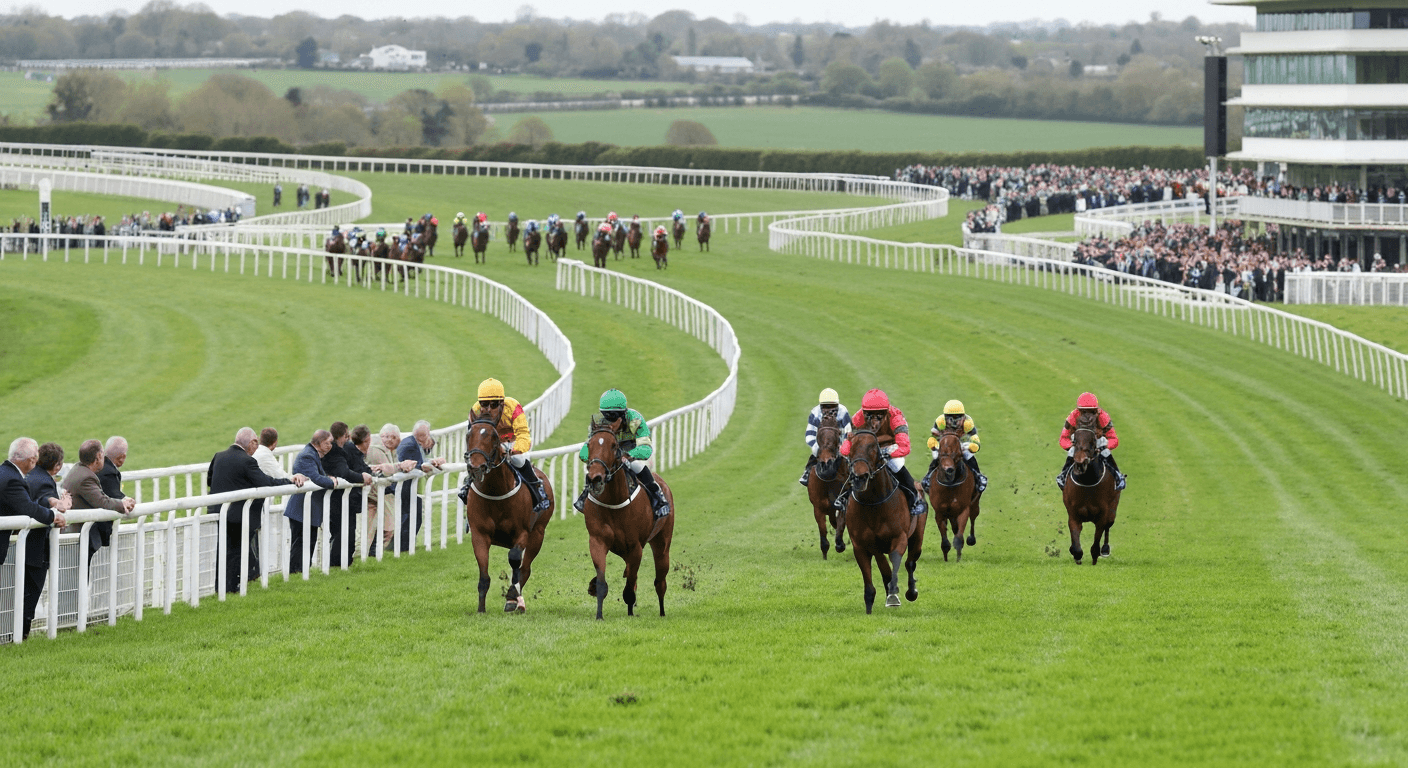
A Day at Naas, Visitor Guide
Plan a day at Naas Racecourse in Co. Kildare, getting there from Dublin, the stands, accessibility, food and bars, the best days and how to watch.
Read moreBetting at Naas, A Course Guide
How Naas's galloping, uphill track shapes Flat trials and Grade 1 jumps form, plus draw, going and the honest favourite picture.
Read moreThe Big Days at Naas, A Guide to the Key Meetings
A guide to Naas Racecourse's key meetings, the Lawlor's Grade 1, Royal Ascot trials, the Ballyhane Stakes and the year-round dual-code calendar.
Read moreResearch the field with the AI Race Predictor
Our model publishes calibrated win-probability estimates for UK races — a second opinion to understand a race, not tips. It's open about its record: it doesn't beat the market, and we show exactly how it does.
Work it out & learn the basics
Gamble Responsibly
Gambling should be entertaining and not seen as a way to make money. Never bet more than you can afford to lose. If you or someone you know has a gambling problem, help and support is available.