
Founder & Editor · Last reviewed 2026-06-30
A boutique track in the heart of Thoroughbred County
You can see the whole race from where you stand at Naas. That sounds like a small thing until you have spent a day craning over heads at a giant track, losing the field behind a stand and picking it up again only at the line. At Naas the left-handed oval sits in front of you like a model, the home straight climbs towards you up the hill, and the finish lands almost at your feet. For a first visit to Irish racing, that openness is a gift.
Naas Racecourse stands on the eastern edge of Naas town in Co. Kildare, just off the M7 motorway, about 30km south-west of Dublin. This is the county town of Kildare, the centre of what locals call Thoroughbred County, and the racecourse fits the setting. It is a dual-code turf track, staging Flat racing in the warmer months and National Hunt jumping through the winter, on grass only, with no all-weather strip. Around 20 meetings fill the calendar across the year.
It is not a giant. Naas is a boutique course, smaller than Leopardstown, Fairyhouse, the Curragh, Punchestown or Galway, and it has never tried to be any of those. There is no week-long festival here. What there is instead is quality, packed into single days. On the Flat, Naas is one of the most important trial courses in Ireland, a proving ground for Classic and Royal Ascot horses before they step up at the Curragh and beyond. Over jumps, it stages the Grade 1 Lawlor's of Naas Novice Hurdle, the first Grade 1 of the Irish National Hunt year and a recognised Cheltenham pointer. The richest day of all is the Irish EBF Ballyhane Stakes meeting in early August, a 300,000 euro two-year-old race day built around family entertainment.
The course markets itself as the Nursery of Champions, and the phrase is earned rather than borrowed. Owned and run by the Naas Race Company since the first meeting in June 1924, it has been named Racecourse of the Year at the Association of Irish Racehorse Owners Awards three years running, in 2022, 2023 and 2024. This guide walks you through a day there, from the journey out of Dublin to the best meetings to pick, what to wear and how to follow it all from home.
This guide covers getting there from Dublin and beyond, the enclosures and The Circle, accessibility for disabled racegoers, the food and bars, the best days to go, what to wear and how to watch from home, rounds off with first-visit tips and what is nearby, and finishes with answers to common questions.
Where to Bet
Place your bets with a trusted, licensed bookmaker.

Promo code BETFRED50. New customers only. Register, deposit with a Debit Card, and place a first bet of £10+ at Evens (2.0)+ on Sports, to be settled within 7 days, to get £30 in Sports Free Bets and £20 in Bet Builder Free Bets within 24 hours of settlement. 7-day expiry. Eligibility & payment exclusions apply. Full T&Cs apply. Take Time to Think. BeGambleAware.org. 18+. Full T&Cs.

Promo code R30. New UK customers only, 18+. Register, deposit £10 or more, then place a £10 single cash bet at odds of 1/2 (1.5) or greater on any sports market (excluding Virtuals). Once the qualifying bet settles you get £30 in Free Bets (3 x £10) — the qualifying bet can win or lose. Free Bets are valid on any sports market excluding Virtuals, expire in 7 days, are non-withdrawable and must be used in full. Excluded deposit methods apply (including PayPal, Apple Pay, Skrill and NETELLER). Named bets such as Lucky 15 do not qualify. If you cash out the qualifying bet, or it is voided, you are no longer eligible for the offer. Ends 31.12.26. Full T&Cs apply. Please gamble responsibly. BeGambleAware.org. 18+. Full T&Cs.

Promo code BET40GET20. New UK customers, 18+. Register with the code and place a first bet of £40 or more at Evens (2.0) or greater. Receive 2 × £10 free bets: the first credited automatically once the qualifying bet settles, the second 24 hours later. Free bets must be placed at minimum odds of 4/1 (5.0), expire 24 hours after credit, and the free-bet stake is not returned with winnings. Debit card deposits only. Take Time to Think. BeGambleAware.org. 18+. T&Cs apply. Full T&Cs.

50% of your first-day net losses refunded as a free bet, capped at £25. New UK customers aged 18+ only. To qualify, deposit and place a first bet of £10 or more on any sport at minimum odds of evens (2.00), then place at least two further bets on different events, each worth at least 50% of your largest bet, all at evens (2.00) or greater. Losses are counted from your first settled bet until 23:59 the same day. Place a qualifying £10+ bet and you are guaranteed at least a £5 free bet. Bets placed at SP, void bets, cashed-out bets and bets struck with free bets do not count towards the offer. The free bet is credited the day after your qualifying bets settle and must be used within 7 days, after which it expires. It can be used at odds from 1/4 (1.25) up to 250/1 on singles and straight accumulators, but not on Trixie, Patent or Yankee style multiples. Free-bet stake is not returned with winnings. One offer per person, household, address, IP address and device. E-wallet deposits may not qualify, so check the cashier before depositing. Customers registered with GAMSTOP cannot claim. KYC identity verification must be completed before the free bet is credited. Take Time to Think. BeGambleAware.org. 18+. T&Cs apply. Full T&Cs.

New customers, 18+. Choose the sports bonus at sign-up, make a first deposit and receive a 100% bonus up to £50 in your Sports Bonus balance. To convert the bonus to cash, wager it 10x within 30 days. Single bets below Evens (2.00) do not qualify; accumulators do not qualify if any selection is below 1/2 (1.50). Virtual Sports, voided, cancelled, drawn, cashed-out and free-bet wagers do not count towards wagering. Only the first settled bet per event counts. Withdrawing before the wagering requirement is met forfeits the bonus balance including bonus winnings. Real-money funds are used before bonus funds. Deposits via Skrill or Neteller are not eligible. Not valid in conjunction with other promotions. Odds, bet and payment limits apply. 10bet general and promotion T&Cs apply. BeGambleAware.org. 18+. Full T&Cs.

New customers in Great Britain and Republic of Ireland, 18+. Place a £10 fixed-odds qualifying bet at minimum odds of 1/2 (1.50) — single or each-way (only the win part counts), pre-event or in-play, not cashed out early, within 28 days of opening the account. Receive up to £60 in bonuses credited over three days: 3 × £10 fixed-odds free bets (the first on settlement, then 24 and 48 hours later) plus 3 × £5 Total Goals FOOTBALL spread bets, 3 × £5 racing Winning Favourites spread bets and a £1 racing Race Index spread bet (the spread bets need a full spread-betting account). Free-bet stakes not returned with winnings; free bets valid 28 days from issue. IMPORTANT: the £5 credits are SPREAD bets — sports spread betting carries the risk that losses can exceed your stake. Sports spread-betting customers do not have Financial Ombudsman or FSCS recourse. Take Time to Think. BeGambleAware.org. 18+. T&Cs apply. Full T&Cs.

Promo code WELCOME15, entered under My Bonuses after registering. New UK customers, 18+. Place a first qualifying bet of at least £10 from your cash balance at odds of evens (2.0) or greater within 7 days of opening the account. Once the qualifying bet fully settles you receive £15 in free bets, credited as 3 x £5 tokens with set uses: one £5 accumulator free bet (minimum 4 legs, each leg at 2/5 or bigger), one £5 sports free bet (any market at evens or bigger) and one £5 Sub Cover free bet (selected football player markets at evens or bigger). Free-bet stakes are not returned with winnings. Free bets expire 7 days after they are credited. Void, cashed-out and partially cashed-out bets do not qualify. One offer per customer. Confirm the current terms on BetGoodwin's own welcome-offer page before claiming. Take Time to Think. BeGambleAware.org. 18+. T&Cs apply. Full T&Cs.

New UK customers, 18+. Minimum deposit £10. Place a £10 qualifying single at minimum odds of 1/2 (1.50), settled within 14 days. Receive £30 in free bets (stake not returned), split £20 for sportsbook use (2 x £10) and £10 for Bet Builder only (2 x £5); Bet Builder does not cover horse racing. Free bets must be accepted within 7 days and expire 7 days after acceptance. No promo code required. Best Odds Guaranteed on UK & Irish racing, subject to having staked over £25 in the previous seven days. Operated by LiveScore Betting and Gaming (Gibraltar) Ltd, UKGC 56859. Confirm the current terms on LiveScore Bet's own promotions page before claiming. Take Time to Think. BeGambleAware.org. 18+. T&Cs apply. Full T&Cs.
18+. BeGambleAware.org
Getting to Naas from Dublin and beyond
Naas sits in a handy spot. It is right on the M7/N7 corridor that links Dublin with Cork, Limerick, Kilkenny and Waterford, so whichever direction you are coming from, the motorway does most of the work. The full address is Tipper Road, Naas, Co. Kildare, the Eircode is W91 ED00, and for the sat-nav the course gives coordinates of N 53 degrees 13.103, W 6 degrees 38.847. The course phone number is +353 (0)45 897391 if you need to ask anything before you set off.
By road
From Dublin, take the N7 out of the city, follow it onto the R410 and leave at exit 9. The drive is normally about 35 to 40 minutes, traffic depending. Coming up from the south, you join the M7 and again leave at exit 9. From that exit the racecourse is roughly five minutes away and clearly signposted, so you should not need to second-guess the turns. Free car parking is laid on at every meeting. It works on a first come, first served basis and there is no priority or reserved parking, so on the busier days it pays to arrive early and follow the marshals.
By rail
The nearest station is Sallins, properly Sallins and Naas, just outside the town on the Iarnrod Eireann line out of Dublin Heuston. From Heuston the train gets you most of the way in good time. From Sallins itself there is a feeder bus and a taxi rank to cover the last stretch. On weekend race days the racecourse runs its own shuttle bus between Sallins station and the course, operating both before and after racing, which takes the guesswork out of the final connection.
By bus
You have a few options. JJ Kavanagh and Sons run 24 services a day into Naas town from Dublin city centre, with pick-ups at Georges Quay, Heuston Station and the Red Cow, as well as from Dublin Airport. On race days, Dublin Coach runs a direct service to the races from Dublin Airport via the Red Cow Luas, dropping at the Roseville stop in Naas. Bus Eireann route 126 also serves the town from Dublin.
By air
Dublin Airport is the closest airport, about 46km away, which keeps Naas within easy reach for visitors flying in. For those arriving in real style, helicopter landing at the course can be arranged in advance, provided you sort the insurance documentation beforehand.
Whichever way you travel, aim to be there in good time. The racecourse opens 1 hour 30 minutes before the first race, and arriving early means a relaxed start, a look at the runners in the paddock and first pick of a spot in the stands.
The enclosures, stands and The Circle
Naas keeps things simple. Rather than carving the course into a maze of separate enclosures with different tickets and different rules, it runs principally as a single main enclosure built around the grandstand, with the parade ring, the various bars and the restaurants all within easy reach of one another. For a newcomer that is a relief. You buy your admission, you walk in, and the whole place is open to you, from the paddock to the winning line.
The grandstand
The grandstand is the heart of the place. It was rebuilt in 1997 at a cost of 2.2 million euro and opened by the then Minister for Finance, Charlie McCreevy, and it has been upgraded steadily since. The ground floor holds a cafe, a Tote bar, a Paddy Power betting shop and a Tote betting shop, so your everyday needs are all under one roof. Up on the first floor you will find the Members Lounge and the Panoramic Restaurant, the latter living up to its name with a long view down over the track. Because the circuit is compact and the home straight runs uphill towards the stand, the view from the steps is genuinely complete, you follow the race the whole way round.
The Circle
The newest landmark is The Circle, a striking cylindrical feature building that opened in January 2019 and cost around 1.7 million euro as part of a wider redevelopment that the racecourse says has run to more than 3.2 million euro since 2018. On the ground floor it houses a public bar. On the first floor sits the Goffs Owners and Trainers Lounge, which enjoys 180-degree views across the course. The same redevelopment programme delivered The Post, a self-service restaurant, a cafe, the Members Lounge and upgrades to the grandstand first floor and the private suites.
Members, owners and suites
Members have their own lounge on the grandstand first floor, and the course runs an annual membership that includes a set of reciprocal fixtures at other tracks. Owners and trainers with runners are looked after in the Goffs lounge in The Circle. Private suites are available for groups and corporate days, and the Panoramic Restaurant offers a sit-down option with the racing laid out below. None of this gets in the way of the general racegoer, though. The strength of Naas is that a standard admission ticket still puts you within a few strides of the paddock, the bookmakers and the finish.
Accessibility for disabled racegoers
Naas publishes accessibility information as part of its Plan Your Day guidance, and the headline points are straightforward. A short phone call before you travel is the single most useful thing you can do, because the course asks racegoers who need accessible parking to ring ahead, and the staff can then make sure your visit runs smoothly.
Accessible parking
Accessible car parking spaces are available, and the course encourages anyone who needs them to phone in advance on 045 897391. Car park staff will help those with a Disabled Person Parking Permit to park close to the entrance, which keeps the walk in as short as possible. Given that the general parking is free and first come, first served, calling ahead is the way to secure a spot near the gate rather than relying on luck on the day.
Accessible toilets
There are disabled, accessible bathrooms in every building on the course. That spread matters at a track like Naas, where you might base yourself in the grandstand, drift across to The Circle for a drink and watch a race from the lawn, because wherever you settle, there is a suitable facility close by.
Assistance dogs
Only guide dogs are allowed inside the enclosure. If you rely on a guide dog you are welcome to bring it in, but other assistance and pet dogs are not permitted, so it is worth planning around that before you set off.
Sensory and neurodiverse provision
Naas has started building out provision for neurodiverse visitors. For Ballyhane Stakes Day in 2025 the course introduced its first dedicated Neurodiverse Day, which featured a wheelchair-accessible Sensory Express Bus, a mobile sensory room fitted with bubble tubes, colour-changing ball pools, water walls and tactile elements. Alongside it were designated quiet-zone suites equipped with ear defenders, sensory toys and relaxing aids. This is tied to a specific day rather than offered at every meeting, so check the fixture before relying on it.
Worth confirming directly
The course's published material does not spell out every detail. Specifics such as step-free routes between all areas, lift provision in each building, dedicated accessible viewing platforms and any formal carer or companion ticket policy are not laid out on the public pages. If any of these matter to your day, the safest course is to ring the racecourse on 045 897391 before you book and confirm exactly what is in place for the meeting you are attending.
Food, bars and hospitality
A day at the races runs on more than horses, and Naas keeps you fed and watered without sending you on a hike. The food and drink outlets cluster around the grandstand and The Circle, so you are rarely more than a short walk from a bar or a hot meal, and you can keep half an eye on the next race while you queue.
Bars and casual food
The ground floor of the grandstand is the practical hub. It holds a cafe for a coffee, a bite or a warm-up on a cold January afternoon, plus a Tote bar for a drink. Over in The Circle, the ground floor is given over to a public bar, a good spot to gather a group between races. For something more substantial on a self-service basis, The Post is the course's self-service restaurant, added during the recent redevelopment, which suits racegoers who want a proper plate of food without committing to a sit-down booking.
Hospitality and the Panoramic Restaurant
If you want to make more of the day, the Panoramic Restaurant on the first floor of the grandstand offers a sit-down option with a long view over the track and the finish. The course also runs hospitality packages, with both main-course and four-course options available depending on the meeting and your budget. As a rough guide, these have ranged from around 49 euro to 66 euro, though packages and prices change from year to year and by fixture, so confirm the detail when you book. Private suites are available too, which work well for groups, celebrations and corporate days.
Betting on course
Betting is part of the fabric of the day, and there is plenty of choice. Independent on-course bookmakers stand at the rail by the parade ring and in front of the stands, taking cash bets at fixed prices. The Tote operates as well, accepting both card and cash, with a Tote bar and Tote betting shop in the grandstand, alongside a Paddy Power betting shop. One practical note worth remembering, there is no cashpoint on the course. Cashback is available on card at the race day office, but it is wise to bring some cash with you rather than rely on finding an ATM.
A word on the betting itself. None of it is a route to guaranteed profit. Backing the favourite in every race, for instance, loses money to the starting price over time, and no staking method changes that. Treat your stake as part of the cost of an enjoyable day rather than an investment, and you will not go far wrong.
The best days to go
Because Naas does not run a single sprawling festival, choosing your day is half the fun. Each signature meeting has its own character, from a frosty Grade 1 hurdle morning in January to a sun-warmed family race day in August. Here is how the calendar breaks down.
January, Lawlor's of Naas Grade 1 day
This is the flagship jumps fixture and the one to circle if you love National Hunt racing. The centrepiece is the Grade 1 Lawlor's of Naas Novice Hurdle, registered as the Slaney Novice Hurdle and run as the Ballymore Novice Hurdle from 2026, over about 2 miles 4 furlongs. It is the first Grade 1 of the Irish jumps year and a recognised Cheltenham trial, especially for the Ballymore Novices' Hurdle, where Envoi Allen in 2020 and Bob Olinger in 2021 went on to complete the double. The roll of honour is heavy with future stars: Rule The World, who later won the 2016 Aintree Grand National, Death Duty, Battleoverdoyen, Champ Kiely, Readin Tommy Wrong, The Yellow Clay and 2026 winner I'll Sort That. Willie Mullins, with at least nine wins, and Gordon Elliott have shared the spoils since the race became a Grade 1 in 2015. The Grade 3 Limestone Lad Hurdle supports the card, and there is a Best Dressed competition to brighten the winter day.
February, Cheltenham trials day
A second strong jumps fixture, geared to the Cheltenham Festival pointers. It features the Grade 2 Johnstown Novice Hurdle, won in the past by the future Champion Hurdler Annie Power, alongside the Grade 3 Newlands Chase and the Nas Na Riogh Novice Handicap Chase. If you want serious form before March, this is the day.
Spring, Royal Ascot Trials Day
For Flat fans, the May highlight is Royal Ascot Trials Day, run with a Family Fun Day alongside it. The card carries the Group 3 Goffs Lacken Stakes, a key Commonwealth Cup pointer won by the likes of So Perfect, The Antarctic and Charles Darwin, and the Group 3 Coolmore Stud Irish EBF Fillies Sprint Stakes, whose alumnae read like a who's who of top fillies, Alpha Centauri, Meditate, Porta Fortuna, Fairy Godmother and Lady Iman among them. The Listed Woodlands and Owenstown Stud Stakes and the Listed Naas Oaks Trial fill out a card that has launched many a Royal Ascot winner and has been shown live on terrestrial television.
June, Blue Wind Stakes day
The Group 3 Blue Wind Stakes, now run in late June and a recognised Oaks pointer for three-year-old fillies, anchors the early-summer Flat programme. Pleascach, later an Irish 1,000 Guineas and Yorkshire Oaks winner, took it in 2015, and Tarnawa won it for Dermot Weld in 2019.
August, Irish EBF Ballyhane Stakes day
If you want the biggest crowd and the warmest atmosphere, this is the day. The Irish EBF Ballyhane Stakes is Naas's richest fixture, a 300,000 euro two-year-old race run on the August Bank Holiday Monday, with family activities laid on and, since 2025, dedicated sensory and neurodiverse provision. A free, sponsor-funded gate in 2023 produced close to a 100% jump in attendance, which tells you how much pull the day has.
What to wear
The good news for anyone who frets about racecourse dress codes is that Naas does not impose one. There is no formal requirement to dress up, and the course's own advice is refreshingly practical: dress for the weather. That single instruction will serve you better here than any rule about jackets and ties, because the right outfit at Naas depends far more on the season than on any etiquette.
Dress for the season
This is a country course in the Irish midlands, and the weather sets the tone. For the January and February jumps fixtures, expect cold and very possibly wet ground underfoot, since Naas can ride soft to heavy through the winter. Warm, waterproof layers and sturdy boots are the sensible choice. You will be on your feet outdoors for much of the afternoon, and being properly wrapped up is the difference between enjoying the racing and counting down to the last.
For the spring and summer Flat meetings, and especially the August Ballyhane day, you can dress lighter and brighter. These are family-friendly days in warmer weather, and many racegoers take the chance to make an effort, but comfort still matters. Whatever the forecast, footwear is the thing people most often get wrong. There is grass and lawn between the stands and the rail, so heels and delicate shoes struggle, particularly after rain.
Best Dressed competitions
If you do fancy dressing up, there is a reason to. The flagship January Grade 1 day runs a Best Dressed competition, and the style stakes lift on the bigger fixtures generally. So while nothing obliges you to put on your finery, a smart outfit is welcome and, on the right day, might catch a judge's eye. The simple summary is this: dress for the weather first, dress for the occasion second, and pick your shoes with the grass in mind.
How to watch Naas from home
Cannot make it to Co. Kildare, or want to follow a Naas runner from the sofa? The picture is straightforward, because Irish racing's broadcast arrangements are settled across the board.
Racing TV is the home
Naas, like all 26 Irish racecourses, has its day-to-day racing shown on Racing TV, the subscription channel owned by Racecourse Media Group. All 26 Irish tracks signed up to a five-year deal running from 2024 to the end of 2029, worth 47 million euro a year to Irish racing, which keeps every Irish fixture on Racing TV throughout that period. The practical point for viewers is that Naas is a Racing TV course, not a Sky Sports Racing course. Sky Sports Racing carries the Arena Racing Company's British tracks, so you will not find Naas there. Racing TV's home coverage sits behind a subscription, and dedicated single-meeting feeds are available through Racing TV Extra if you want to follow one card in full.
Terrestrial coverage of the big days
A handful of the biggest Irish race days reach free-to-air television. In Ireland, RTE covers the major fixtures, and Naas's Royal Ascot Trials Day has been broadcast live on ITV in Britain and TG4 in Ireland. So for the marquee Flat trials in spring you may well catch the racing without a subscription, though for the routine meetings and the winter jumps cards, Racing TV is the reliable route.
Streaming and following the results
Beyond the dedicated channels, many bookmakers carry integrated live streams of Irish racing for account holders, which is another way to watch the action. If you simply want to keep up with the results and the form rather than the live pictures, the usual services all cover Naas: the Racing Post, Sky Sports Racing, At The Races, Sporting Life and Horse Racing Ireland's own goracing.ie. Between them you can follow every race, check the going and read the form whether or not you have a subscription.
To sum up, subscribe to Racing TV for the everyday coverage, watch for RTE, ITV or TG4 on the biggest days, lean on a bookmaker stream if you have an account, and use the results services to keep on top of the form.
First-visit tips and what is nearby
A little planning makes a Naas day run smoothly. Here are the things worth knowing before you go, drawn from how the course actually works on the ground.
Practical tips for a first visit
- Arrive early. The gates open 1 hour 30 minutes before the first race. With free parking on a first come, first served basis and no reserved spaces, getting there early means an easier park and a better spot in the stands.
- Bring cash. There is no cashpoint on the course. You can get cashback on card at the race day office, but having notes for the on-course bookmakers and the Tote saves a queue.
- Pick up a race card. Cards are sold for 4 euro and are worth it for a first-timer, helping you follow the runners, the form and the order of play.
- Hire binoculars. Even though the compact track gives you a full view, binoculars sharpen the action at the far side. They can be hired or bought from a stall opposite the parade ring.
- Use the paddock. Naas's single-enclosure layout puts the parade ring within easy reach. Watching the horses walk round before a race is part of the experience and a good habit before you bet.
- Bet for fun, not profit. On-course bookmakers and the Tote both operate, by card and cash. Remember that no betting system guarantees a return. Backing favourites blindly loses to the starting price over time, so set a budget and enjoy the day.
What is nearby
Naas is the county town of Kildare, in the heart of Thoroughbred County, so there is plenty around it. For somewhere to stay, local hotels include Lawlor's of Naas in the town centre, the Osprey Hotel, Naas Court Hotel, Killashee Hotel and the historic Barberstown Castle.
The area is made for a racing break. The Curragh is about 20 minutes' drive away, and Punchestown is close by too, so it is easy to string two or three tracks together over a weekend. Away from the racing, the Irish National Stud and its Japanese Gardens at Tully near Kildare town make a popular day out, a fitting stop in a county that breeds and trains so many of the horses you will see on the track. Build a visit to Naas around one of its signature days, add a nearby course or the National Stud, and you have the makings of a proper Kildare racing trip.
Frequently Asked Questions
Share this article
More about this racecourse
All naas guides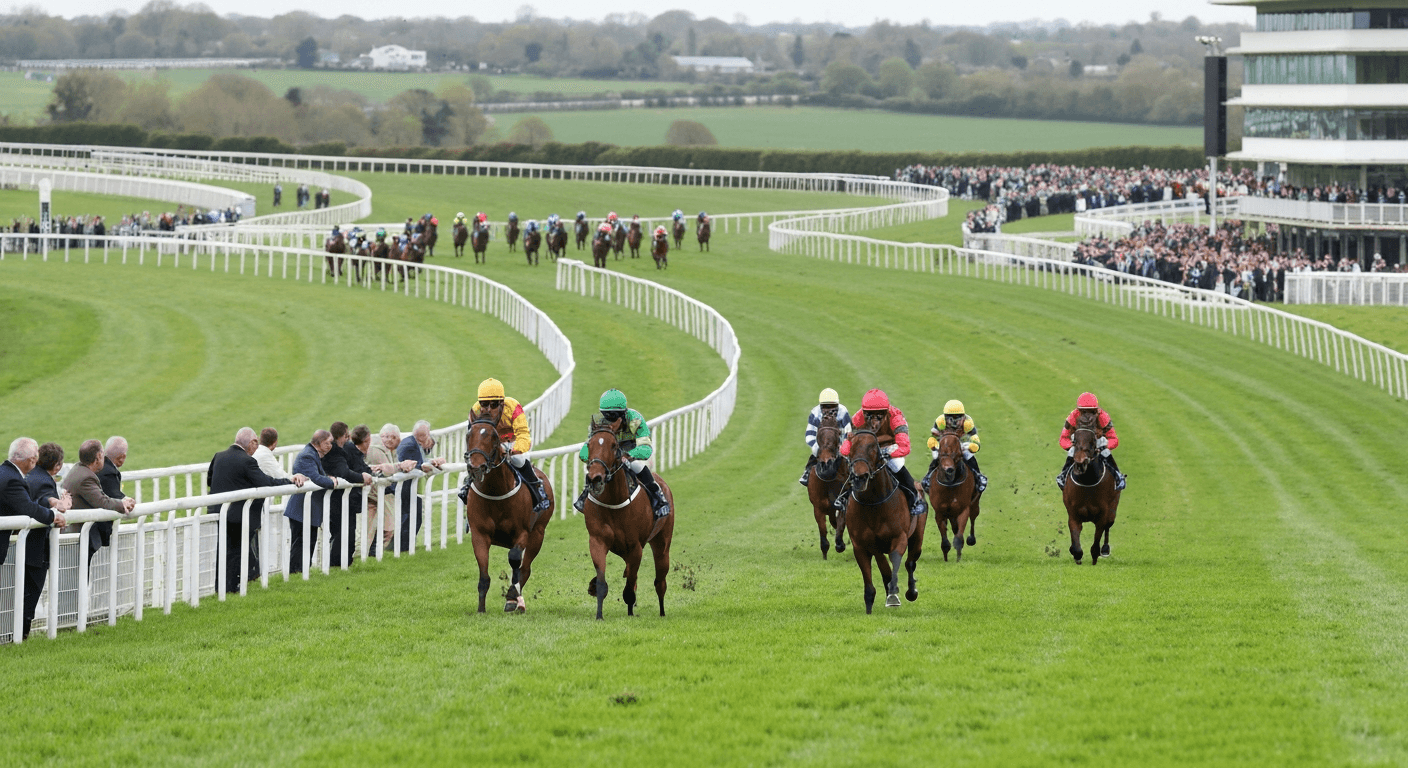
Betting at Naas, A Course Guide
How Naas's galloping, uphill track shapes Flat trials and Grade 1 jumps form, plus draw, going and the honest favourite picture.
Read moreThe Big Days at Naas, A Guide to the Key Meetings
A guide to Naas Racecourse's key meetings, the Lawlor's Grade 1, Royal Ascot trials, the Ballyhane Stakes and the year-round dual-code calendar.
Read moreNaas Racecourse: The Complete Guide
Naas (Co. Kildare) in full: the dual-code Classic-trials track and home of the Grade 1 Lawlor's of Naas Novice Hurdle, three times Racecourse of the Year, the key meetings and their winners, tickets, travel and how to visit.
Read moreResearch the field with the AI Race Predictor
Our model publishes calibrated win-probability estimates for UK races — a second opinion to understand a race, not tips. It's open about its record: it doesn't beat the market, and we show exactly how it does.
Work it out & learn the basics
Gamble Responsibly
Gambling should be entertaining and not seen as a way to make money. Never bet more than you can afford to lose. If you or someone you know has a gambling problem, help and support is available.