
Founder & Editor · Last reviewed 2026-06-29
A Dublin track built to copy Sandown
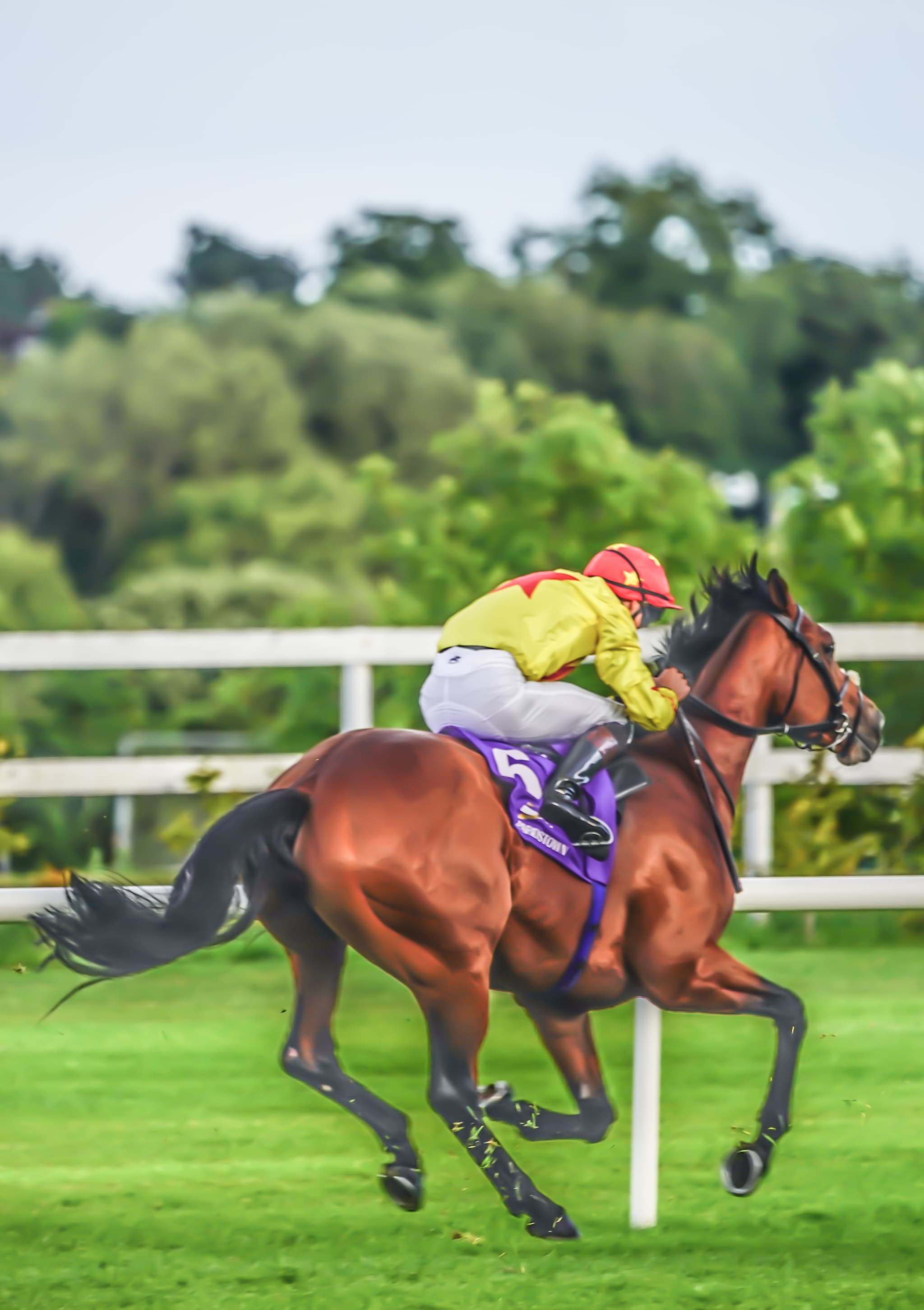
On a stiff three-furlong climb to the line in south Dublin, the favourite lands a high share of the big races, the crowd roars, and a horse adds another chapter to a track that has been doing this since the Victorians. Leopardstown is not just a Flat course, and it is not just a jumps course. It is the only racecourse in Ireland to stage both Group 1 racing on the level and Grade 1 racing over fences and hurdles, and it has been holding that rare dual role together for well over a century.
The setting is Foxrock, about eight kilometres south of Dublin city centre, in the Dún Laoghaire-Rathdown area. The track itself is a wide, left-handed turf oval of roughly a mile and three-quarters, with no all-weather strip (Irish all-weather racing lives at Dundalk) and a deceptively stiff finish that punishes any horse short of stamina. Horse Racing Ireland owns and runs it, and the official figures tell you how much it carries: 23 race days a year, 13 Grade 1 races over jumps, and from 2026 three Group 1 races on the Flat.
Three meetings give the year its shape. The Leopardstown Christmas Festival fills the days between 26 and 29 December with seven Grade 1s over jumps. The Dublin Racing Festival, created in 2018, packs eight Grade 1s into a single late-January weekend. And in September the course opens the Irish Champions Festival with the Irish Champion Stakes, one of the best middle-distance races in Europe.
What follows is the story of how a Dublin bookkeeper's land speculation during an 1880s slump became all of that: the deliberate copy of an English course, the long quiet decades, the move to the front rank of both codes, the horses and people who made their names here, and the multi-million-euro rebuild that brought the place into the present. It is a history with two parallel threads, Flat and jumps, that keep crossing. Leopardstown is where they meet.
This guide covers the 1888 founding and the Sandown blueprint, the early decades and the Clarke years, the rise to dual-code prominence, the legendary horses and legendary people, the modern era and the redevelopment, and answers to common questions.
Where to Bet
Place your bets with a trusted, licensed bookmaker.

Promo code BETFRED50. New customers only. Register, deposit with a Debit Card, and place a first bet of £10+ at Evens (2.0)+ on Sports, to be settled within 7 days, to get £30 in Sports Free Bets and £20 in Bet Builder Free Bets within 24 hours of settlement. 7-day expiry. Eligibility & payment exclusions apply. Full T&Cs apply. Take Time to Think. BeGambleAware.org. 18+. Full T&Cs.

Promo code R30. New UK customers only, 18+. Register, deposit £10 or more, then place a £10 single cash bet at odds of 1/2 (1.5) or greater on any sports market (excluding Virtuals). Once the qualifying bet settles you get £30 in Free Bets (3 x £10) — the qualifying bet can win or lose. Free Bets are valid on any sports market excluding Virtuals, expire in 7 days, are non-withdrawable and must be used in full. Excluded deposit methods apply (including PayPal, Apple Pay, Skrill and NETELLER). Named bets such as Lucky 15 do not qualify. If you cash out the qualifying bet, or it is voided, you are no longer eligible for the offer. Ends 31.12.26. Full T&Cs apply. Please gamble responsibly. BeGambleAware.org. 18+. Full T&Cs.

Promo code BET40GET20. New UK customers, 18+. Register with the code and place a first bet of £40 or more at Evens (2.0) or greater. Receive 2 × £10 free bets: the first credited automatically once the qualifying bet settles, the second 24 hours later. Free bets must be placed at minimum odds of 4/1 (5.0), expire 24 hours after credit, and the free-bet stake is not returned with winnings. Debit card deposits only. Take Time to Think. BeGambleAware.org. 18+. T&Cs apply. Full T&Cs.

50% of your first-day net losses refunded as a free bet, capped at £25. New UK customers aged 18+ only. To qualify, deposit and place a first bet of £10 or more on any sport at minimum odds of evens (2.00), then place at least two further bets on different events, each worth at least 50% of your largest bet, all at evens (2.00) or greater. Losses are counted from your first settled bet until 23:59 the same day. Place a qualifying £10+ bet and you are guaranteed at least a £5 free bet. Bets placed at SP, void bets, cashed-out bets and bets struck with free bets do not count towards the offer. The free bet is credited the day after your qualifying bets settle and must be used within 7 days, after which it expires. It can be used at odds from 1/4 (1.25) up to 250/1 on singles and straight accumulators, but not on Trixie, Patent or Yankee style multiples. Free-bet stake is not returned with winnings. One offer per person, household, address, IP address and device. E-wallet deposits may not qualify, so check the cashier before depositing. Customers registered with GAMSTOP cannot claim. KYC identity verification must be completed before the free bet is credited. Take Time to Think. BeGambleAware.org. 18+. T&Cs apply. Full T&Cs.

New customers, 18+. Choose the sports bonus at sign-up, make a first deposit and receive a 100% bonus up to £50 in your Sports Bonus balance. To convert the bonus to cash, wager it 10x within 30 days. Single bets below Evens (2.00) do not qualify; accumulators do not qualify if any selection is below 1/2 (1.50). Virtual Sports, voided, cancelled, drawn, cashed-out and free-bet wagers do not count towards wagering. Only the first settled bet per event counts. Withdrawing before the wagering requirement is met forfeits the bonus balance including bonus winnings. Real-money funds are used before bonus funds. Deposits via Skrill or Neteller are not eligible. Not valid in conjunction with other promotions. Odds, bet and payment limits apply. 10bet general and promotion T&Cs apply. BeGambleAware.org. 18+. Full T&Cs.

New customers in Great Britain and Republic of Ireland, 18+. Place a £10 fixed-odds qualifying bet at minimum odds of 1/2 (1.50) — single or each-way (only the win part counts), pre-event or in-play, not cashed out early, within 28 days of opening the account. Receive up to £60 in bonuses credited over three days: 3 × £10 fixed-odds free bets (the first on settlement, then 24 and 48 hours later) plus 3 × £5 Total Goals FOOTBALL spread bets, 3 × £5 racing Winning Favourites spread bets and a £1 racing Race Index spread bet (the spread bets need a full spread-betting account). Free-bet stakes not returned with winnings; free bets valid 28 days from issue. IMPORTANT: the £5 credits are SPREAD bets — sports spread betting carries the risk that losses can exceed your stake. Sports spread-betting customers do not have Financial Ombudsman or FSCS recourse. Take Time to Think. BeGambleAware.org. 18+. T&Cs apply. Full T&Cs.

Promo code WELCOME15, entered under My Bonuses after registering. New UK customers, 18+. Place a first qualifying bet of at least £10 from your cash balance at odds of evens (2.0) or greater within 7 days of opening the account. Once the qualifying bet fully settles you receive £15 in free bets, credited as 3 x £5 tokens with set uses: one £5 accumulator free bet (minimum 4 legs, each leg at 2/5 or bigger), one £5 sports free bet (any market at evens or bigger) and one £5 Sub Cover free bet (selected football player markets at evens or bigger). Free-bet stakes are not returned with winnings. Free bets expire 7 days after they are credited. Void, cashed-out and partially cashed-out bets do not qualify. One offer per customer. Confirm the current terms on BetGoodwin's own welcome-offer page before claiming. Take Time to Think. BeGambleAware.org. 18+. T&Cs apply. Full T&Cs.

New UK customers, 18+. Minimum deposit £10. Place a £10 qualifying single at minimum odds of 1/2 (1.50), settled within 14 days. Receive £30 in free bets (stake not returned), split £20 for sportsbook use (2 x £10) and £10 for Bet Builder only (2 x £5); Bet Builder does not cover horse racing. Free bets must be accepted within 7 days and expire 7 days after acceptance. No promo code required. Best Odds Guaranteed on UK & Irish racing, subject to having staked over £25 in the previous seven days. Operated by LiveScore Betting and Gaming (Gibraltar) Ltd, UKGC 56859. Confirm the current terms on LiveScore Bet's own promotions page before claiming. Take Time to Think. BeGambleAware.org. 18+. T&Cs apply. Full T&Cs.
18+. BeGambleAware.org
1888 and the Sandown Park model
Leopardstown owes its existence to a man who knew a bargain when he saw one. Captain George Quin was a bookkeeper for the Irish Turf Club, and in the 1880s he spotted around 200 acres of cheap land in Foxrock going for very little during an economic slump. He bought it, set up the Leopardstown Racecourse Company, and laid out a racecourse on it.
A deliberate copy of an English course
Quin did not design the track from a blank sheet. He modelled it directly on Sandown Park in Surrey, the English course that had pioneered the enclosed, grandstand-led "park" raceday a few years earlier. Leopardstown shares many of Sandown's features, with one obvious difference that anyone who has backed a horse at both will know: Sandown is right-handed, while Leopardstown runs left-handed. The idea was the same, though. This was to be a modern, ticketed, comfortable raceday for a Dublin audience, not a rough open meeting.
A fast and successful opening
The build moved quickly. According to britishracecourses.org, "within six months of that starting, Leopardstown was inaugurated, with more than 5,000 reportedly attending the successful grand opening." The course was completed in 1888, and the crowd that turned up for that first day showed there was real appetite for racing on Dublin's southern edge. Leopardstown was, and remains, the only racecourse in the Irish capital.
What Quin actually built
The shape Quin laid down is essentially the shape that survives. A wide, left-handed, broadly oval galloping track of about a mile and three-quarters, with a run-in of three furlongs that rises gently from the final bend to the post. It is, as later form guides would point out, a stiffer track than it looks: the climb up the straight is long and gradual rather than dramatic, but it is a genuine stamina test, and the pace tends to lift a long way from home. That character, a place where strong stayers come into their own and hard-luck stories are rare, was built into the ground from the start.
One claim from the founding era should be treated with care. A secondary guide describes Leopardstown as the first British or Irish track to stage Sunday racing, but that has not been confirmed against a primary historical source, so it is best left as folklore rather than fact. What is solid is the rest: cheap Foxrock land, a Sandown blueprint, an 1888 opening, and 5,000 people through the gates on day one.
The early decades and the Clarke years
For its first half-century Leopardstown was a steady, well-run Dublin fixture rather than the international stage it later became. The big change in control came when management passed to Fred and Harold Clarke in the early 1900s, and it was under the Clarkes that the course settled into the pattern that defines it to this day: it began staging both Flat racing and jumps racing, rather than committing to one code. That decision, more than anything, set Leopardstown apart from tracks that picked a single discipline.
Wartime on the racecourse
The early decades were not entirely quiet. In 1941, during the Second World War, an RAF pilot named Hugh Verity force-landed his aircraft on the racecourse. Verity was briefly interned, this being neutral Ireland, before escaping back to England. It is one of those odd footnotes that a long-lived sporting venue accumulates, a reminder that the track was a real place in a real landscape, not a sealed sporting bubble.
The races that gave the meeting its prestige
The Clarke era also saw Leopardstown start to build the race programme that would carry its reputation. In 1950 the course ran the inaugural Irish Champion Hurdle, and the result could hardly have been better for the venue's standing: it was won by Hatton's Grace, trained by Vincent O'Brien, one of the defining names in the history of Irish racing. From its very first running, the Irish Champion Hurdle had a marquee winner and a marquee trainer attached to it.
The jumps story deepened a few years later. In 1956 the course first ran the novice chase now known as the Arkle Novice Chase, then called the Milltown Novice Chase. In 1963 the race was won by Arkle himself, the horse it would later be renamed for and one of the greatest chasers ever to race. A track that could put Hatton's Grace and Arkle on its honours board in the space of a single decade was no longer a provincial afterthought.
The threat that nearly ended it
By the 1960s the Clarkes faced a problem that had nothing to do with racing. Dublin was expanding south, and the family feared that urban encroachment would eventually swallow the Foxrock land. Rather than watch the course be sold off for housing piece by piece, in 1967 they sold the whole site to the Horse Racing Board of Ireland, reportedly for £300,000, specifically to preserve it for racing. It was the most important transaction in the track's history, and it set up everything that followed.
The rise to dual-code prominence
The 1967 sale to the Horse Racing Board of Ireland was a rescue, but it was also an investment. The new owners did not simply protect the land; they rebuilt the track. They re-laid, re-drained and widened the course and put up a new stand. The drainage work matters more than it sounds, because Leopardstown's good natural drainage and modern watering, refined from this era onward, are why the track rarely produces the extremes of going that plague some courses. That reliability of ground is one reason the best horses keep coming back.
Building the Flat programme
With the course secure, the race programme grew fast. In 1971 the track created the Leopardstown Derby Trial, originally run as the Nijinsky Stakes, and the Irish Sweeps Hurdle transferred in from Fairyhouse. The single most significant Flat addition came in 1976, when Leopardstown first ran the race that is now the Irish Champion Stakes. It started life as the Joe McGrath Memorial Stakes, named for Joe McGrath, the founder of the Irish Hospitals' Sweepstake.
The Champion Stakes then took a detour. From 1984 to 1990 it was run at Phoenix Park as the Phoenix Champion Stakes. When Phoenix Park closed after 1990, several of its key races came to Leopardstown, and the Champion Stakes returned in 1991 under its present name. It has been the centrepiece of the track's Flat calendar ever since, and a Group 1 contested by some of the best middle-distance horses in the world.
Building the jumps programme
The jumps side grew in parallel. In 1987 the course first ran the Irish Gold Cup, originally the Vincent O'Brien Irish Gold Cup, giving the winter calendar a staying chase of real weight to sit alongside the Irish Champion Hurdle. The Christmas Festival's premier chase took its modern form in 1992, when the present three-mile race, then the Ericsson Chase, replaced an earlier shorter contest. That race is now the Savills Chase.
The two festivals come into focus
Two later moves locked in the modern shape. In 2014 Leopardstown took on the Saturday of Irish Champions Weekend, later renamed the Irish Champions Festival, with the Curragh hosting the Sunday. Then in 2018 the course launched the Dublin Racing Festival, combining the previously separate Irish Champion Hurdle and Irish Gold Cup cards into a single two-day meeting carrying eight Grade 1 races and over two million euro in prize money.
By the end of this period the dual-code identity was complete: top-class Flat in September, the best of Irish jumps over Christmas and at the end of January, and a track that could plausibly claim to be Ireland's premier dual-purpose venue.
The legendary horses
A track is remembered through its horses, and Leopardstown's roll call spans both codes. Some came once and produced something unforgettable; others came back year after year and made the place their own.
Sea The Stars (Flat)
If you want one race to sum up the level Leopardstown can reach, take the 2009 Irish Champion Stakes. Sea The Stars, trained by John Oxx and ridden by Michael Kinane, won it as part of an unbeaten campaign that read 2000 Guineas, Derby, Eclipse, Juddmonte International, Irish Champion and Arc, six Group 1s in a single season at three. He had already won a maiden at Leopardstown in August 2008, so the track saw both the apprentice and the master. He is rated among the greatest middle-distance horses of all time, and the Irish Champion was one of his crowning days.
Istabraq and Hurricane Fly (jumps)
Over hurdles, two horses defined eras here. Istabraq, trained by Aidan O'Brien and ridden by Charlie Swan, won the Irish Champion Hurdle three times from 1998 and added four December Festival Hurdles, the dominant hurdler of his time. Then came Hurricane Fly, trained by Willie Mullins and ridden by Ruby Walsh, who took the Irish Champion Hurdle five times between 2011 and 2015 and the December Hurdle four times. He is reported to have won ten times in all at Leopardstown.
Galopin Des Champs and the staying chasers
The modern jumps star is Galopin Des Champs, trained by Willie Mullins and ridden by Paul Townend. He won the Irish Gold Cup three years running from 2023 to 2025, the Savills Chase in 2023 and 2024, and the Dr P.J. Moriarty Novice Chase in 2022, all on top of two Cheltenham Gold Cups. Even the greats are mortal at Leopardstown, though: his bid for a record-equalling fourth Irish Gold Cup failed in 2026, when he finished third behind stablemate Fact To File, and his attempt at a third straight Savills Chase ended in third behind 7/1 Affordale Fury in 2025.
He chases a record set by Florida Pearl, also a Mullins horse, who won the Irish Gold Cup four times between 1999 and 2004, the last of them as a 12-year-old.
More of the honours board
- Honeysuckle (Henry de Bromhead, Rachael Blackmore): three Irish Champion Hurdles, 2020 to 2022.
- State Man (Willie Mullins, Paul Townend): three Irish Champion Hurdles, 2023 to 2025, plus two December Hurdles.
- Arkle: winner of the 1963 Milltown Novice Chase, now the Arkle Novice Chase, and a Leopardstown Hall of Fame member.
- Famous Name (Dermot Weld): holds the course record for most wins with 13 victories, every one at odds of 11/10 or shorter.
On the Flat, the Irish Champion Stakes alone has been won by Giant's Causeway, Dylan Thomas (twice, 2006 and 2007), Magical (twice, 2019 and 2020), High Chaparral, Daylami, Fantastic Light, Golden Horn, Roaring Lion and Auguste Rodin. The Leopardstown Hall of Fame also honours Dawn Run, Levmoss and Nijinsky. Two codes, one honours board, and very little of it ordinary.
The legendary people
Behind the horses stand the trainers, jockeys, owners and administrators who shaped Leopardstown across both codes. The names recur, generation to generation, which is part of what gives the place its continuity.
The trainers who built the legend
Vincent O'Brien is woven into the track's early prestige: he trained Hatton's Grace to win the first Irish Champion Hurdle in 1950, and the Irish Gold Cup was originally named in his honour. He is a Hall of Fame member. Tom Dreaper, the great chase trainer behind Arkle, is another, and his grip on the place was almost comic at one point: he won the Leopardstown Handicap Chase seven years in a row, from 1962 to 1968.
The modern era belongs to two men above all. Willie Mullins is the dominant jumps trainer the track has known, with a record nine Irish Champion Hurdles between 2011 and 2025, a record tally of Arkle wins, 11 December Hurdles across four horses, and multiple Irish Gold Cups and Savills Chases. In 2024 he won all eight Dublin Racing Festival Grade 1s; in 2025 he took six of the eight. On the Flat, Aidan O'Brien is the most successful Irish Champion Stakes trainer with 13 wins and carries the best 10-year strike rate at the track, around 19.4 per cent. Dermot Weld sits just behind on the Flat, the man who trained Famous Name to his 13 course wins and Tahiyra to the 2023 Matron Stakes. Gordon Elliott and Henry de Bromhead complete the modern jumps picture, the latter the trainer of Honeysuckle's three Irish Champion Hurdles.
The jockeys
In the saddle, Michael Kinane holds the Irish Champion Stakes record with seven wins, from Carroll House in 1989 to Sea The Stars in 2009. Over jumps, Ruby Walsh matched that with seven Irish Champion Hurdles between 2006 and 2016, four of them on Hurricane Fly, and rode at around a 28 per cent strike rate over the decade. Charlie Swan won five Irish Champion Hurdles, four on Istabraq. Among current riders, Paul Townend is the most successful active jumps jockey at the track, with more than 55 course wins, while Jack Kennedy has the best recent record. On the Flat, Ryan Moore strikes at around 28.9 per cent, and Rachael Blackmore is tied to Honeysuckle, A Plus Tard and Notebook. Pat Eddery and jockey Pat Taaffe, Arkle's partner, are Hall of Fame members.
Owners and administrators
The owners read like a who's who of the sport: the Coolmore partnership of Derrick Smith, Mrs John Magnier and Michael Tabor via Ballydoyle, JP McManus, Gigginstown House Stud, the Aga Khan Studs, Marie Donnelly (State Man) and Audrey Turley (Galopin Des Champs). And the people who run the place matter too: Brian Kavanagh as former HRI chief executive and Pat Keogh as Leopardstown chief executive oversaw the modern course through its biggest physical changes, with Mark Clayton the current Leopardstown chief executive.
The modern era and the redevelopment
The Leopardstown of today is a track that decided to invest heavily in itself rather than coast on its history, and the result is a venue rebuilt in stages across the 2010s.
The redevelopment
The work came in phases. Phase 1, a roughly three-million-euro project, landed in 2013. Phase 2 followed in 2015, a hospitality makeover on Grandstand Level 2 with an enlarged Champions Bar at ground level, finished in time for that year's Christmas Festival. The headline phase came in 2016 and 2017: a 12-million-euro project sitting within an overall 20-million-euro redevelopment, supported by a 4.7-million-euro HRI Capital Development grant. It delivered a new restaurant, new bars, new betting and entertainment areas, a new saddling area, a new weigh-room and administration building, and a second entrance, with the old Ballyogan entrance gates demolished. HRI chief executive Brian Kavanagh and Leopardstown chief executive Pat Keogh oversaw the works.
The aim, according to The Irish Times, was to host up to around 20,000 people comfortably on a given day, an increase of roughly 2,000 on the previous figure. The course had drawn around 20,000 on Champion Stakes day as far back as 2001, and across the whole of 2015 it welcomed about 167,000 visitors.
The three festivals today
The rebuilt course now anchors three big meetings, the structure the modern era is built around.
| Festival | When | Headline |
|---|---|---|
| Christmas Festival | 26 to 29 December | Seven Grade 1 jumps races, including the Savills Chase and Matheson Hurdle |
| Dublin Racing Festival | Late January / early February | Eight Grade 1s, including the Irish Gold Cup and Irish Champion Hurdle |
| Irish Champions Festival | September, Day 1 | Irish Champion Stakes and Matron Stakes on the Flat |
The Christmas Festival drew more than 62,000 spectators across its four days in 2024. The Dublin Racing Festival, launched in 2018, now attracts crowds approaching 25,000. And the September meeting opens the Irish Champions Festival, with the Curragh taking the second day.
What is changing next
The track is still evolving. From 2026 the European Pattern Committee approved upgrading the Golden Fleece Stakes to Group 1 status, with its distance increasing from eight furlongs to nine, giving Leopardstown a third Flat Group 1. That keeps a neat symmetry with the official marketing line: 23 meetings a year, 13 Grade 1 races over jumps, and now three Group 1 races on the Flat.
A note on betting the place
For all the prestige, Leopardstown is an honest track for punters rather than a generous one. The stiff, galloping circuit and that long three-furlong climb tend to let the best horse win, which is partly why favourites land a high share of the marquee races: 12 of the last 20 Irish Champion Stakes and 16 of the last 22 Irish Champion Hurdles went to the market leader. That is a statement of fact, not a tip. Over a full season backing every favourite to starting price still loses money to the bookmakers' margin, here as everywhere. What Leopardstown reliably offers is not an edge but a fair test, on a course Captain Quin laid out in 1888 and Ireland has been improving ever since.
Frequently Asked Questions
Share this article
More about this racecourse
All leopardstown guides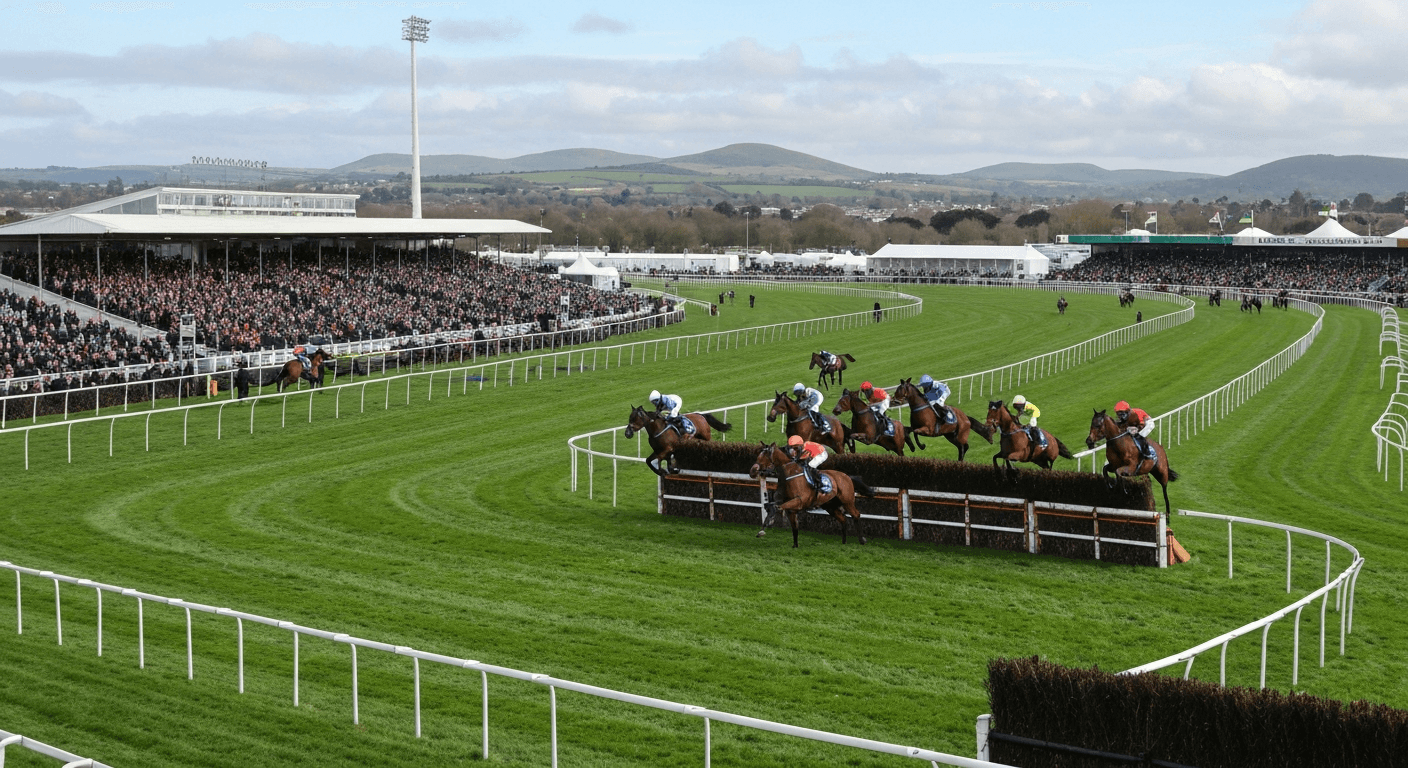
The Irish Champion Stakes: Race Guide
A full guide to the Irish Champion Stakes, Leopardstown's Group 1 mile-and-a-quarter championship: history, great winners and where it sits in the autumn.
Read moreA Day at Leopardstown: Visitor Guide
Plan a day at Leopardstown, Dublin's dual-code racecourse: getting there by Luas, the stands, food and bars, the big festivals and first-visit tips.
Read more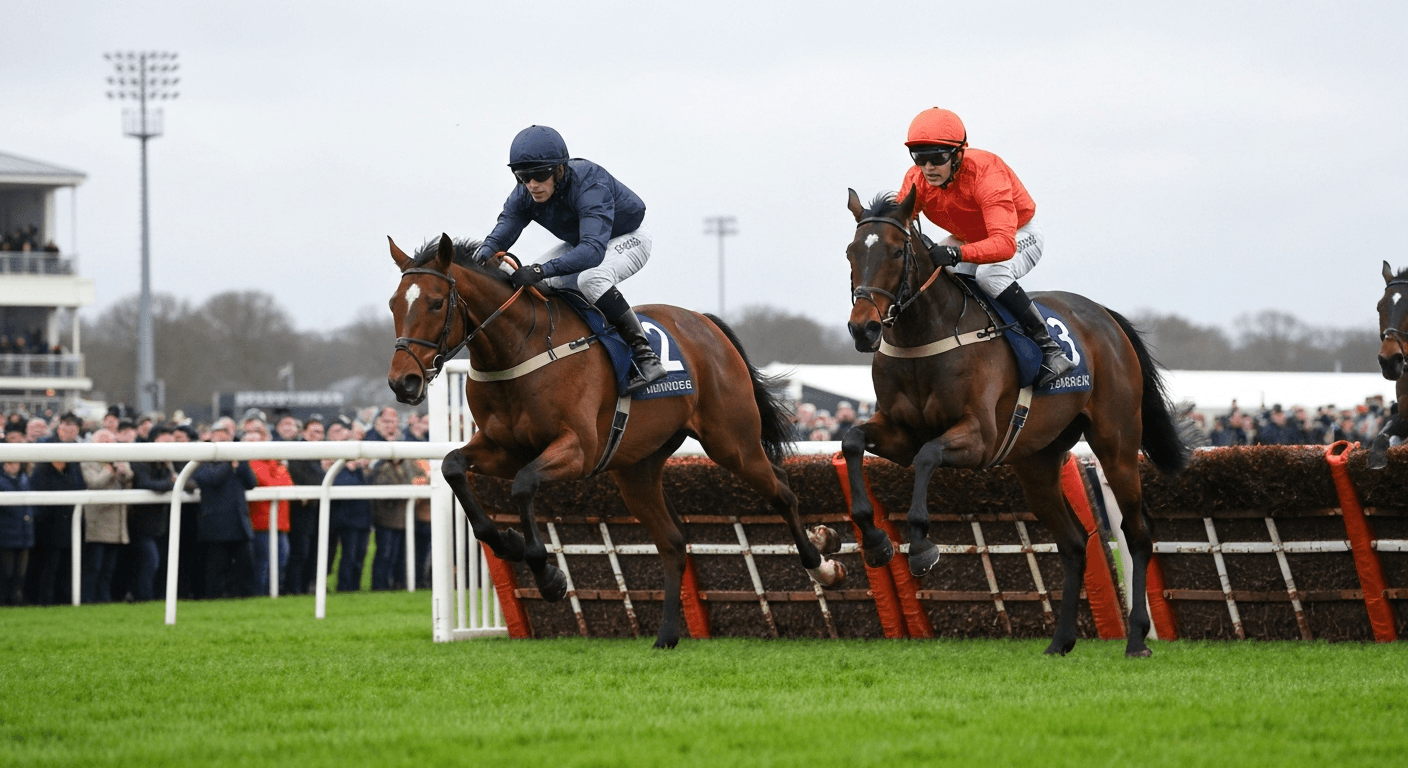
The Dublin Racing Festival: A Complete Guide
A complete guide to Leopardstown's Dublin Racing Festival: eight Grade 1s across one early-February weekend, the key Cheltenham trial, and how to go.
Read moreResearch the field with the AI Race Predictor
Our model publishes calibrated win-probability estimates for UK races — a second opinion to understand a race, not tips. It's open about its record: it doesn't beat the market, and we show exactly how it does.
Work it out & learn the basics
Gamble Responsibly
Gambling should be entertaining and not seen as a way to make money. Never bet more than you can afford to lose. If you or someone you know has a gambling problem, help and support is available.