
Founder & Editor · Last reviewed 2026-09-16
In the early autumn of 1972, a bay gelding from a Southport car dealer's yard travelled to Carlisle and won a three-mile chase called the Windermere Handicap Chase. The following April, he won the Grand National at Aintree. In the autumn of 1973, he returned to Carlisle and won the Windermere again. The following April, he won the Grand National again. In 1976, the same horse — by then the most famous horse in Britain — came back to Carlisle and won the Windermere for a third time. The following April, he won the Grand National for a third time.
The correlation was so precise that racing people began to treat the Windermere Handicap Chase as an oracle. When Red Rum won at Carlisle in the autumn, the Aintree victory in the spring seemed inevitable. When he failed at Carlisle, as he did in the two autumns in between, he was beaten at Aintree too. Three wins at Carlisle, three Grand Nationals. Two losses at Carlisle, two Aintree defeats. The numbers lined up with the precision of a pattern rather than coincidence.
Carlisle is not a course that features prominently in most accounts of Red Rum's career. The Grand National is Aintree's story, and the 1974 Scottish Grand National double belongs to Ayr. But for Ginger McCain and his team at Southport, the Border City course served a specific and vital function: it was where Red Rum opened his jumps season, tested his fitness after the summer on the beach, and confirmed that the preparation was on track. When Carlisle went well, Aintree would go well. The relationship was not superstition but method.
Carlisle later revived the Windermere Handicap Chase under its old name for a Red Rum Day, forty years after his last win there. The course's Red Rum Bar is also named after him. This article tells the story of that specific Carlisle connection.
See also the Carlisle complete guide and the Carlisle Bell guide.
Bet on Carlisle
Place your bets on Carlisle races with a trusted bookmaker.

Promo code BETFRED50. New customers only. Register, deposit with a Debit Card, and place a first bet of £10+ at Evens (2.0)+ on Sports, to be settled within 7 days, to get £30 in Sports Free Bets and £20 in Bet Builder Free Bets within 24 hours of settlement. 7-day expiry. Eligibility & payment exclusions apply. Full T&Cs apply. Take Time to Think. BeGambleAware.org. 18+. Full T&Cs.

Promo code R30. New UK customers only, 18+. Register, deposit £10 or more, then place a £10 single cash bet at odds of 1/2 (1.5) or greater on any sports market (excluding Virtuals). Once the qualifying bet settles you get £30 in Free Bets (3 x £10) — the qualifying bet can win or lose. Free Bets are valid on any sports market excluding Virtuals, expire in 7 days, are non-withdrawable and must be used in full. Excluded deposit methods apply (including PayPal, Apple Pay, Skrill and NETELLER). Named bets such as Lucky 15 do not qualify. If you cash out the qualifying bet, or it is voided, you are no longer eligible for the offer. Ends 31.12.26. Full T&Cs apply. Please gamble responsibly. BeGambleAware.org. 18+. Full T&Cs.

Promo code BET40GET20. New UK customers, 18+. Register with the code and place a first bet of £40 or more at Evens (2.0) or greater. Receive 2 × £10 free bets: the first credited automatically once the qualifying bet settles, the second 24 hours later. Free bets must be placed at minimum odds of 4/1 (5.0), expire 24 hours after credit, and the free-bet stake is not returned with winnings. Debit card deposits only. Take Time to Think. BeGambleAware.org. 18+. T&Cs apply. Full T&Cs.

50% of your first-day net losses refunded as a free bet, capped at £25. New UK customers aged 18+ only. To qualify, deposit and place a first bet of £10 or more on any sport at minimum odds of evens (2.00), then place at least two further bets on different events, each worth at least 50% of your largest bet, all at evens (2.00) or greater. Losses are counted from your first settled bet until 23:59 the same day. Place a qualifying £10+ bet and you are guaranteed at least a £5 free bet. Bets placed at SP, void bets, cashed-out bets and bets struck with free bets do not count towards the offer. The free bet is credited the day after your qualifying bets settle and must be used within 7 days, after which it expires. It can be used at odds from 1/4 (1.25) up to 250/1 on singles and straight accumulators, but not on Trixie, Patent or Yankee style multiples. Free-bet stake is not returned with winnings. One offer per person, household, address, IP address and device. E-wallet deposits may not qualify, so check the cashier before depositing. Customers registered with GAMSTOP cannot claim. KYC identity verification must be completed before the free bet is credited. Take Time to Think. BeGambleAware.org. 18+. T&Cs apply. Full T&Cs.

New customers, 18+. Choose the sports bonus at sign-up, make a first deposit and receive a 100% bonus up to £50 in your Sports Bonus balance. To convert the bonus to cash, wager it 10x within 30 days. Single bets below Evens (2.00) do not qualify; accumulators do not qualify if any selection is below 1/2 (1.50). Virtual Sports, voided, cancelled, drawn, cashed-out and free-bet wagers do not count towards wagering. Only the first settled bet per event counts. Withdrawing before the wagering requirement is met forfeits the bonus balance including bonus winnings. Real-money funds are used before bonus funds. Deposits via Skrill or Neteller are not eligible. Not valid in conjunction with other promotions. Odds, bet and payment limits apply. 10bet general and promotion T&Cs apply. BeGambleAware.org. 18+. Full T&Cs.

New customers in Great Britain and Republic of Ireland, 18+. Place a £10 fixed-odds qualifying bet at minimum odds of 1/2 (1.50) — single or each-way (only the win part counts), pre-event or in-play, not cashed out early, within 28 days of opening the account. Receive up to £60 in bonuses credited over three days: 3 × £10 fixed-odds free bets (the first on settlement, then 24 and 48 hours later) plus 3 × £5 Total Goals FOOTBALL spread bets, 3 × £5 racing Winning Favourites spread bets and a £1 racing Race Index spread bet (the spread bets need a full spread-betting account). Free-bet stakes not returned with winnings; free bets valid 28 days from issue. IMPORTANT: the £5 credits are SPREAD bets — sports spread betting carries the risk that losses can exceed your stake. Sports spread-betting customers do not have Financial Ombudsman or FSCS recourse. Take Time to Think. BeGambleAware.org. 18+. T&Cs apply. Full T&Cs.

Promo code WELCOME15, entered under My Bonuses after registering. New UK customers, 18+. Place a first qualifying bet of at least £10 from your cash balance at odds of evens (2.0) or greater within 7 days of opening the account. Once the qualifying bet fully settles you receive £15 in free bets, credited as 3 x £5 tokens with set uses: one £5 accumulator free bet (minimum 4 legs, each leg at 2/5 or bigger), one £5 sports free bet (any market at evens or bigger) and one £5 Sub Cover free bet (selected football player markets at evens or bigger). Free-bet stakes are not returned with winnings. Free bets expire 7 days after they are credited. Void, cashed-out and partially cashed-out bets do not qualify. One offer per customer. Confirm the current terms on BetGoodwin's own welcome-offer page before claiming. Take Time to Think. BeGambleAware.org. 18+. T&Cs apply. Full T&Cs.

New UK customers, 18+. Minimum deposit £10. Place a £10 qualifying single at minimum odds of 1/2 (1.50), settled within 14 days. Receive £30 in free bets (stake not returned), split £20 for sportsbook use (2 x £10) and £10 for Bet Builder only (2 x £5); Bet Builder does not cover horse racing. Free bets must be accepted within 7 days and expire 7 days after acceptance. No promo code required. Best Odds Guaranteed on UK & Irish racing, subject to having staked over £25 in the previous seven days. Operated by LiveScore Betting and Gaming (Gibraltar) Ltd, UKGC 56859. Confirm the current terms on LiveScore Bet's own promotions page before claiming. Take Time to Think. BeGambleAware.org. 18+. T&Cs apply. Full T&Cs.
18+. BeGambleAware.org
Red Rum: The Horse
Origins and Early Career
Red Rum was foaled in 1965 in Ireland, a bay gelding by Quorum out of Mared. His early career was on the flat — he won a modest dead heat as a juvenile and ran in low-grade flat races without distinction. By the time he moved into jump racing, he had changed hands multiple times and was considered a journeyman of limited potential.
The decisive moment in his career came when Ginger McCain purchased him at Doncaster Sales in August 1972 for 6,000 guineas, acting for Noel Le Mare — a businessman in his eighties who had dreamed of owning a Grand National winner for most of his adult life. Red Rum was a seven-year-old gelding with a bone condition called pedal ostitis, a progressive deterioration of the pedal bone in the hoof that should, in conventional veterinary assessment, have precluded competitive racing at the highest level.
What saved him was the sea.
Ginger McCain and the Southport Treatment
Donald "Ginger" McCain trained from a yard behind his car showroom in Southport, within easy reach of the beach. His primary training tool for Red Rum was the sand — galloping and exercising the horse in the wet, firm sand and through the surf at low tide. The combination of the soft landing surface and the saltwater is widely credited with managing Red Rum's pedal ostitis more effectively than any conventional treatment could have done.
McCain was not an establishment trainer. He had no Classic string, no prestige address, and no patrons from the major owner groups. He had Red Rum, a beach, and a methodical approach to preparation that prioritised the horse's physical condition over racing frequency. The relationship between trainer and horse was of the close, hands-on variety that is rare in large operations — McCain knew Red Rum's needs specifically and managed them precisely.
The Grand National Hat-Trick
Red Rum's three Grand National wins — 1973, 1974, and 1977 — are the fixed points of the story. In 1973, he hauled back a fifteen-length deficit on the exhausted Crisp in the final furlong, winning in a time that stood as the course record for decades. In 1974, he won more comfortably, carrying 12 stone past L'Escargot. In 1977, at the age of twelve — the oldest Grand National winner of the modern era — he won by a distance that made it look almost too simple, leading from the Canal Turn.
He also finished second in 1975 and 1976, making five consecutive top-two finishes in the most demanding race in the world. His Aintree record across those five years has never been matched.
Jockeys and Connections
Brian Fletcher rode Red Rum to his first two Grand National wins and to second place the following spring. Tommy Stack replaced him for the next Grand National, when they finished second again, and rode the horse to the third victory.
At Carlisle, the riding arrangements varied across the three Windermere victories in 1972, 1973, and 1976. The continuity was not in the saddle but in the stable: McCain's management of Red Rum's autumn preparation was consistent across all three Carlisle campaigns, and the horse's readiness for the Border City chase reflected the same seasonal approach each time.
Physical Type and Character
Red Rum was a bay gelding of medium build, athletic and correct rather than physically dominating. His jumping was accurate, quick, and instinctive — he rarely had to scramble at a fence, and he managed the big Aintree obstacles with a fluency that owed something to natural ability and something to the hundreds of hours of preparation on the Southport sand.
His temperament was exceptional for a horse subjected to the public attention he received. Red Rum attended promotional events, appeared at parades, and was ridden in public on numerous occasions throughout his later life without displaying any of the anxiety or difficult behaviour that would have been understandable given the demands placed on him. He carried his celebrity quietly, which is one reason why the public's affection for him endured so long after his racing career ended.
The Races at Carlisle
The Windermere Handicap Chase at Carlisle
The Windermere Handicap Chase was a three-mile handicap steeplechase run at Carlisle's autumn jumps opening meeting. It was a competitive northern chase — not a race that featured in national previews or attracted runners from the major southern operations, but a quality three-miler by the standards of Carlisle's programme, with enough prize money to attract connections who were serious about the autumn jumps season.
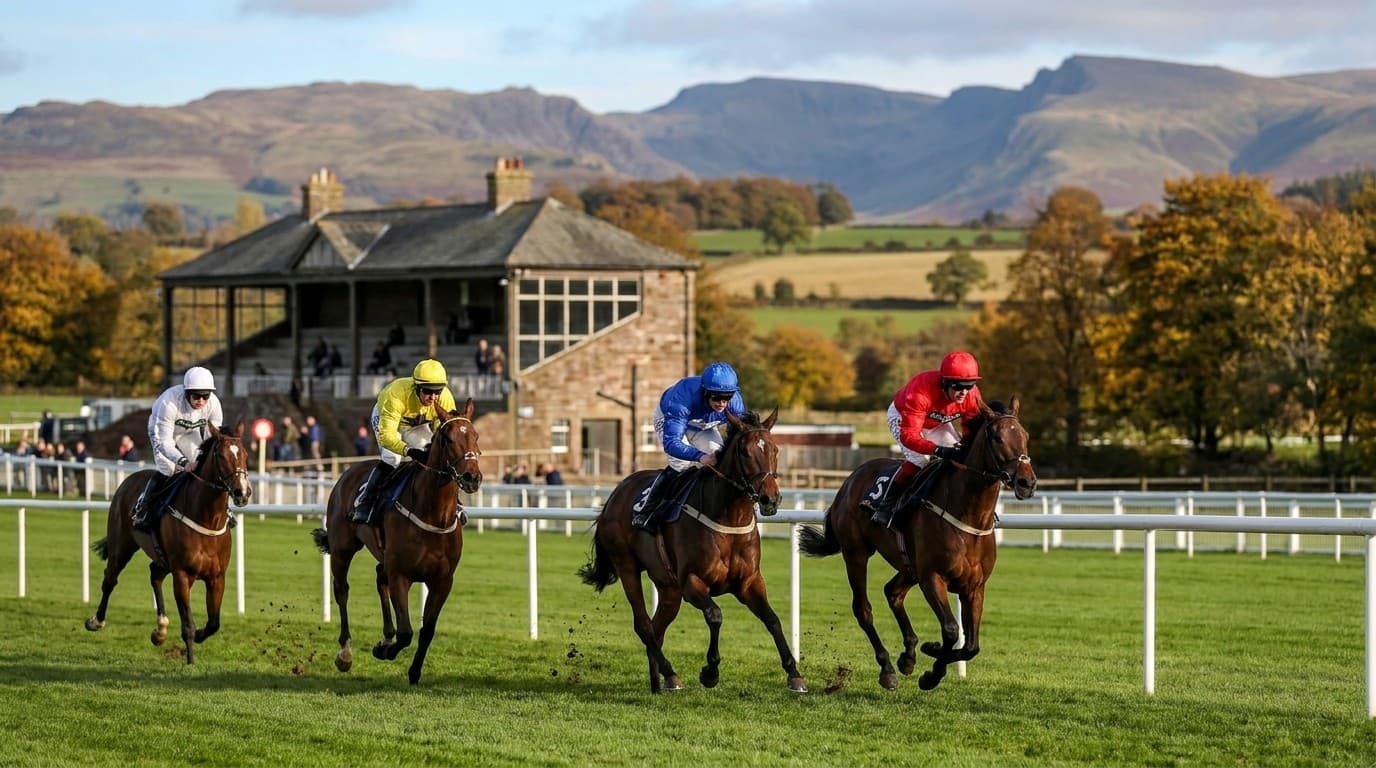
Carlisle's pear-shaped, right-handed track with its extended back straight and undulating terrain provides a thorough test for staying chasers. A horse who handles the circuit well over three miles is demonstrating real jumping ability, stamina, and the willingness to work on ground that varies from good to yielding in autumn conditions. These are precisely the qualities required at Aintree.
Windermere Chase, Carlisle — Autumn 1972
Red Rum arrived at Carlisle for the 1972 Windermere Handicap Chase in the first season of his association with Ginger McCain. He had been purchased in August and had spent the summer on the Southport beach — the treatment for his pedal ostitis was already underway, and McCain was cautiously optimistic that the horse could compete competitively again.
The Windermere win in 1972 confirmed that Red Rum was sound and competitive. It was the opening race of what would become the most dramatic jumps season of the era: seven months later, he hauled back Crisp's fifteen-length lead to win the Grand National at Aintree. The Carlisle form had told those watching carefully that the horse was ready.
Windermere Chase, Carlisle — Autumn 1973
Red Rum returned to Carlisle for the 1973 Windermere Handicap Chase as the reigning Grand National champion. He arrived with a higher profile than the previous year's entry, but the race served the same preparation function: a three-mile test over Carlisle's fences to confirm fitness and form before the long winter campaign.
He won again. Seven months later, carrying 12 stone at Aintree, he won the Grand National for the second time. The Carlisle pattern was now two for two.
The 1974 and 1975 Breaks in the Sequence
In the autumn after his second Grand National, Red Rum failed to win the Windermere Handicap Chase at Carlisle. Earlier that year he had also won the Scottish Grand National at Ayr, carrying a 6lb penalty that took his weight to 11st 13lb. The following April, at Aintree, he finished second to L'Escargot.
In 1975, the same pattern repeated. Red Rum did not win at Carlisle in the autumn, and in April 1976 he finished second again at Aintree, this time behind Rag Trade. The correlation was now five from five: three Carlisle wins, three Aintree wins; two Carlisle defeats, two Aintree defeats.
Windermere Chase, Carlisle — Autumn 1976
That autumn, Red Rum returned to the Windermere Handicap Chase for what would prove to be his third and final win at Carlisle. By now eleven years old, he was running in his fifth year at Carlisle and fifth year as a Grand National contender. The win confirmed to McCain that the horse was fit, willing, and ready. Tommy Stack had been his jockey since replacing Brian Fletcher at Aintree that spring.
The following April 1977, Red Rum won the Grand National for the third time. He led from the Canal Turn, jumped clear over the final fences, and won by a distance that made the crowds' celebration feel like the outpouring of years of accumulated affection. Three Carlisle wins, three Aintree victories. The sequence was complete.
Carlisle's course subsequently resurrected the Windermere Chase in 2016 to mark the 40th anniversary of Red Rum's final Cumbrian triumph, running the race over the same three-mile course that had served as the Grand National's most reliable barometer.
Great Moments
The Pattern Reveals Itself
The great moment at Carlisle is not a single race but a recognition — the moment when racing people understood that what was happening on the Border City course in October and November was not coincidental. Three wins at Carlisle, three Grand National wins. Two losses at Carlisle, two Grand National second places. The pattern was exact.
For those who had been watching carefully, the recognition arrived somewhere in the middle of the sequence — perhaps after the second Aintree defeat that followed the second Carlisle loss. At that point, the correlation was no longer accidental. It was structural. The Carlisle preparation was either producing the fitness that the Grand National required, or the Carlisle result was a direct indicator of where the horse's condition stood that autumn.
McCain never claimed it was anything as simple as a barometer reading. He understood that the preparation was the thing — the months on the beach, the careful management of the pedal ostitis, the building of stamina and jumping sharpness through the autumn programme. Carlisle was one race in that programme, not the whole programme. But it was the race whose result most clearly correlated with what would happen seven months later at Aintree.
The 1976 Win in Context
The most charged of the three Windermere victories was the 1976 race. By then, Red Rum was eleven years old, had been second twice in the Grand National he had twice won, and was preparing for what everyone sensed might be the final serious Grand National campaign of his career. The question of whether he had one more great Aintree run in him dominated the autumn racing press.
His Carlisle win that autumn answered the question. He was fit, willing, and jumping accurately. The three-mile Windermere over Carlisle's demanding autumn ground produced the form that McCain needed to see. The winter campaign was set.
What followed in April 1977 — Red Rum's third Grand National, the victory by a distance that converted five consecutive top-two finishes into a three-peat that has never been approached — was built on that October morning at Carlisle and the work that preceded it.
The Red Rum Bar
Carlisle named its Red Rum Bar, beside the parade ring, after him. It is the most direct sign of what the horse meant to the course: the bar acknowledges the specific place Carlisle held in his career.
In retirement Red Rum became a national figure rather than a racing figure, and Carlisle, through the bar and the revived Windermere, keeps its specific place in that story.
The Significance for Northern Jump Racing
A less remarked-upon aspect of Red Rum's Carlisle connection is what it says about the quality of northern jump racing in the 1970s. The Windermere Handicap Chase was competitive enough to serve as a significant preparation for the Grand National — not a token run, but a three-mile chase that tested a horse thoroughly. The standard of northern jump racing in that era, centred on Carlisle, Hexham, Haydock, and the other northern circuits, provided the competitive foundation for several horses who went on to Aintree distinction.
Red Rum's use of Carlisle was not a local eccentricity but a rational training decision: the course offered the right distance, the right fences, the right competition level, and the right going conditions for the autumn preparation of a Grand National horse.
Legacy & Significance
The Windermere Handicap Chase After Red Rum
When Carlisle staged a Red Rum Day, forty years after his last win there, it revived the race under its Windermere name, and it ran the Windermere Handicap Chase again the following autumn, over the same three miles.
The race called the Red Rum Handicap Chase is a different contest: it is run at Aintree in April, over about two miles.
The Red Rum Bar
Carlisle Racecourse's Red Rum Bar is the most visible daily reminder of the horse's association with the course. It sits beside the parade ring and is open to all racegoers. The name is not simply a historical reference — it is a working part of the course's identity, encountered by every racegoer who visits on any race day, jumps or flat.
That a racecourse bar bears the name of a horse is, in British racing terms, not entirely unusual — horses are commemorated in various ways at various venues. What is specific to Carlisle is the combination: the named bar and the revived race. Together they are an appropriate response to a connection that distinctly shaped the course's place in the Grand National story.
Carlisle's Place in the Grand National Narrative
Red Rum's legacy at Carlisle positions the course within the longer narrative of the Aintree Grand National in a way that few other tracks can claim. The Grand National's history is primarily an Aintree story, but the preparation of its greatest winner was conducted, in part, on Carlisle's pear-shaped right-handed course in the Border City. That Carlisle revived his race and named a bar after him is the sport's appropriate acknowledgement.
The Carlisle history article tells the full story of the course's development, including the early racing records that date to 1559 and the Carlisle Bell — the oldest horse racing prize in Britain. Red Rum's three Windermere wins add to a history that already extends across four and a half centuries. The Border City racecourse has been staging important racing for a very long time, and the autumn visits of the greatest jumping horse of the twentieth century are among the most recent chapters in that unbroken story.
Ginger McCain's Legacy at Carlisle
Ginger McCain died in 2011 at the age of eighty. His training record, built almost entirely on Red Rum's achievement, secured him an enduring place in the sport's memory. His understanding of Red Rum's needs — the beach, the careful seasonal build-up, the targeted autumn campaign through Carlisle — was the method behind the record. Carlisle was one element of a training strategy that produced results no other approach had achieved.
In the Border City, the autumn arrivals of Ginger McCain's lorry — the modest trailer from Southport, the bay gelding with the distinctive white blaze — are remembered by those old enough to have been present as something quite specific. Not the Grand National, not Ayr, not the public appearances in retirement. The quiet autumn mornings, the jumps meeting at the start of the season, the Windermere Handicap Chase, and the knowledge — born of three successive confirmations — that if he won here, he would win at Aintree.
Frequently Asked Questions
Share this article
More about this racecourse
All Carlisle guides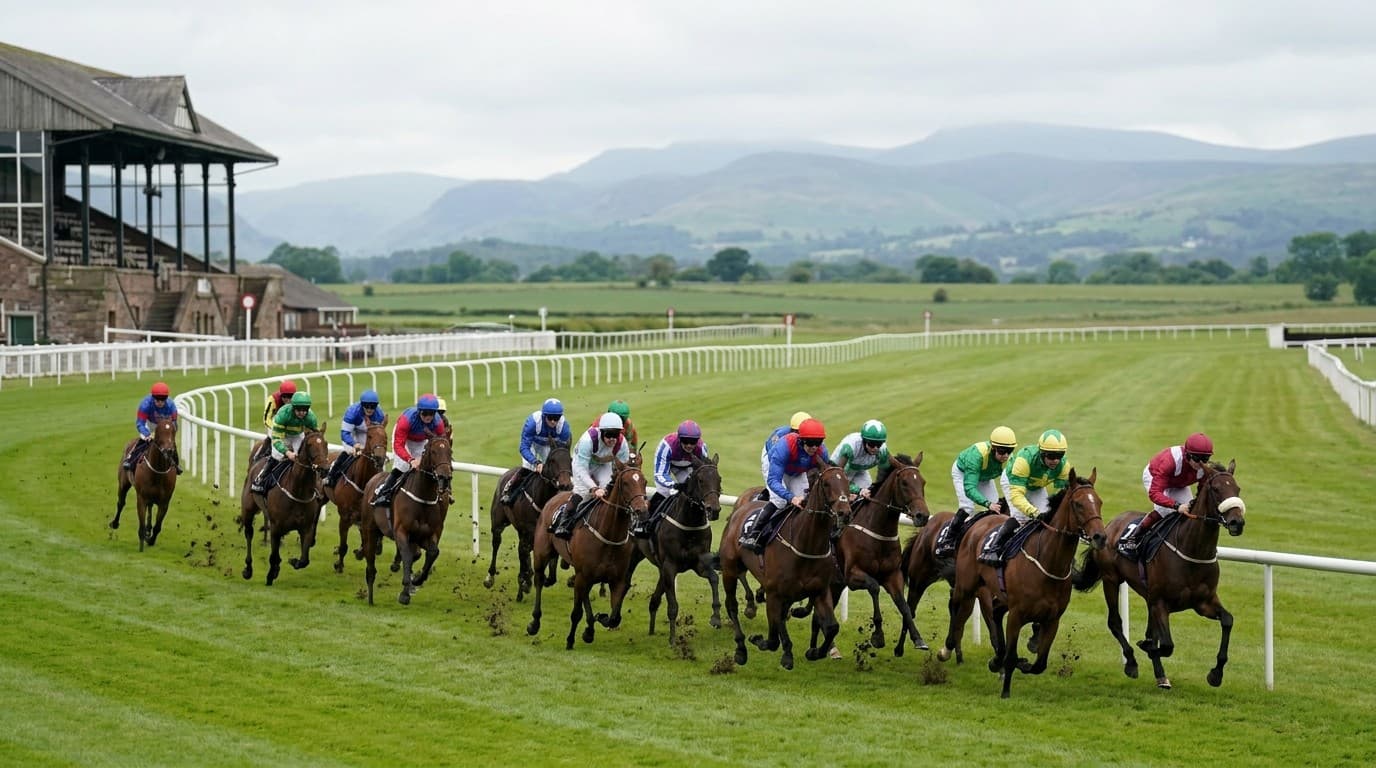
Carlisle Bell: Complete Guide
Your complete guide to the Carlisle Bell — one of the oldest sporting trophies in the world, run at Carlisle Racecourse each June.
Read more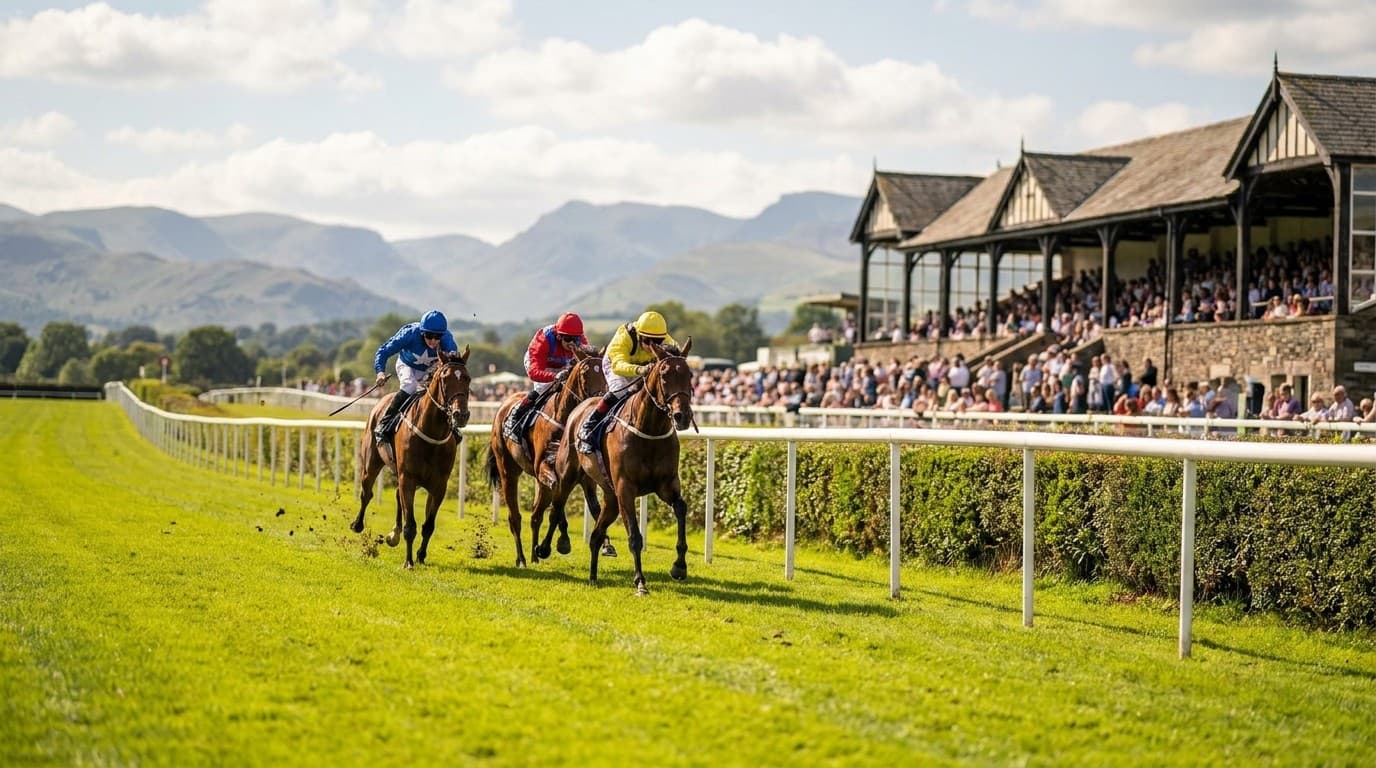
Betting at Carlisle Racecourse
How to bet smarter at Carlisle — track characteristics, going and draw, key trainers and jockeys, and strategies for Britain's northernmost dual-purpose track.
Read more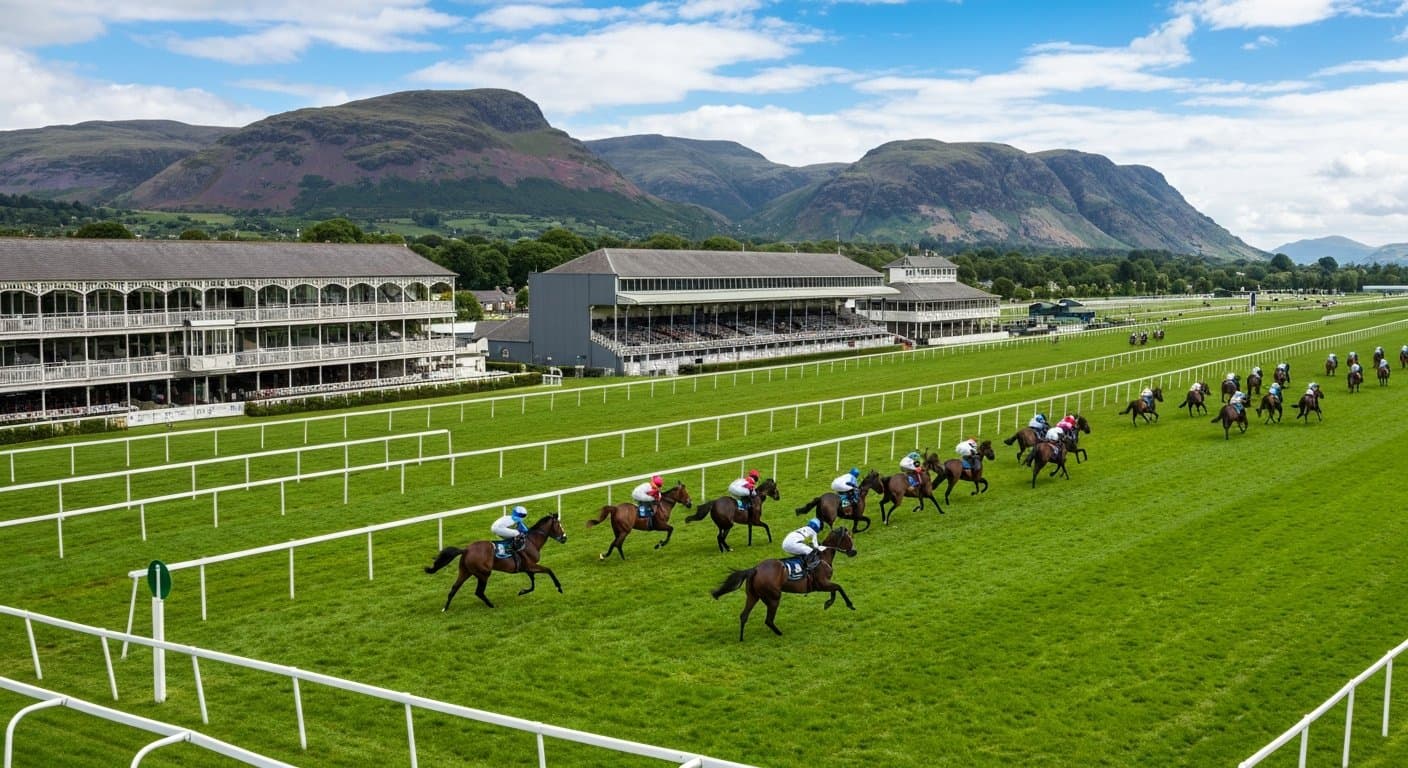
Carlisle Racecourse: Tips, Going & Britain's Northernmost Track
Get winning tips for Britain's northernmost racecourse. Carlisle Bell insights, going reports, and everything you need for Cumbria racing.
Read moreResearch the field with the AI Race Predictor
Our model publishes calibrated win-probability estimates for UK races — a second opinion to understand a race, not tips. It's open about its record: it doesn't beat the market, and we show exactly how it does.
Work it out & learn the basics
Gamble Responsibly
Gambling should be entertaining and not seen as a way to make money. Never bet more than you can afford to lose. If you or someone you know has a gambling problem, help and support is available.